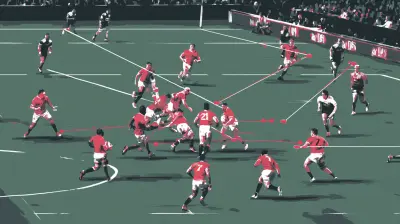
When the Crowd Became the 12th Man in the 2027 Final
29 September 2026
There is a moment in every great final when the game stops belonging to the players and starts belonging to the people watching. Not literally, of course. The scoreboard still obeys the rules. The ball still behaves according to physics. But something shifts in the air, and everyone inside the stadium feels it at the same time. The 2027 final was that kind of night. What happened there was not a fluke of noise or a lucky bounce. It was the clearest recent demonstration of a principle that coaches talk about constantly and analysts still struggle to measure: a crowd can function as a genuine tactical force, and on the right night, it can decide a championship.
This article is not a retelling of that match. Plenty of outlets did that. Instead, it is an attempt to explain how crowd influence actually works, why it sometimes fails, and what teams, venues, and broadcasters should understand before they treat atmosphere as a controllable variable. The 2027 final is the anchor, but the lessons reach far beyond it.
What the 12th Man Really Means
The phrase gets thrown around loosely. Commentators use it when a stadium is loud. Marketing departments use it on t-shirts. But the concept has a specific meaning in performance terms. A genuine 12th man is not just noise. It is a feedback loop in which crowd behavior changes player behavior, which changes crowd behavior again, and the loop tightens over the course of a match.Three conditions usually have to be present for that loop to form:
- The crowd must be close enough to affect communication and perception.
- The players must be emotionally and cognitively receptive to the crowd's state.
- The match must be balanced enough that small advantages matter.
Remove any one of those and the effect collapses into background noise. A blowout in front of a passionate crowd is still a blowout. A tense match in an empty stadium can still be brilliant. The 12th man only exists in the overlap.
Why Noise Alone Is Not the Mechanism
It is tempting to think the crowd works by being loud. Loudness matters, but it is a blunt instrument. What actually changes the game is the timing and structure of the noise. A crowd that roars constantly becomes wallpaper. A crowd that surges at specific moments - a defensive stand, a service break, a red-zone snap - creates something closer to a weapon.The reason is simple. Players rely on auditory cues for coordination. A goalkeeper organizing a wall, a point guard calling a play, an offensive line adjusting protection - all of these depend on hearing. When a crowd produces a sudden spike, it does not just distract. It delays. A half-second of delay in a defensive rotation is often the difference between a stop and a score.
The Emotional Contagion Layer
Beyond communication, crowds transmit emotion. This is where the 12th man gets its staying power. Players are not machines. They read the room, sometimes consciously, often not. When 60,000 people believe a comeback is possible, that belief becomes information. It tells a tired player that the effort is worth it. It tells a nervous player that the moment is bigger than fear.Sports psychologists describe this as emotional contagion, and it cuts both ways. A crowd that turns anxious can infect a team with anxiety. A crowd that turns hostile toward its own players can accelerate a collapse. The 2027 final was notable because the crowd never flipped. It stayed in a narrow emotional band - intense, but not desperate - and that stability became its own advantage.
The 2027 Final: A Case Study in Momentum Control
Without rehashing the full match, the shape of the 2027 final is worth examining because it illustrates the mechanics cleanly.The first half belonged to the away side. They were sharper, more organized, and clearly prepared for the environment. The home team looked tense. The crowd, sensing this, grew quiet in a way that felt heavy rather than supportive. This is a common mistake. Fans often interpret silence as respect when players experience it as doubt.
The turning point came early in the second half, not with a goal or a score, but with a single defensive sequence. A home defender made a lunging tackle that had no real chance of winning the ball cleanly. It was reckless. It was also exactly what the crowd needed. The roar that followed was disproportionate to the event. And that disproportionality is what changed the match.
From that point, the crowd stopped reacting to the game and started shaping it. Every away possession was met with a wall of sound. Every home touch was met with anticipation. The away team, which had been composed, began taking longer on the ball. Their passing became safer. Their shape dropped deeper. None of this was dramatic. It was a series of small retreats that, compounded over 30 minutes, handed control to the home side.
Why the Crowd Succeeded Where It Usually Fails
Most crowds do not change matches. They are loud, they are committed, and they are ultimately irrelevant. The 2027 final was different for three reasons.First, the venue geometry. The stadium was designed with steep stands and a low roof over the main tribune. This is not a trivial detail. Acoustic design determines whether noise dissipates or concentrates. In many modern arenas, the sound escapes upward and the effect on the field is muted. In the 2027 final venue, the sound came back down.
Second, the crowd was organized. Not in a manufactured, drum-line way, but in the sense that it had a shared understanding of when to peak. This comes from culture, from years of watching the same team in the same competition, and from leaders within the stands who instinctively know when to push.
Third, the match was close. A two-goal or two-score margin would have neutralized everything. The crowd's influence was only possible because the game was within reach.
The Tactical Consequences of a Hostile Environment
When a crowd is genuinely influential, the tactical adjustments happen in real time. Coaches who prepare for this have a significant edge over those who do not.Communication Breakdown
The most immediate effect is on verbal organization. Defensive units that rely on constant talk - backlines, secondaries, rotations in basketball - suffer first. Teams that have practiced silent communication, hand signals, or pre-set triggers handle it better. This is why some coaches spend preseason sessions with artificial noise pumped into training. It is not about toughness. It is about building alternative channels.Decision Speed
Crowd pressure does not just slow communication. It slows decisions. Players under auditory stress tend to default to safer options. A midfielder who would normally play a line-breaking pass plays it square. A quarterback who would normally check down to a second read throws the ball away. These micro-decisions add up.The counter is not to ignore the crowd. That is impossible. The counter is to rehearse decisions under stress so that the default option is still aggressive. Teams that train this way often look calmer in hostile venues, and the effect is visible to anyone watching closely.
Fatigue and Perceived Effort
There is a real physiological dimension here. Crowd support does not make players fitter, but it changes how they perceive effort. A supportive crowd makes hard running feel worthwhile. A hostile crowd makes it feel futile. Over 90 minutes or four quarters, that perception gap can translate into measurable differences in late-game intensity.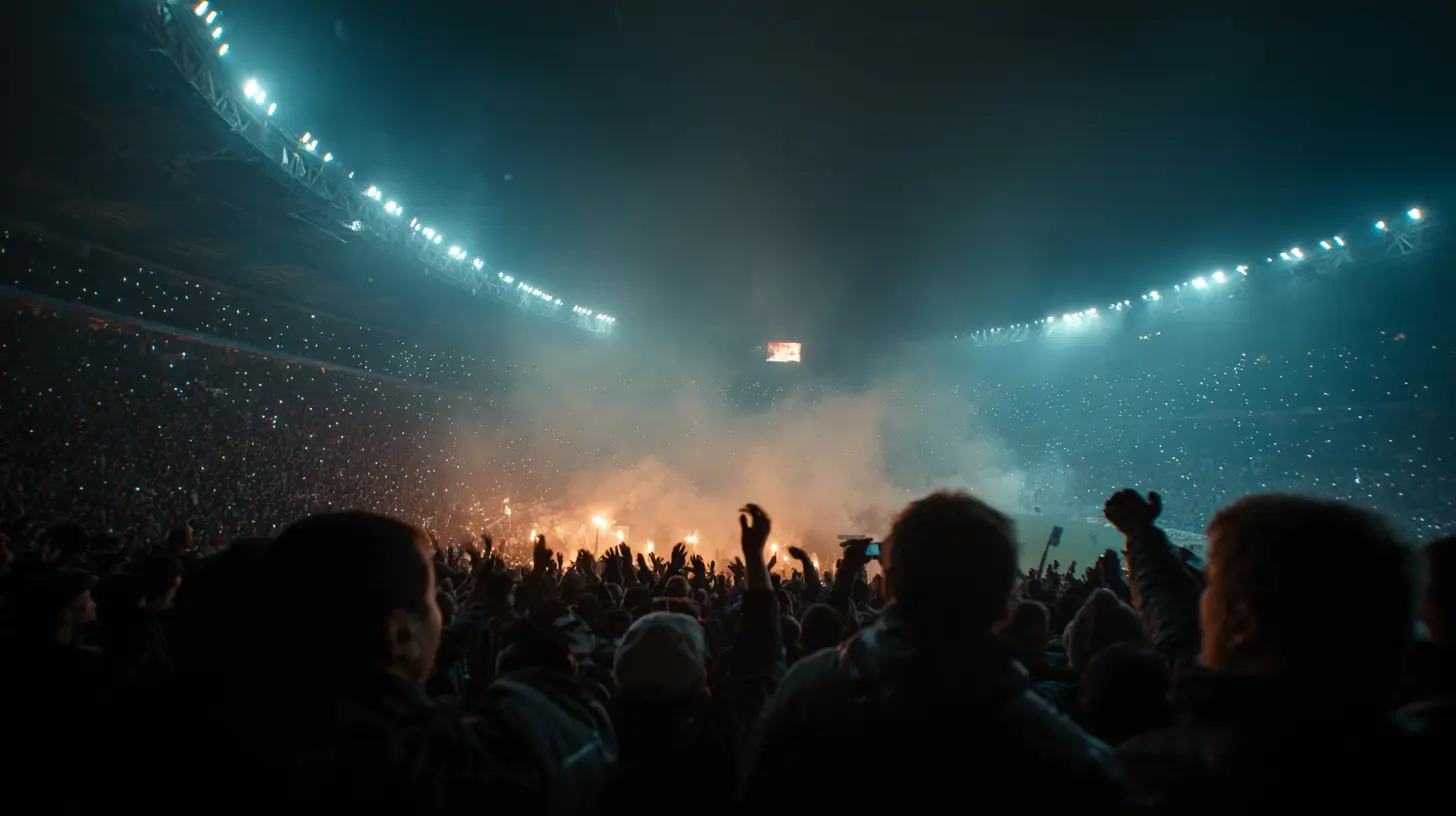
When the Crowd Becomes a Liability
It is important to be balanced here. Crowds are not universally helpful. In fact, they frequently harm the teams they support.The Anxiety Spiral
When a home team falls behind, the crowd often becomes anxious. That anxiety is readable. Players start snatching at chances, forcing plays, and abandoning structure. The crowd, seeing this, becomes more anxious. The spiral is difficult to break, and it is one of the most common reasons home favorites lose.The 2027 final avoided this because the crowd's emotional baseline was confidence rather than desperation. That is not luck. It is culture, and it is built over years.
Hostility Toward Own Players
Nothing accelerates a collapse faster than a crowd turning on its own team. Boos after a misplaced pass, jeers after a missed shot - these are not motivational. They are confirmation of failure. Players who are already struggling do not need their environment to agree with their self-doubt.Coaches and captains often talk about managing the crowd, and this is what they mean. It is not about scripting chants. It is about giving fans something to believe in early, so that when the difficult moments come, the default reaction is support rather than frustration.
Overreliance on Atmosphere
Some teams build their entire identity around home advantage. They train for it, they talk about it, and they subtly expect it to carry them. This works until it does not. A neutral venue, a quiet crowd, or an opponent that thrives on hostility can expose a team that never learned to generate its own energy.The best teams treat the crowd as a bonus, not a foundation. They are capable of playing well in silence. When the noise comes, it amplifies what is already there.
What Venues and Organizers Should Consider
The 2027 final raised an uncomfortable question for stadium designers and competition organizers: how much should atmosphere be engineered?Acoustic Design as a Performance Variable
Historically, stadium acoustics were treated as an aesthetic concern. That is changing. Architects now model how sound behaves in different configurations, and some venues are explicitly designed to amplify crowd noise toward the field. This raises ethical and competitive questions. If one team's stadium is acoustically superior, is that a fair advantage or a structural one?There is no clean answer. What matters is transparency. If a venue is designed to amplify crowd effect, that should be acknowledged rather than treated as a neutral backdrop.
Ticket Allocation and Crowd Composition
Who is in the stadium matters as much as how many. A crowd of season-ticket holders behaves differently from a crowd of neutral spectators. A crowd with a large traveling contingent behaves differently again. Organizers of finals have to decide how to balance these groups, and those decisions have performance consequences.The 2027 final was notable for a crowd that was overwhelmingly partisan but not hostile to the occasion itself. That balance is difficult to manufacture and easy to destroy.
Broadcast and the Illusion of Atmosphere
Television flattens crowd noise. What sounds overwhelming in the stadium often sounds distant on broadcast. This creates a perception gap. Viewers at home may not understand why players are struggling to communicate. Producers sometimes manipulate crowd audio to compensate, and that manipulation shapes public understanding of what actually happened.For analysts, this is a real problem. Evaluating a performance without accounting for crowd conditions is like evaluating a swimmer without knowing the current.
Practical Takeaways for Coaches and Players
If you are preparing for a match where the crowd will be a factor, here is what actually helps.Train Under Noise, but Train Specifically
Generic crowd noise is better than nothing, but it is not enough. The useful version is situational. Recreate the moments when communication matters most - set pieces, defensive rotations, late-game possessions - and rehearse them under realistic auditory stress. The goal is not to simulate the noise. It is to build habits that survive it.Establish Non-Verbal Systems
Every team should have a silent language. Hand signals, pre-set codes, and visual triggers reduce dependence on voice. This is not just for hostile crowds. It is for any environment where communication is compromised.Manage Emotional Baseline
Captains and senior players have more influence over crowd emotion than they realize. A calm reaction to adversity, a visible show of belief after a mistake - these are read by the stands. The 2027 final was shaped as much by the home captain's body language as by any tactical adjustment.Do Not Chase the Crowd
Players who try to generate noise artificially often look desperate. The crowd responds to genuine effort and genuine risk. A safe pass does not lift a stadium. A committed tackle does. This is why the turning point in the 2027 final came from a play that was not even successful in a conventional sense.Common Misconceptions
Several ideas about crowd influence are widely repeated and mostly wrong.Misconception one: louder is always better. Not true. Constant noise loses meaning. Structured noise, timed to key moments, is far more effective.
Misconception two: crowds only help the home team. Hostile crowds can help an away team that thrives on adversity. Some players perform better when the environment is against them.
Misconception three: crowd influence is psychological, not tactical. It is both. The tactical effects - delayed rotations, slower decisions, altered risk tolerance - are measurable and often decisive.
Misconception four: atmosphere is uncontrollable. It is not fully controllable, but it is influenceable. Coaches, captains, and organizers all shape it, whether they intend to or not.
What the 2027 Final Actually Taught Us
The cleanest lesson from the 2027 final is that the 12th man is not a myth and not a marketing line. It is a real phenomenon with identifiable conditions. It requires the right venue, the right emotional tone, and a match close enough for small edges to matter. When those conditions align, the crowd becomes part of the tactics, not just the backdrop.But the final also taught a subtler lesson. The crowd did not win that match on its own. It amplified a decision the home team made - to play with risk, to commit to tackles, to refuse the safe option. The crowd responded to that decision, and then rewarded it. The relationship was reciprocal.
That is the part most analysis misses. The 12th man is not something a crowd gives to a team. It is something a team and a crowd build together, moment by moment, over the course of a night. In 2027, they built it well enough to decide a championship. In most finals, they do not. Understanding why is the difference between nostalgia and insight.
all images in this post were generated using AI tools
Category:
Historic MatchesAuthor:

Easton Simmons