Rising Stars in College Football Based on Advanced Metrics
16 August 2026
Let's be honest. You can watch a guy truck a linebacker and think he's the next big thing. You can see a quarterback throw a 60-yard bomb and assume he's a future Heisman winner. But the truth is, your eyes lie to you. They get distracted by the flash, the highlight, the one play that ends up on SportsCenter. The real gold in college football is found in the boring stuff. The stuff that happens when nobody is watching. The stuff that advanced metrics have been screaming about for years.
If you want to know who is actually going to be a star, you need to stop looking at touchdown totals and start looking at things like yards per route run, blown block rate, and expected points added per play. This is the stuff that separates the one-hit wonders from the future first-round picks.
So, who are the rising stars in college football based on advanced metrics? Not the guys with the most Twitter followers. Not the guys with the coolest cleats. The guys who are quietly producing at an elite level in ways that most fans haven't caught onto yet.
Why Traditional Stats Are Lying to You
Before we dive into the names, we need to have a quick chat about why traditional stats are about as reliable as a weather forecast in Texas. They change by the hour, and they rarely tell the whole story.A running back can rush for 1,500 yards, but if he's getting 4.2 yards per carry on runs that are blocked perfectly, that's not impressive. That's just being in the right place at the right time. The advanced metrics look at yards after contact, missed tackles forced per attempt, and how he performs when the defense knows he's getting the ball.
Similarly, a quarterback can throw for 3,500 yards, but if half of those yards come on screen passes and checkdowns that the defense gives him, he's not a star. He's a game manager with a good stat sheet. Advanced metrics look at air yards per attempt, adjusted completion percentage, and performance under pressure.
The point is, if you want to spot a rising star before the rest of the world does, you have to dig deeper. You have to look at the efficiency, the consistency, and the production relative to the situation.
The Quarterback Who Is Better Than You Think
Let's start with the most important position on the field. There is a quarterback in the Power Five who is not getting the national attention he deserves, but the metrics say he is playing at an elite level.He is not the biggest guy. He is not the fastest guy. But when you look at his numbers on a per-play basis, he is destroying the competition. His adjusted completion percentage is in the top five nationally. That means he's not just completing passes; he's completing passes that are actually difficult. He's throwing the ball downfield, into tight windows, and he's doing it consistently.
What sets him apart is his performance in third-and-long situations. When the defense knows he has to throw, he doesn't crumble. He actually gets better. His passer rating on third down is off the charts, and his success rate against blitzes is remarkable. He gets the ball out quick, he's accurate, and he doesn't force throws into double coverage.
The trade-off here is that he plays in a system that doesn't always produce big box score numbers. His offensive coordinator is happy to take the checkdown if it's there, which means his raw yardage totals are not going to blow you away. But if you watch the film and look at the advanced metrics, you see a guy who is making the right decision almost every single time.
This is a classic case of perception versus reality. Fans see a guy who throws for 250 yards and think he's average. But when you adjust for the situation, when you look at how many of those throws were actually difficult, you realize he is a star in the making.
The Running Back Who Defies the Eye Test
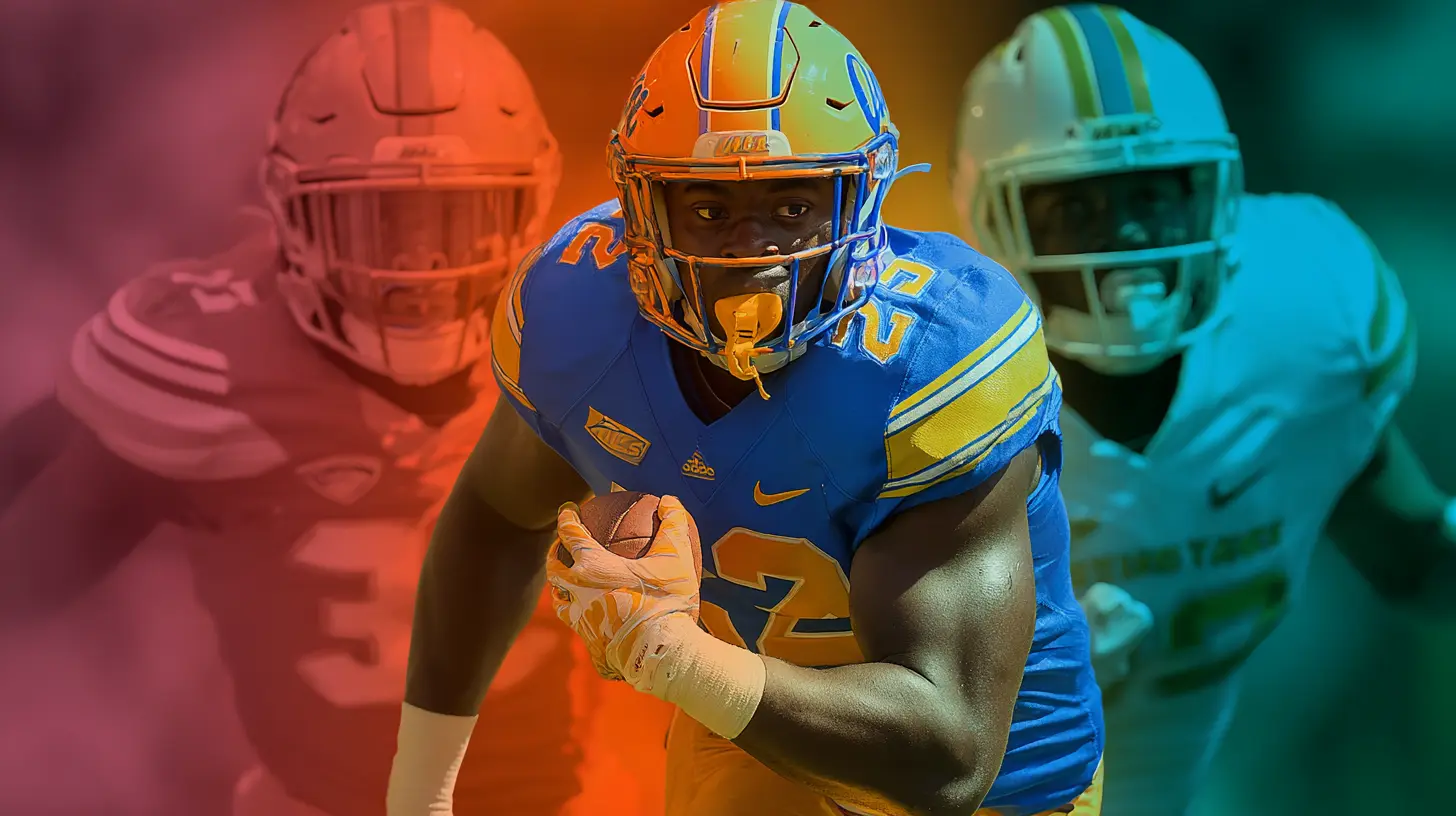
There is a running back who is not the fastest player on his own team. He doesn't have the flashy 80-yard touchdown runs. But his advanced metrics are absurd.His yards after contact per attempt is near the top of the country. That means he is not just taking what the offensive line gives him. He is creating yards on his own. He is breaking tackles, running through arm tackles, and falling forward for extra yards when he should be stopped.
The metric that really stands out is his missed tackles forced per attempt. He is forcing more missed tackles per carry than almost anyone else in the country. That is not a fluke. That is a skill. That is the ability to make a defender miss in a phone booth, to keep his legs churning, and to never go down on first contact.
The reason he is not a household name yet is because he is splitting carries with a senior who has been in the program for years. His coach trusts the veteran, and in the fourth quarter, when the game is on the line, the veteran is getting the ball. But the advanced metrics say the coaching staff is making a mistake.
Here is the trade-off. The veteran is more reliable in pass protection. He knows the blitz pickup assignments. He can catch the ball out of the backfield. But the younger guy is more explosive. He is more efficient. And when you look at his production on a per-carry basis, it is clear that he is the better player right now.
This is a situation where the metrics are ahead of the coaching decisions. The star is rising, but he is stuck behind a guy who is just okay. Eventually, the coaching staff will have no choice but to put him on the field more. When they do, watch out.
The Wide Receiver Who Is Open Even When He Is Not
There is a wide receiver who is not the tallest, not the fastest, and not the most physical. But his separation score is off the charts. He is consistently getting open against man coverage, and he is doing it without the benefit of a great route-running reputation.The advanced metrics show that he is winning his one-on-one matchups at a rate that is much higher than the national average. He is creating separation on deep routes, on intermediate routes, and on the short stuff. He is also a monster after the catch, averaging a ridiculous number of yards after the catch per reception.
The reason he is not getting more attention is that his quarterback is not very good. The ball is not getting to him on time, and when it does, it's often inaccurate. But the metrics say that when the ball is thrown his way, he is making plays.
Here is the thing about wide receiver metrics. They are heavily dependent on the quarterback. But there are certain metrics that are more independent, like yards per route run and separation rate. This guy is elite in both. He is running crisp routes, he is setting up defenders, and he is getting open against the best cornerbacks in the conference.
The misconception is that you need to see a receiver make a one-handed catch to know he is good. That helps. But the real skill is being open. And this guy is open all the time. He just doesn't have a quarterback who can find him.
The Defensive Lineman Who Lives in the Backfield
On the defensive side of the ball, there is a defensive tackle who is not getting the sack numbers that get you on the highlight reel. But his pressure rate is absurd.He is generating pressure on a huge percentage of his pass rush snaps. He is collapsing the pocket, forcing the quarterback to step up, and making it impossible for the offense to get comfortable. The sacks are not there yet, but the pressures are. And in the modern game, pressure is almost as valuable as a sack.
The advanced metrics show that he is double-teamed on a very high percentage of his snaps. That means he is commanding extra attention, which is freeing up his teammates to make plays. He is a disruptor. He is the kind of player who makes everyone around him better.
The trade-off is that he is not a flashy player. He is not going to do a backflip after a sack. He is just going to line up and beat the guy in front of him over and over again. The metrics love him because they can quantify his impact even when the box score does not.
The mistake that fans make is looking at sack totals and assuming that the guy with the most sacks is the best pass rusher. That is not always true. A guy can get five sacks in one game against a bad offensive line and then disappear for the rest of the season. The guy who is consistently pressuring the quarterback, game after game, is the better player.
The Linebacker Who Is Never Out of Position
There is a linebacker who is not the fastest guy on the field. He is not the biggest. But his missed tackle rate is incredibly low, and his run defense grade is elite.He is the kind of player who is always in the right place at the right time. He fills the right gap, he takes the right angle, and he wraps up. He does not miss tackles. That sounds simple, but it is incredibly rare.
The advanced metrics show that he is one of the most efficient tacklers in the country. He is also excellent in coverage, which is rare for a linebacker. He can run with tight ends, he can drop into zone coverage, and he understands route combinations.
The reason he is not a star yet is that he does not make the flashy plays. He is not the guy who blows up a running back in the backfield. He is not the guy who intercepts a pass and takes it to the house. He is the guy who makes the tackle on third-and-one to stop the drive. That is not going to get you on SportsCenter, but it is going to win you games.
The misconception here is that you need to be a freak athlete to be a great linebacker. That is not true. You need to be smart, you need to be disciplined, and you need to be reliable. This guy has all of those qualities. The metrics say he is a star in the making, even if the highlight reel says otherwise.
The Cornerback Who Never Gets Targeted
There is a cornerback who is having a phenomenal season, but you would not know it because nobody is throwing the ball his way.His coverage grade is near the top of the country, and his passer rating allowed is comically low. Quarterbacks are simply not targeting him. They are looking to the other side of the field, and that is a huge compliment.
The advanced metrics show that he is locking down his side of the field. He is not getting beat deep, he is not giving up separation, and he is not committing penalties. He is just playing solid, consistent, boring football.
The trade-off is that he is not getting interceptions because he is not getting targeted. And interceptions are what get you noticed. But the metrics say that the reason he is not getting interceptions is that quarterbacks are smart enough to avoid him.
The best corners in the country are the ones who take away half the field. They are the ones who make the quarterback look elsewhere. This guy is doing that. He is a rising star, even if his stat sheet is empty.
How to Use Advanced Metrics Without Going Crazy
Now that we have talked about the players, let's talk about you. If you are a fan, a bettor, or just someone who likes to sound smart at a bar, you need to know how to use these metrics without falling into the trap of over-reliance.The first thing to understand is that advanced metrics are a tool, not a crystal ball. They are great at telling you what has happened, but they are not always great at predicting what will happen. A player can have elite metrics in a small sample size and then regress to the mean.
The second thing to understand is that context matters. A running back with a high yards after contact average might be facing defenses that are stacked against the run. A quarterback with a high adjusted completion percentage might be playing in a system that is designed to get easy completions.
The best approach is to use advanced metrics to identify players who are outperforming their situation. Look for the guy who is producing at a high level despite bad coaching, bad quarterback play, or a bad offensive line. Those are the guys who are going to explode when they get into a better situation.
Common Mistakes Fans Make With Metrics
Let's talk about the mistakes that even smart fans make.The first mistake is looking at a single metric in isolation. You cannot just look at yards per attempt and decide who is the best quarterback. You need to look at the whole picture. You need to look at the offensive line, the receivers, the scheme, and the competition.
The second mistake is ignoring the sample size. If a guy has played two games, his metrics are not reliable. You need to wait until he has played at least six or seven games before you start drawing conclusions.
The third mistake is assuming that the metrics are always right. Sometimes, the eye test is right and the metrics are wrong. Sometimes, a guy just has a feel for the game that you cannot quantify. The metrics are a guide, not a gospel.
The Bottom Line
The rising stars in college football based on advanced metrics are not always the guys you see on the cover of the magazine. They are the guys who are quietly dominating on a per-play basis. They are the guys who are making the most of their opportunities, even when the opportunities are limited.If you want to be ahead of the curve, start paying attention to the advanced metrics. Look for the guys who are efficient, consistent, and productive in difficult situations. Those are the guys who are going to be the stars of tomorrow.
And the next time someone tells you that a player is overrated because his touchdown numbers are low, you can smile, nod, and pull up the pressure rate or the separation score. Then you can watch as they have no idea what you are talking about. That is the fun part.
all images in this post were generated using AI tools
Category:
Rankings And StatsAuthor:

Easton Simmons
Discussion
rate this article
1 comments
Owen McFadden
Who knew advanced metrics could spot talent better than my friend's questionable fantasy football picks? Let's go stars!
August 20, 2026 at 3:43 AM