Fan Reactions to Preseason Buzz Around 2027 Hopefuls
8 October 2026
Every preseason, a new wave of names starts circulating through fan communities before a single meaningful game has been played. For the 2027 cycle, that wave has arrived earlier and louder than usual. Fans are already debating depth charts, projecting breakout seasons, and arguing about which young players deserve the hype. The reactions themselves have become a story, and they reveal a lot about how modern fan culture works, what it gets right, and where it tends to go wrong.
This article looks at what fans are actually saying about the 2027 hopefuls, why the buzz forms the way it does, and how to separate signal from noise. Whether you run a fan community, cover a team, or just want to follow the conversation without getting swept up in it, the goal here is to give you a clear framework for reading preseason hype intelligently.
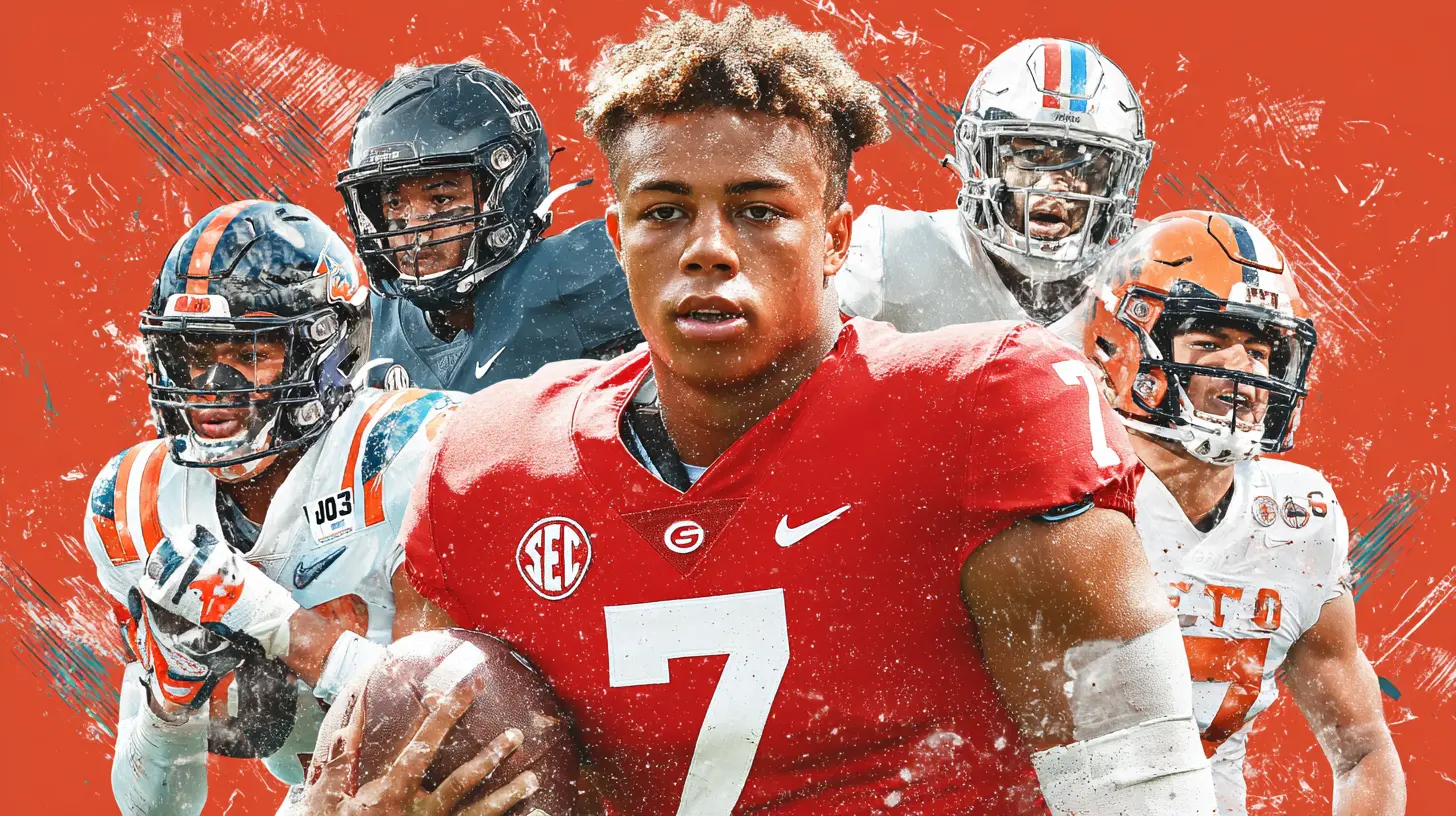
Why Preseason Buzz Forms So Early
Preseason hype is not random. It follows a predictable cycle, and understanding that cycle helps explain why 2027 hopefuls are already drawing attention when the games that matter are still far away.The first driver is simple scarcity. During the offseason, there is no live competition to settle arguments. Fans fill that vacuum with projection. A highlight reel from a training session, a coach's offhand comment, a measurable recorded at a camp: all of it gets amplified because there is nothing else to weigh it against. When real games return, the noise drops. Until then, speculation is the only currency available.
The second driver is the nature of the 2027 cycle itself. Players in this group are typically at a stage where their trajectories are still genuinely open. Some are entering the years when physical development, skill refinement, and opportunity converge. That uncertainty is exactly what makes them compelling. A player who has already proven everything offers little to debate. A player on the edge of a breakthrough offers everything.
The third driver is community. Fan reactions are social behavior as much as they are analysis. Being early on a player is a form of identity. Saying "I saw it before everyone else" carries status, and that incentive pushes fans to stake claims early, sometimes before the evidence justifies it.
None of this is inherently bad. Early attention can be a healthy sign of an engaged fanbase. The problem starts when enthusiasm hardens into certainty.
The Main Camps in the Fan Conversation
Fan reactions to 2027 hopefuls tend to cluster into a few recognizable camps. Recognizing which camp a take is coming from is often more useful than judging the take itself.The Early Believers
These fans have watched the film, tracked the developmental curve, and decided the player is real. Their strength is that they often do the homework. They can point to specific improvements, not just vibes. Their weakness is confirmation bias. Once invested, they tend to explain away setbacks and treat every positive data point as proof.Early believers are valuable to a community because they generate the detailed discussion that casual fans rely on. They are dangerous when they stop updating their views in response to new information.
The Skeptics
Skeptics push back on hype, often for good reasons. They point out that preseason praise is cheap, that competition level varies wildly, and that many hyped players never make the leap. Their strength is discipline. Their weakness is that reflexive skepticism can be just as lazy as reflexive hype. Dismissing a player because "we have seen this before" ignores the possibility that this time is different.The best skeptics are specific. They do not say a player will fail. They say which part of the player's game has not yet been tested and what would change their mind.
The Wait-and-See Crowd
This is the largest group, and often the wisest. They enjoy the conversation without committing to a verdict. They understand that preseason buzz is a hypothesis, not a conclusion. Their risk is passivity. Waiting too long can mean missing the moment when a player's value, in fantasy terms or in pure fandom terms, is still low.The Contrarians
Every cycle produces fans who root for the under-the-radar name precisely because it is under the radar. This can be genuinely insightful, since markets and fan consensus do miss players. It can also be pure performance, where the goal is to seem smarter than the crowd rather than to be right.
What the Buzz Gets Right
It would be a mistake to treat all preseason hype as empty. Fan communities often identify real developments before mainstream coverage catches up, and there are concrete reasons for that.First, fans watch more than analysts do. A dedicated follower may see every snap of a player's season, including the unglamorous ones. That volume of observation can surface patterns that a national analyst, working from a handful of games, will miss.
Second, fans track context. They know about a coaching change, a scheme shift, or an injury that affected a player's production. That context matters enormously when projecting forward, and it is often lost in surface-level stat comparisons.
Third, fan communities self-correct, eventually. The same crowd that overhyped a player in April will turn on that player by October if the evidence demands it. The collective is not always right, but it is rarely permanently wrong.
The practical takeaway: treat fan buzz as a lead, not a verdict. It tells you where to look. It does not tell you what you will find.
Where the Buzz Goes Wrong
The failure modes of preseason hype are consistent enough to name.Confusing Traits With Production
A player can look impressive in measurable terms, movement skills, or practice settings, without ever translating that into production when the games count. Fans frequently mistake the presence of a trait for the presence of a skill. Having speed is not the same as knowing how to use it. Having size is not the same as knowing how to leverage it.The fix is to ask a simple question: has this player actually done the thing in a competitive setting? If the answer is no, the hype is a projection, not a record.
Overweighting Recency
A strong finish to a season, or a standout showing in a camp, tends to dominate memory. Fans anchor on the most recent data point and extrapolate. This is a well-documented cognitive bias, and it shows up in every cycle.The counter is to zoom out. Look at the full body of work, not just the last month. A player who was ordinary for two seasons and excellent for six weeks is a different bet than one who has been consistently good.
Ignoring Situational Fit
A talented player in a bad situation can look worse than he is. A limited player in a perfect situation can look better than he is. Fans often evaluate players in isolation, ignoring the scheme, the supporting cast, and the coaching. This is one of the most common mistakes in preseason analysis, and it is also one of the most fixable. Ask what role the player will actually have and whether that role suits his strengths.Treating Consensus as Evidence
When enough fans repeat a take, it starts to feel true. But repetition is not verification. A widely shared opinion is still just an opinion. The wisdom of crowds works when opinions are independent. In fan communities, they often are not, because everyone is reading the same posts.How to Read Fan Reactions Like an Analyst
If you want to use fan buzz productively rather than just consume it, a few habits make a real difference.Separate claims from evidence. When you see a strong take, ask what it rests on. Film study, statistics, a coach's comment, or pure feeling? The quality of the evidence tells you how much weight to give the claim.
Track who changes their mind. The most credible voices in any community are the ones who update when the facts change. Follow those people, not the loudest ones.
Look for specificity. "This player is going to be great" is noise. "This player's footwork against pressure has improved and that was his biggest weakness" is signal. Specificity is hard to fake.
Watch the language of certainty. The more absolute the claim, the less reliable it usually is. Good analysis is comfortable with uncertainty because reality is uncertain.
Check the incentives. Is the person making the claim trying to inform you or to build a reputation? Both are fine, but they lead to different kinds of takes.
Practical Advice for Different Readers
The right way to handle preseason buzz depends on who you are and what you need from it.If You Are a Fan
Enjoy the speculation, but do not let it define your expectations. Set a few checkpoints for yourself. What would you need to see in the first month of real competition to confirm or reject the hype? Writing that down, even mentally, keeps you honest.If You Run a Fan Community
Set a tone that rewards specificity and punishes certainty. Pin a thread for each major hopeful and ask people to post evidence, not just opinions. When a player's outlook changes, update the thread. Communities that model intellectual honesty tend to produce better discussion and attract better contributors.If You Cover the Sport
Use fan buzz as a source of leads, then do your own verification. The crowd will often point you at the right player. It will rarely give you the right conclusion. Your value comes from adding context the crowd does not have.If You Play Fantasy or Prediction Games
Preseason buzz moves prices. That cuts both ways. If you think the crowd is right before the market adjusts, acting early helps. If you think the crowd is overreacting, the inflated price creates an opportunity. The key is having your own view, formed independently, before you look at what everyone else thinks.Common Misconceptions About 2027 Hopefuls
A few beliefs show up every cycle and are worth correcting directly.The first is that hype is always wrong. It is not. Some hyped players do break out, and dismissing all of them guarantees you will miss the real ones.
The second is that a slow start means failure. Development is not linear. Many players who become excellent were not excellent immediately. Judging a 2027 hopeful on the first few weeks of the cycle is like judging a book by its cover page.
The third is that measurables predict success. They correlate with it, sometimes strongly, but they do not determine it. Skill, situation, health, and work ethic all matter, and none of them show up in a single number.
The fourth is that fan opinion is uniform. It is not. The conversation is a mix of careful analysis and pure emotion, and treating it as a single voice flattens everything useful about it.
A Balanced View of the Hype Cycle
The healthiest relationship with preseason buzz is neither full embrace nor full rejection. It is engagement with a filter.Buzz is a signal that something is worth watching. It is not proof that something is good. The fans who get the most out of the 2027 cycle will be the ones who treat every take, including their own, as a hypothesis to be tested rather than a truth to be defended.
That stance is also more fun. It keeps the conversation open. It lets you enjoy being early on a player without needing to be right about everything. And it means that when the real games arrive, you are watching to see what happens rather than watching to confirm what you already said.
Final Thoughts
Fan reactions to 2027 hopefuls are a living example of how sports fandom works at its best and its worst. The same energy that produces sharp, detailed analysis also produces runaway hype. The difference is discipline.If you take one thing from this, let it be this: the value of preseason buzz is not in the conclusions it offers. It is in the questions it raises. Follow the questions. Check the evidence. Stay willing to change your mind. That approach will serve you well through this cycle and every one after it.
all images in this post were generated using AI tools
Category:
Preseason AnalysisAuthor:

Easton Simmons

![Defining Greatness: What Sets [Player Name] Apart from Their Peers](/pictures/blog/small/defining-greatness-what-sets-player-name-apart-from-their-peers_3.webp)