Crossbar Chaos: Real-Time Coverage of Penalty Kick Thriller
30 October 2026
A penalty shootout is the only part of a football match where the entire emotional weight of ninety-plus minutes compresses into a few seconds of action, repeated five times or more. For anyone covering the sport in real time, whether as a broadcast producer, a live text reporter, a social media editor, or a data analyst feeding a betting platform, the shootout is the most demanding assignment in football. It is fast, unforgiving, and structurally different from anything else you will cover that day. This article breaks down how real-time coverage of a penalty kick thriller actually works, why certain approaches fail, and what separates competent coverage from coverage that holds up under pressure.
Why the Penalty Shootout Breaks Normal Coverage Models
Most football coverage assumes a continuous flow. You watch, you narrate, you update. A shootout inverts that model. It is a sequence of discrete, high-stakes events with long pauses between them, and each event can flip the result instantly. The rhythm is stop-start, and the stakes escalate with every kick.That structure creates three specific problems for live coverage.
First, the information window is tiny. A penalty kick from the whistle to the ball crossing the line takes roughly three to four seconds, and the decisive moment, the strike and the keeper's reaction, is under one second. If your description lags even slightly, you are describing history while the audience has already seen the outcome.
Second, the emotional and factual layers diverge. Viewers want raw reaction, but they also want accuracy on details like who is taking the kick, which foot, which corner, whether the keeper moved early, and what the score now is. Blending those layers badly produces coverage that is either breathless and wrong or precise and lifeless.
Third, the shootout has its own rulebook and its own statistical texture. Sudden death, the five-kick minimum, the order of takers, the technicalities of encroachment and keeper movement off the line. Coverage that treats a shootout as just "penalties" will misdescribe what is happening at the exact moment precision matters most.
The Anatomy of a Shootout and What It Means for Live Work
A shootout begins after extra time with five kicks per side, taken alternately, and moves to sudden death if the score is level after those five. Only players on the field at the end of extra time, plus eligible substitutes in accordance with competition rules, may take kicks. Each kick must be completed within the referee's signal, and the taker gets one attempt.For live coverage, the practical consequences are concrete:
- You must track two parallel scores. The shootout score and the match score are different numbers, and confusing them in a live post is one of the most common and most damaging errors in football journalism.
- The order matters and must be stated clearly. Audiences need to know who is next, which side is under pressure, and whether a miss ends the contest.
- The "must score" threshold shifts with every kick. After three rounds, the mathematics of who can still win becomes genuinely complex. Good coverage explains it in plain language before the kick, not after.
A useful habit is to maintain a simple mental ledger: kicks taken by each side, conversions, and the current state of the contest (level, one-goal lead, match point). Update it before you speak, not while you speak.
Building a Real-Time Coverage Stack
Serious outlets do not cover shootouts with one person and one screen. They build a stack, and the quality of that stack determines the quality of the output.The primary video feed plus a clean feed
The broadcast feed carries commentary and graphics. A clean feed, without on-screen clutter, is essential for anyone producing their own graphics or verifying details like which player is walking to the spot. If you only have the main feed, you inherit its mistakes and its timing.A live data terminal
Stats providers push event data with a short delay. That delay is usually small but not zero, and in a shootout it matters. Treat the data terminal as a verification tool, not a source of truth for the present moment. Your eyes on the video are the primary source. The terminal confirms spelling, shirt numbers, and the official record after the fact.A rules reference open in a second window
Competition-specific shootout rules vary in small but real ways, particularly around eligibility and the order of kicks after a player is sent off or injured. Having the current competition regulations open saves you from confidently stating something that is wrong.A communication channel with the desk
One person should own the official scoreline and the sequence of kicks. In a newsroom, that is usually the live text editor. Everyone else, social, video clips, alerts, should defer to that person. The failure mode here is well known: two desks publish conflicting scorelines within seconds of each other, and the correction costs more trust than the original post earned.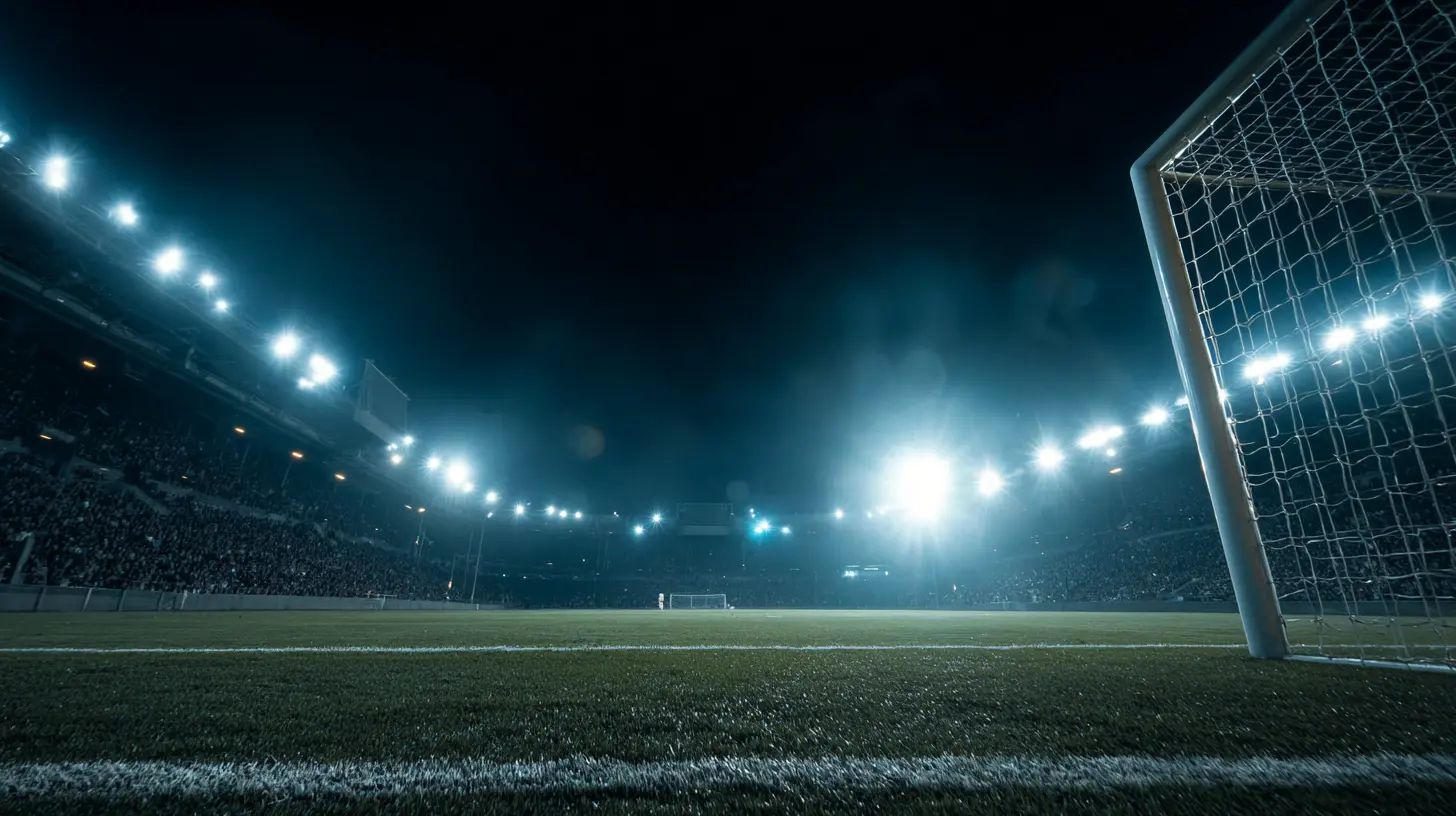
The Three-Second Problem: Describing the Kick Itself
The hardest craft skill in shootout coverage is describing the kick in a way that is fast, accurate, and vivid without being overwrought. Most descriptions fail in one of two directions.The first failure is the generic template: "He steps up... he scores!" This tells the audience nothing they could not see, and it wastes the one moment where language can add value.
The second failure is over-description: a paragraph of prose about the run-up, the body shape, the keeper's stance, delivered after the ball has already been cleared from the net. By the time it lands, the next taker is walking forward.
The workable middle ground is a short, specific clause that captures the decisive detail: the direction, the height, the keeper's movement, and the outcome. For example, a low drive to the keeper's right that he gets a hand to but cannot keep out is a different story from a clipped effort down the middle after the keeper dives early. Those two sentences carry real information: placement, power, and the keeper's read. That is what audiences remember and what analysts quote later.
A practical discipline for live text and broadcast alike: decide the key detail before the kick. Is this taker known for power or placement? Has the keeper been going early? Knowing the likely storylines lets you confirm or reject them in the half second after contact rather than starting from scratch.
Reading the Keeper and the Taker Without Overclaiming
Punditry around penalties is full of confident claims that do not survive scrutiny. "He always goes to his left." "The keeper knew where it was going." Sometimes those statements are true, but live coverage should be careful about asserting intent.What you can state as fact: where the ball went, how the keeper moved, whether contact was made, and the outcome. What you should frame as observation or possibility: whether the keeper guessed, read the taker's body shape, or was following a pre-match plan. Keepers and takers operate on a mix of preparation, pattern recognition, and instinct, and the split is rarely knowable in the moment.
This matters for trust. Audiences are increasingly literate about the sport. A commentator who says "the keeper went early and committed" is describing visible behavior. One who says "the keeper knew exactly where it was going" is inventing a mental state. The first builds credibility. The second invites correction.
The same caution applies to takers. A missed penalty is not automatically a choke, and a scored one is not automatically composure. The ball hitting the post is a matter of centimeters. Coverage that moralizes every outcome as character will read as lazy to anyone who has watched enough shootouts to know how much variance is involved.
Managing the Pauses: Where Most Coverage Loses Its Audience
The gaps between kicks are where coverage either earns its keep or bleeds attention. A shootout has natural pauses of thirty to ninety seconds, and audiences fill them with their own reactions. Your job is to give them something worth returning to.Three techniques work well.
Context, not repetition. Use the pause to add a layer the viewer does not have: the taker's record from the spot this season, the keeper's save rate, the historical weight of the moment for the club, the tactical reason this player is taking the fifth kick rather than the first.
Preparation for the next kick. Tell the audience who is next and what is at stake for them. "If this goes in, the pressure swings entirely to the other side" is simple, useful, and keeps people watching.
Controlled silence. In broadcast, not every pause needs filling. A good commentator knows when to let the crowd and the tension do the work. In live text, the equivalent is a short, clean update rather than a wall of speculation.
What does not work: recapping what just happened in detail, re-litigating the previous kick, or filling the pause with generic atmosphere language. The audience saw the kick. They do not need it described twice.
The Rules and Technicalities That Trip Up Live Coverage
Several shootout rules are routinely misdescribed in live coverage, and each one is worth drilling until it is automatic.The keeper must have at least part of one foot on or in line with the goal line when the ball is struck. Enforcement varies, and VAR involvement in shootouts depends on the competition. Coverage should describe what the referee and technology did, not assert what should have happened.
Encroachment by outfield players can force a retake if it affects the outcome. This is rare but it happens, and live coverage that has never considered it will scramble badly when it does.
A player who has already taken a kick cannot take another until every eligible teammate has taken one. In sudden death, this rule shapes the order, and coverage that ignores it will misstate who can step up next.
The shootout is a separate competition for record-keeping purposes. Goals scored in a shootout do not count toward a player's career goal tally in the way match goals do. This is a common error in live posts and one that gets screenshotted and mocked.
Injuries and substitutions during the shootout are tightly restricted. If a taker is injured, the rules on replacement are specific and competition-dependent. Do not improvise.
Data, Graphics, and the Temptation to Overload
Modern broadcasts have access to rich shootout data: conversion rates by placement zone, keeper dive tendencies, historical head-to-head records from the spot. Used well, this data adds genuine insight. Used badly, it buries the drama.The rule of thumb: one data point per pause, maximum. A graphic showing the taker's placement history is useful before the kick. A screen full of numbers during the run-up is noise. The audience is watching the player, not the dashboard.
There is also a timing issue. Data that arrives after the kick is worthless for the live moment but valuable for the post-match analysis. Route it accordingly. Do not let the analyst's material leak into the live commentary at the wrong moment.
Social, Clips, and the Speed Versus Accuracy Trade-Off
Social coverage of a shootout is a different discipline from broadcast or live text, and the trade-offs are sharper.Speed wins attention. The first accurate clip of the decisive penalty will outperform every later version. But speed without verification produces errors that travel further than corrections. The workable approach is to define, in advance, what can be posted on sight and what needs a check. A goal is visible and can be posted immediately. A red card, a rule controversy, or a claim about who is taking the next kick needs a beat of verification.
Clip selection matters too. The most valuable clip is not always the goal. The keeper's save, the reaction of the bench, the taker's walk back to the center circle, these often carry more emotional weight and are less likely to be saturated across every outlet within seconds.
One more point on social: the scoreline discipline from earlier applies with double force. Pin the correct shootout score, update it before every post, and never let a scheduled post fire with stale numbers.
Common Mistakes and How to Avoid Them
A short, practical checklist drawn from the failure modes above:- Confusing the shootout score with the match score.
- Describing a kick before confirming the outcome, then having to walk it back.
- Asserting keeper intent or taker mentality as fact.
- Misstating who is eligible to take the next kick.
- Filling every pause with repetition instead of context.
- Overloading graphics during the run-up.
- Publishing social posts faster than the verification process allows.
- Forgetting that sudden death changes the mathematics entirely.
None of these are exotic. They are the everyday errors of live coverage, and they are avoidable with preparation and discipline.
What Good Coverage Actually Looks Like
The best real-time shootout coverage feels calm. It is fast without being frantic, specific without being pedantic, and emotional without being uncontrolled. It tells the audience what happened, why it mattered, and what comes next, in that order, every time.That calm is not an accident. It comes from a stack that works, a rules reference that is current, a scoreline owner who is unambiguous, and a craft discipline around the three-second moment of the kick. Get those right and the chaos on the pitch becomes the story, not the coverage.
The crossbar, the post, the keeper's fingertips, the ball rolling agonizingly over the line. Those are the moments audiences will remember. Your job is to be ready for them before they happen, not to describe them after.
all images in this post were generated using AI tools
Category:
Live CommentaryAuthor:

Easton Simmons
Discussion
rate this article
1 comments
Fatima Wolf
What a nail-biter! The suspense of those penalty kicks kept everyone on edge. Crossbar hits added to the drama, making it a memorable showdown.
October 30, 2026 at 5:49 AM