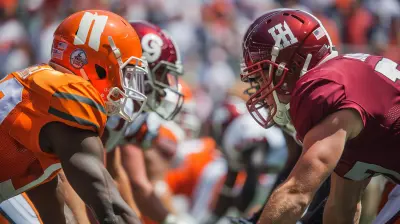
What Made the 2027 World Cup Semifinal Truly Magical
11 October 2026
Some matches end and you forget them by the time you reach the parking lot. Others stay with you for decades, resurfacing every time the tournament rolls around. The 2027 World Cup semifinal belongs to the second category. It was not magical because of one thunderous goal or one viral celebration. It was magical because of how many separate forces, tactical, emotional, physical and cultural, collided on the same evening and produced something that felt bigger than a football match.
This piece is not a recap of the scoreline. It is an attempt to explain why that night worked the way it did, what made it different from the dozens of other knockout games we have watched, and what anyone involved in the game, from coaches to fans to young players, can take from it. If you want a list of goals, look elsewhere. If you want to understand why the match still lives in people's heads, keep reading.

The Setup: Why This Semifinal Carried Unusual Weight
Semifinals are strange animals. They are not finals, so they do not get the full ceremonial treatment. But they are often better matches, because both teams still believe they can win the whole thing and play with a freedom that finals sometimes smother. The 2027 edition arrived with a specific set of conditions that raised the stakes beyond the usual.First, the bracket had produced two teams with genuinely contrasting identities. One side had built its tournament on patient possession, rotating the ball through midfield and waiting for the opponent to make a mistake. The other had built its run on aggressive pressing, quick transitions and a willingness to defend deep when needed. This was not a clash of similar styles. It was a clash of philosophies, and everyone knew it going in.
Second, the host nation had been eliminated in the quarterfinal a few days earlier. That sounds like a negative, but it changed the emotional temperature of the semifinal. With the home team gone, the stadium crowd was no longer split along local lines. Instead, it filled with neutrals, traveling supporters and people who simply wanted to witness something memorable. That kind of crowd behaves differently. It reacts to quality rather than allegiance, and it amplifies every moment of skill.
Third, several key players were playing what might have been their last World Cup match at peak level. That added a layer of urgency that you cannot manufacture. When veterans know the window is closing, they play with a concentration that is almost visible.

The Tactical Chess Match That Nobody Expected
Most people predicted a cautious first half. They got the opposite. Both coaches made bold choices in the opening twenty minutes, and those choices shaped everything that followed.The Pressing Trap and How It Was Set
The pressing team did something clever. Instead of pressing high from the first whistle, they sat in a mid block and invited the possession team to play out from the back. On the surface, this looked passive. In reality, it was a trap. The possession team's fullbacks pushed high, as they always do, and the pressing team waited for the ball to reach a specific zone near the touchline before triggering a coordinated swarm.Why did this work? Because pressing is not about running more. It is about running at the right moment. A press that starts too early wastes energy and leaves gaps. A press that starts too late never wins the ball. The 2027 semifinal was a masterclass in timing the trigger. Every time the ball moved into that zone, three players converged, the nearest passing lanes were cut, and the possession team was forced into a hurried clearance.
The trade-off was obvious. Sitting in a mid block means conceding territory. If the possession team had been more patient and simply circulated the ball sideways for ten minutes, the pressing team would have grown frustrated and stepped out, opening space behind. But patience is hard when the crowd is roaring and the stakes are enormous. That is the psychological dimension of tactics that stat sheets never capture.
The Possession Team's Adjustment
Around the twenty-fifth minute, the possession team changed something subtle. Their deepest midfielder started dropping between the two center backs, essentially creating a back three in buildup. This gave them an extra passing option and made the pressing trap harder to execute, because there was always a free man behind the first line of pressure.This is a standard solution, but the execution mattered. The midfielder did not just drop and stand there. He dropped, received, and immediately played forward into the half spaces. That forward pass is what broke the press. Once the ball was past the first line, the pressing team had to scramble, and scrambling teams commit fouls.
The lesson here is simple and often ignored. Beating a press is not about dribbling past three players. It is about creating a numerical advantage in the area where the press is happening. One extra player in the right spot changes everything.

The Moments That Turned a Good Match Into a Great One
Tactics set the table. Moments decided the meal. Three specific sequences elevated this semifinal from a well played contest into something people will talk about for years.The Save in the 58th Minute
There is a category of save that is not just athletic but intelligent. In the 58th minute, the pressing team won the ball high and broke forward with a three on two advantage. The striker received the ball at the edge of the box, shifted onto his stronger foot and struck low toward the far corner. The goalkeeper, who had been moving the wrong way, adjusted mid stride, extended his trailing leg and deflected the ball onto the post.What made this save special was not the reflex. It was the reading of the situation two seconds earlier. The goalkeeper had noticed his defender was beaten and had already begun to narrow the angle before the shot came. That anticipation is what separates elite keepers from good ones. You cannot teach reflexes at that level. You can teach positioning, and positioning is what gave him a chance.
The Substitution That Changed the Game
Coaches get praised for substitutions when the substitute scores. That is lazy analysis. The more interesting substitution in this match happened around the seventieth minute, and it had nothing to do with scoring.The possession team brought on a winger who was not particularly fast but was exceptionally good at holding the ball under pressure. On paper, this looked like a defensive move. In practice, it was an attacking one. By keeping the ball in wide areas and drawing fouls, the winger allowed his team to push up as a unit, waste time in the opponent's half and force the pressing team to defend in their own third for extended stretches.
This is a principle worth remembering. Sometimes the best way to relieve pressure is not to defend better but to make the opponent defend. Possession in the right areas is a defensive tool.
The Final Ten Minutes
The last ten minutes of this semifinal were chaotic in the best way. Both teams abandoned structure. Fullbacks pushed forward without cover. Midfielders sprinted past strikers. The game became a series of transitions, each one capable of producing a goal.Why does this happen? Fatigue is part of it. But the bigger factor is psychological. When players sense the match is slipping away, they stop trusting the system and start trusting instinct. This can be beautiful or disastrous, sometimes both in the same minute. In this case, it produced two clear chances at each end and a sequence of defending that bordered on desperate.
The reason this chaos felt magical rather than sloppy is that both teams were still trying to win. Nobody parked the bus. Nobody settled for penalties. That willingness to risk losing in order to win is what fans remember.

The Human Element: Stories Behind the Shirts
Tactics and moments matter, but they do not explain why people cried in living rooms across multiple continents. The human stories did that.The Captain Playing Through Injury
Word emerged after the match that one captain had been carrying a hamstring strain for most of the knockout stage. He had trained sparingly, received treatment daily and played only because his team had no adequate replacement. Watching the match back, you can see it. He was half a step slower than usual, and he compensated by positioning himself better than anyone else on the pitch.This is not a recommendation. Playing through injury can end careers, and most medical staff would advise against it. But it is a reminder that elite athletes operate in a different psychological space. The calculation is not just about risk. It is about legacy, duty and the knowledge that this chance may never come again. Whether that is admirable or reckless depends on your perspective. Both views have merit.
The Young Player Who Did Not Blink
On the other side, an uncapped twenty year old started the match and played like he had been there a hundred times. He did not hide from the ball. He demanded it in tight areas. He made one mistake early, gave the ball away, and then spent the next eighty minutes making sure it did not happen again.What makes a young player ready for a stage like this? Coaches talk about temperament more than talent at this level. Talent gets you into the squad. Temperament gets you through the match. The ability to forget a mistake, to reset emotionally within seconds, is what separates players who rise in big games from those who shrink.
Why the Atmosphere Felt Different
Crowd energy is hard to quantify, but anyone who was there or watched on television felt it. Several factors combined to create it.The neutral crowd was one. When fans do not have a dog in the fight, they cheer for the game itself. They applaud good defending. They gasp at near misses. That creates a feedback loop where players feel rewarded for quality rather than for partisanship.
The kickoff time was another. It was an evening match, which meant the stadium filled gradually and the noise built organically rather than arriving all at once. Evening matches also tend to produce better football because players are not dealing with peak heat.
And the sound design of the stadium mattered more than people realize. A compact, steep sided ground traps noise and sends it back onto the pitch. Players describe it as a wall of sound. That pressure can lift a tired team in the final minutes or rattle a nervous one.
Common Misconceptions About Matches Like This
Whenever a game is labeled magical, lazy narratives follow. It is worth pushing back on a few of them.Misconception one: The better team won. Semifinals rarely produce a clear better team. They produce a team that executed better on the night. The margins are tiny, often one save or one substitution. Over a seven game series, the result might flip. That is not a flaw. It is the nature of knockout football.
Misconception two: Tactics decide everything. Tactics create the conditions. Players decide the outcome. A perfect game plan fails if a defender slips or a striker scuffs a shot. Coaches know this better than anyone, which is why they talk about "moments" so often.
Misconception three: Chaos at the end means the teams lost discipline. Chaos at the end usually means both teams understood the situation correctly. A draw was not enough for either side. Pushing forward was the rational choice, even if it looked reckless.
What Coaches and Players Can Take From This Match
If you are involved in the game at any level, this semifinal offers practical lessons that transfer beyond the elite stage.Practice pressing triggers, not pressing effort. Running more is not the answer. Identify the specific pass or touch that signals the press, and rehearse it until it is automatic.
Build in a numerical advantage during buildup. One extra player behind the first line of pressure solves most pressing problems. It can be a midfielder dropping or a fullback tucking in. The shape matters less than the number.
Use possession as defense. When you are under pressure, keeping the ball in the opponent's half is more effective than dropping deep. It requires players who can hold the ball under contact, so recruit and develop them.
Prepare players emotionally, not just physically. The ability to reset after a mistake is trainable. Visualization, breathing routines and honest conversations about pressure all help.
Trust the bench. Substitutions are not just about fresh legs. They are about changing the problem the opponent has to solve.
What Fans Should Watch For Next Time
If you want to appreciate a match at this level, stop watching the ball for a few minutes. Watch the players away from it. Watch the midfielder who drops between the center backs. Watch the winger who tucks inside to create a passing lane. Watch the goalkeeper's positioning before the shot arrives.The magic of the 2027 semifinal was not in the highlight reel. It was in the details that most cameras miss. The angles, the timing, the small decisions that added up to something unforgettable. Once you start seeing those details, every big match becomes richer.
The Legacy of a Night Like This
Tournaments are remembered for their finals, but they are loved for their semifinals. The final is often tense and cautious. The semifinal is where teams take risks, where careers are made, where the football itself becomes the story.The 2027 World Cup semifinal mattered because it gave us all of that in one evening. It gave us a tactical battle worth studying. It gave us individual moments worth replaying. It gave us human stories worth telling. And it gave us a reminder of why this sport holds so many people in its grip, even when their own team is not on the pitch.
Years from now, when the next World Cup comes around, someone will bring up this match. They will not remember every pass. They will remember how it felt. That is the highest compliment a football match can receive.
all images in this post were generated using AI tools
Category:
Historic MatchesAuthor:

Easton Simmons