When Strategy Trumped Power in the 2026 Grand Slam Final
18 October 2026
The 2026 Grand Slam final will be remembered less for the winners struck and more for the winners chosen. On a night when the bigger hitter had every physical advantage, the title went to the player who treated the match as a problem to be solved rather than a contest to be survived. That distinction sounds small. It decides championships.
This article breaks down how that final was won, why the approach worked, where it can fail, and what players, coaches, and serious fans should take from it. The lessons apply far beyond one match. They apply to anyone who has ever walked onto a court against an opponent who hits harder, serves bigger, or simply looks more imposing in the warmup.
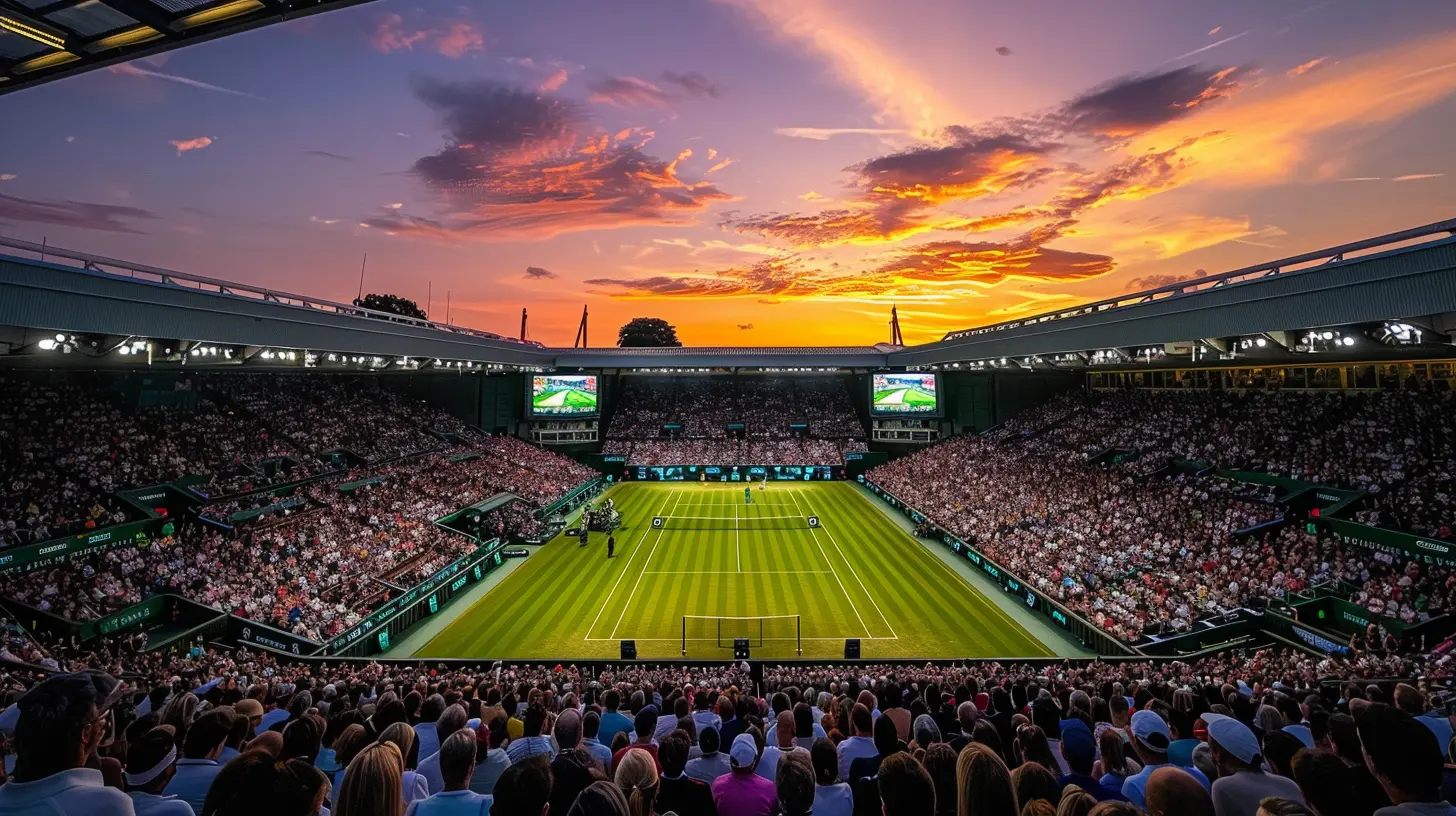
The Core Premise: Power Is a Tool, Not a Plan
Power wins points. It does not win matches on its own. That is the central truth of the 2026 final.The player who lost the final, let us call him the power baseline, did what power baselines do. He served at extreme speeds, looked to end rallies in three or four shots, and dictated whenever he got a neutral ball. On paper, that should have been enough. It usually is against most of the draw.
But a final is not most of the draw. A final is a single opponent who has had two weeks to study you, and a coaching team that has spent those two weeks finding the one pattern that bothers you most. Power is predictable in a way that strategy is not. A 220 km/h serve is a known quantity by the time you reach a final. A server who suddenly changes placement, spin, and tempo on the same toss is not.
The winner understood this. Instead of trying to outhit a bigger opponent, he built a match around three questions:
- Which shots does my opponent actually dislike, not just struggle with?
- How do I make him hit those shots more often than his favorites?
- How do I stay patient enough to accept short-term losses for long-term gains?
Every decision in the match flowed from those questions. That is what strategy means in practice. It is not a motivational word. It is a set of choices made before the first ball and adjusted during the match.

Why the Bigger Hitter Lost: The Mechanics of Predictability
It is worth being precise about why power alone failed, because the reasons are not obvious to everyone watching.First, power depends on time. A big hitter needs a certain rhythm to load and unload. Take away half a second and the same swing produces a shank, a mistimed ball, or a defensive push. The winner in 2026 did exactly that. He varied the pace of his shots deliberately, mixing heavy topspin with flat drives and the occasional slice that stayed low. The power baseline never got the same ball twice in a row, so he never got comfortable.
Second, power depends on position. A player who is stretched wide cannot hit through the court, no matter how strong he is. The winner's serve placement, not serve speed, was the story. He served into the body on big points, jammed the forehand, and opened the court only when the returner had already committed. The result was that the big hitter was constantly hitting from awkward positions, and even his best shots landed short enough to be attacked.
Third, power depends on confidence. When a big hitter misses two or three aggressive shots in a row, the natural instinct is to pull back. When he pulls back, he loses the very advantage that makes him dangerous. The winner understood this cycle and fed it. He made the big hitter play one extra ball, then another, until the aggressive shot became a low-percentage gamble rather than a routine.
None of this required the winner to hit harder. It required him to think harder.
The Five Strategic Pillars of the Winning Performance
The final was not won by one clever trick. It was won by five overlapping decisions that reinforced each other. Understanding them separately is useful, but understanding how they connect is what makes the approach transferable.1. Serve Placement Over Serve Speed
The winner's first serve percentage was not spectacular, but his placement was ruthless. He targeted three zones with intent: the body, the backhand corner on the deuce side, and the wide slice on the ad side. He used the same toss for all three, which meant the returner could not read the serve early.Why this works: returners prepare based on patterns and cues. If the toss looks identical and the ball leaves the racket at similar speeds, the returner must wait longer to commit. That extra fraction of a second is the difference between a clean return and a defensive block.
When to use it: almost always, but especially against returners who like pace. Big hitters love rhythm. Deny them rhythm and they start guessing, and guessing returners make errors.
When not to use it: if your serve is genuinely weak, placement alone will not save you against elite returners. You still need enough pace to keep the returner honest. The goal is to make placement the priority, not to abandon power entirely.
2. Rally Length as a Weapon
The winner deliberately extended rallies. Not passively, by pushing the ball back, but actively, by choosing shots that made the next shot harder for his opponent. He hit deep, heavy balls to the middle of the court when he was out of position, then attacked the first short ball. He accepted that some rallies would end with him losing the point, because the cumulative effect was worth it.Why this works: long rallies tax the legs, the lungs, and the patience. A player built for short points is not built for a twenty-shot exchange. By the third set, the big hitter's movement had dropped a step, and a step is everything at the top level.
When to use it: against players whose fitness or patience is suspect, and against players whose shot selection deteriorates under fatigue. It is also useful when you are the less powerful player and need to neutralize the opponent's advantage.
When not to use it: if you are the one with the fitness problem, extending rallies is self-sabotage. Know your own tank before you try to empty someone else's.
3. Target the Second-Best Shot
Most scouting reports focus on the weakness. The winner in 2026 focused on something subtler: the opponent's second-best shot. The big hitter's forehand was lethal, his backhand was solid but not devastating. The winner spent the first set hitting to the backhand not to win points directly, but to force the big hitter to run around it. That run-around created space on the forehand side, which the winner then attacked with a serve or a first-strike return.Why this works: elite players protect their weakness. They do not protect their second-best shot nearly as well, because they do not think of it as a vulnerability. Exploiting that gap creates opportunities that the opponent has not rehearsed.
When to use it: against players with a clear hierarchy of weapons. It requires honest scouting and a willingness to lose a few points while you test the theory.
When not to use it: against players whose second-best shot is still better than your best shot. In that case, you need a different plan entirely.
4. Emotional Tempo Control
The winner controlled the pace of the match between points as deliberately as he controlled it during points. He took his time after lost points, resetting with a fixed routine, and he moved quickly after won points to deny the opponent a chance to regroup. This is not gamesmanship. It is match management.Why this works: tennis is a game of momentum, and momentum is influenced by rhythm. A player who rushes between points gives away free emotional energy. A player who controls the tempo forces the opponent to play at a pace they did not choose.
When to use it: always, but especially after a bad error or a lost game. The between-point routine is the cheapest reset available.
When not to use it: never, really, as long as you stay within the rules and do not delay excessively. The line between tempo control and time wasting is real, and crossing it costs you warnings and focus.
5. Risk Allocation by Score
The winner did not play the same way at 30-30 as he did at 40-0. He took calculated risks on the points that mattered and played high-percentage tennis on the points that did not. This sounds obvious. In practice, most players do the opposite. They play safe on big points and gamble on small ones, which is exactly backwards.Why this works: a point at 30-30 is worth more than a point at 40-0, because the next point changes the game's structure. Spending your risk budget on the points with the highest leverage is simple math that few players actually apply.
When to use it: in every match, at every level. The specific risks change, but the principle does not.
When not to use it: if you cannot execute your high-percentage patterns under pressure, the leverage calculation is academic. Build the patterns in practice first.
A Concrete Example: The Third-Set Game That Decided the Match
To see how these pillars combine, consider the game that effectively decided the final.The big hitter was serving at 4-4 in the third set. He had won the second set and looked in control. The winner had lost the second set partly because he had tried to match power with power, a mistake he corrected at the changeover.
On the first point, the winner returned from deep, aimed at the middle, and forced a rally. The big hitter won it with a forehand winner, but the rally lasted fourteen shots. On the second point, the winner stepped in and returned short and angled, drawing a weak reply that he put away. On the third point, he served to the body, jammed the return, and followed with a deep approach to the backhand. The big hitter ran around it and missed a forehand long. On the fourth point, the winner used a slow, high topspin ball to the backhand, then a flat drive to the forehand corner. The big hitter got there but could not do anything with it.
The game ended with a break. The big hitter had not played badly. He had simply been given a series of problems he had not prepared for, and the cumulative effect of those problems was a lost game.
That is what strategy looks like in real time. It is not a single heroic shot. It is a sequence of small, deliberate choices that add up to a structural advantage.
Common Mistakes When Trying to Play Strategically
The 2026 final offers a useful mirror for players who want to adopt a more strategic approach. The following mistakes show up constantly at every level, and they are worth naming directly.Mistake 1: Confusing Strategy With Caution
Strategy is not the same as playing safe. The winner in 2026 hit plenty of aggressive shots. The difference was that his aggression was chosen, not reflexive. Players who equate strategy with pushing the ball back are not playing strategically. They are avoiding decisions.Mistake 2: Over-Scouting and Under-Executing
A detailed scouting report is useless if you cannot execute the shots it demands. Many players spend hours analyzing opponents and minutes practicing the patterns those analyses require. The ratio should be reversed. Pick two or three patterns, practice them until they are automatic, then use them.Mistake 3: Abandoning the Plan Too Early
A strategic plan often looks worse before it looks better. You may lose the first set while testing a theory. Players who abandon the plan after one bad set never find out whether it would have worked. Give a plan at least a set to show signs of life, and adjust the details rather than discarding the whole approach.Mistake 4: Ignoring Your Own Strengths
Strategy is not only about exploiting weaknesses. It is also about creating situations where your strengths matter. A player with a great forehand should build patterns that put the forehand in play, not just patterns that avoid the opponent's weapons. The winner in 2026 did both.Mistake 5: Treating the Plan as Fixed
A plan is a hypothesis, not a contract. The winner adjusted his return position, his serve placement, and his rally length as the match unfolded. Strategy without flexibility is just another form of rigidity.
Misconceptions About Power and Strategy
Several beliefs about this topic are widely repeated and mostly wrong. It is worth correcting them, because they lead players toward bad decisions.Misconception: Power always beats strategy at the highest level. Reality: power and strategy are not opposites. The best players have both. The 2026 final was not a case of a weak player outsmarting a strong one. It was a case of a complete player choosing the right tools for a specific opponent. Strategy won because it was applied to a power advantage that was not complemented by tactical flexibility.
Misconception: Strategic players are defensive players. Reality: strategy is about control, not passivity. Some of the most aggressive players in the game are deeply strategic. They simply choose when to be aggressive rather than being aggressive all the time.
Misconception: You need elite technique to play strategically. Reality: strategy is available at every level. A club player who serves to the backhand on big points and varies rally length is already playing strategically. The tools are simpler, but the logic is identical.
Misconception: Strategy only matters in long matches. Reality: strategy matters most in short matches, because there is less time to recover from a bad plan. A best-of-three match rewards the player who solves the problem fastest.
Practical Advice for Players and Coaches
The 2026 final is a useful case study, but case studies only help if they translate into action. Here is how to apply the lessons in practice.Before the Match
- Identify one pattern you believe will bother your opponent and one pattern that plays to your strength. Build the match around those two.- Decide your serve placement priorities in advance. Do not leave placement decisions to feel.
- Set a rally-length target. If you want longer rallies, commit to it for at least a set.
- Prepare a between-point routine and practice it in training so it holds under pressure.
During the Match
- Track whether your plan is working in terms of point structure, not just score. You can lose points while winning the structural battle.- Adjust one variable at a time. Changing everything at once makes it impossible to know what worked.
- Use the changeover to reset emotionally, not to replay errors.
- Watch for signs of opponent frustration. They often appear before the scoreboard reflects them.
After the Match
- Review which patterns produced the outcomes you expected and which did not.- Note the moments when you abandoned the plan and why. Those moments are your real development targets.
- Carry forward one or two patterns into practice, not the whole plan. Depth beats breadth.
For Coaches
- Teach players to describe points in terms of structure, not just outcome. Ask what pattern they were trying to create, not just whether they won the point.- Build practice drills that reward decision-making, not just execution. A player who can hit a shot is not the same as a player who knows when to hit it.
- Resist the urge to simplify strategy into slogans. The nuance is the point.
Trade-Offs and Balanced Perspectives
It would be dishonest to present strategy as a universal answer. There are real trade-offs, and they deserve an honest hearing.The biggest trade-off is between control and pressure. A strategic player accepts longer rallies and more decision-making in exchange for a structural advantage. A power player accepts lower margins and shorter points in exchange for constant pressure. Neither approach is inherently superior. The right choice depends on the player's skills, the opponent, the surface, and the conditions.
A second trade-off is between preparation and adaptability. Heavy preparation gives you a plan, but it can also make you rigid. Light preparation keeps you flexible, but it can leave you without answers when the match turns. The best players prepare thoroughly and then hold their plans loosely.
A third trade-off is between short-term and long-term thinking. Strategy often costs points in the short term to gain games in the long term. Players who cannot tolerate short-term discomfort will struggle to play strategically, no matter how well they understand the theory.
What the 2026 Final Means for the Future of the Game
The 2026 final is unlikely to end the era of power tennis, and it should not. Power is still the most reliable way to win points, and the players who hit hardest will keep winning most of their matches. What the final showed is that power without tactical flexibility has a ceiling, and that ceiling is lower than many people assume.The more interesting question is what happens next. If the lessons of the final spread, we may see more players developing varied serves, more deliberate rally construction, and more sophisticated scouting. That would be good for the sport. It would reward creativity, patience, and problem-solving, which are the qualities that make tennis worth watching.
It would also raise the bar for power players. Hitting hard will no longer be enough on its own. The next generation of big hitters will need to develop the tactical awareness to protect their advantage, vary their patterns, and solve problems when their first plan fails. That is a higher standard, and it is a healthier one.
Final Thoughts
The 2026 Grand Slam final was not a story about a weaker player beating a stronger one. It was a story about a player who understood that a match is a series of problems, and that the player who solves more problems wins. Power is a solution to some of those problems. It is not a solution to all of them.The winner's advantage was not physical. It was structural. He made his opponent play the wrong shots at the wrong times, and he did it with patience, discipline, and a willingness to accept short-term losses for long-term gains. That is a skill, and like any skill, it can be learned.
The lesson for players is straightforward. Do not try to outhit everyone. Try to outthink them. The lesson for coaches is equally straightforward. Teach decision-making alongside technique, because technique without decisions is just a collection of tools waiting for a plan.
And the lesson for fans is the most satisfying one. The match was not won by the biggest shot. It was won by the best idea. That is a result worth remembering.
all images in this post were generated using AI tools
Category:
Historic MatchesAuthor:

Easton Simmons