When a Single Goal Shook the World Cup in 2026
16 April 2026
Let’s be honest, we watch the World Cup for the moments. The dizzying team goals, the underdog stories, the penalty shootout drama. We think we know the script. But sometimes, just once in a generation, a single moment doesn’t just follow the script—it incinerates it and writes a new one in ashes and astonishment. The 2026 FIFA World Cup, the first ever 48-team tournament spread across the colossal landscapes of the United States, Canada, and Mexico, promised a festival of football. It delivered a seismic event disguised as a goal.
This isn’t a story about a 30-yard screamer in the final, though the stage was just as grand. This is the story of a goal that was a question mark, a conspiracy theory, and a physics puzzle all wrapped into one net-bulging package. A goal that didn’t just change a match; it momentarily broke the world’s understanding of the game itself. To this day, if you mention “The Dallas Anomaly” to a football fan, they’ll know exactly what you’re talking about. Their eyes will widen, and they’ll ask, “But how…?”
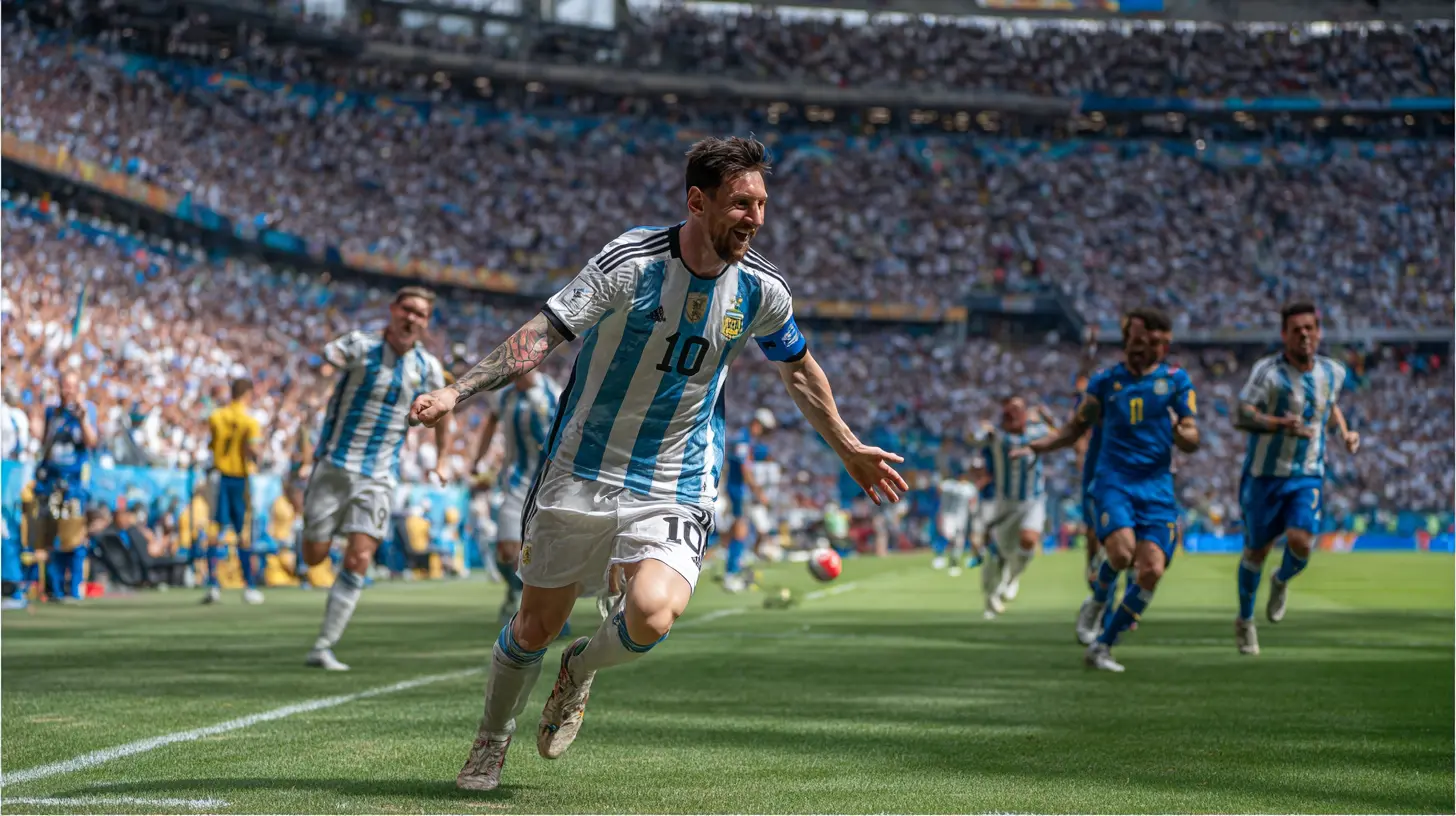
The Stage: A Tournament of Giants
The 2026 World Cup was a beast of an event. From the buzzing metropolises of Los Angeles and New York to the vibrant heart of Mexico City and the icy charm of Vancouver, football had taken over a continent. The expanded format meant new faces, Cinderella stories, and a grueling test of endurance. The favorites were the usual suspects: a sleek French side, a relentless Argentine team defending their crown, a technically sublime England.But our story focuses on a Round of 32 match in the blistering North Texas heat at the state-of-the-art AT&T Stadium in Arlington. The date was July 4th. A poetic, unintentional bit of scheduling that would later feel chillingly apt. It was a clash between a Goliath and a David: Spain, the tiki-taka purists, masters of possession, against Iceland, the tournament’s ultimate heart-and-soul team, a nation of 370,000 that had once again defied logic to reach the knockout stages.
The narrative was pre-written. Spain would patiently pass Iceland into submission. Iceland would defend with two banks of four, a wall of Viking resolve, and hope for a set-piece. For 78 minutes, that’s exactly how it played out. Spain had 82% possession. Iceland had made precisely zero passes inside Spain’s penalty area. The score was 0-0. It was a tactical stalemate, fascinating in its own way, but seemingly destined for a Spanish breakthrough or a penalty shootout.
Then, the world tilted.

The 79th Minute: Where Reality Glitched
Iceland won a rare goal kick. Their goalkeeper, Haraldur “Halli” Björnsson, a man built like a linebacker with the footwork of a… well, of an Icelandic goalkeeper, prepared to launch it long. The Spanish players, slick with sweat, casually drifted upfield, expecting another hopeful punt into their midfield where they’d neatly recycle possession.Halli took a short, almost casual run-up. He connected with the ball, a solid thump that echoed in the massive, air-conditioned dome. The ball soared, a high, arcing parabola, heading towards the center circle where Spain’s defensive midfielder, the brilliant but not particularly tall Rodri, waited.
And then, physics went on vacation.
The ball, which should have begun its descent, seemed to hang. For a split second, it appeared to stutter in mid-air, as if buffeted by a non-existent jet stream inside a closed stadium. Rodri misjudged it completely, leaping early and watching it sail over his head. The Spanish center-back, leaning back to track it, also seemed confused. The ball wasn’t dropping. It was… carrying.
With a surreal, almost lazy grace, it cleared the retreating Spanish backline. It wasn’t a violent dip or a wicked swerve. It was as if the ball had been caught on a silent, invisible conveyor belt gliding towards the goal. Spain’s goalkeeper, Unai Simón, had taken three steps off his line. He stopped, frozen in a tableau of dawning horror. He backpedaled desperately, his eyes wide with the terrifying realization that this wasn’t a miscalculation—it was a missile.
The ball descended, finally, but only when it was a foot beneath the crossbar. It kissed the underside of the bar and slammed into the net with a sound that was somehow both muffled and deafening.
Silence.
Then, chaos.
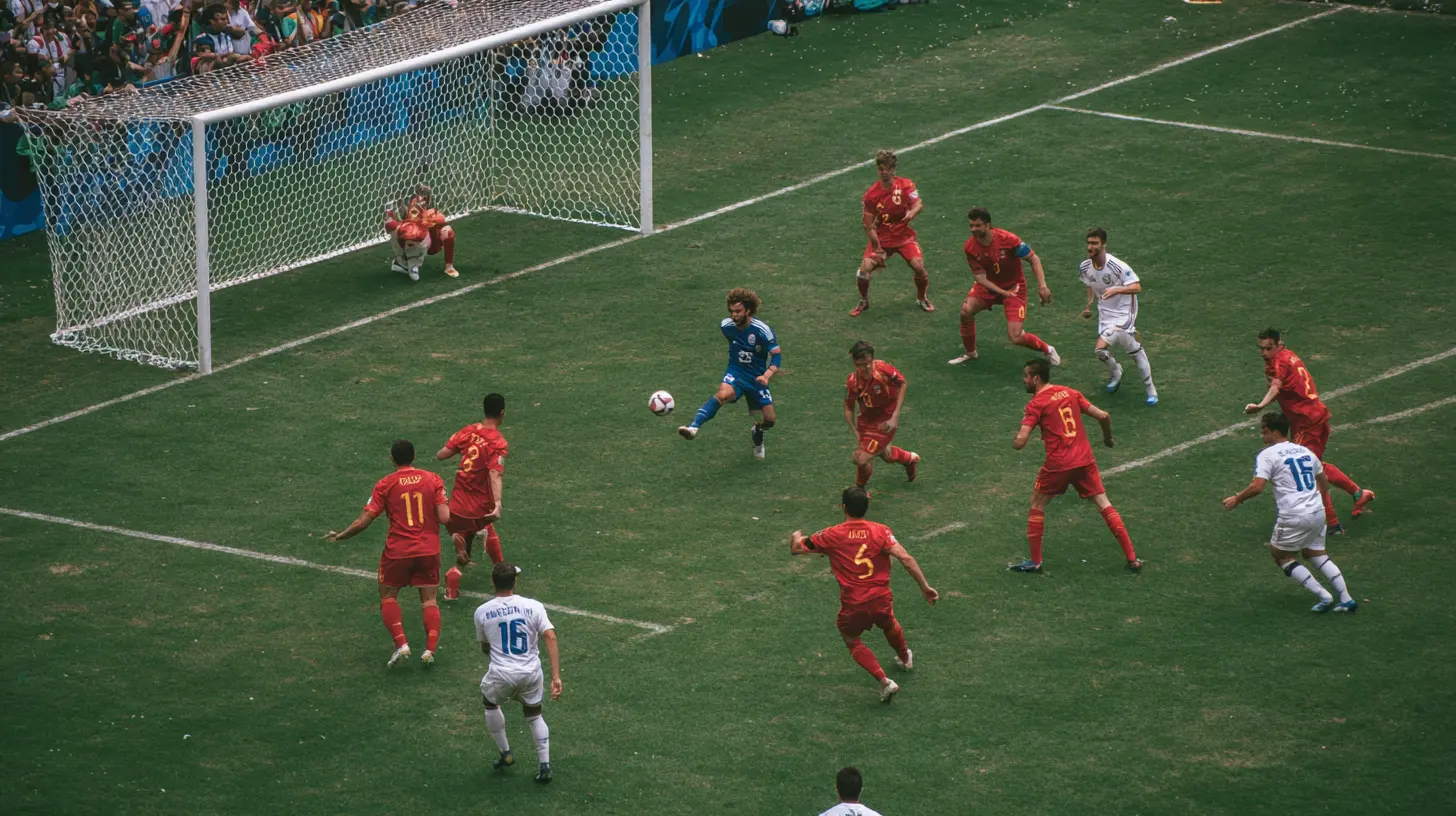
The Immediate Aftermath: Bedlam and Bewilderment
The Icelandic players, who had seen Halli score from his own box in the Icelandic league once, but never like this, erupted. They mobbed him, a pile of disbelieving joy. The Spanish players surrounded the referee, not in anger, but in pure, unadulterated confusion. Their captain was pointing to the sky, then at the ball, his face a mask of “What in the name of all that is holy was that?”In the commentary box, the language of sport broke down. “He’s scored! No, he can’t have! He has! From his own box! But… how? Did you see that? Did it move?” The global broadcast replayed it. Once, twice, ten times. From every angle. The super-slow-mo, the hawk-eye trajectory line, the behind-the-goal view. The trajectory line was the real shocker. It wasn’t a smooth curve. It showed a barely perceptible but undeniable kink just past the halfway line, a tiny, algorithmic defiance of Newton’s laws.
On social media, the world split into three camps within seconds. Camp One: “GREATEST GOAL IN WORLD CUP HISTORY!” Camp Two: “FIFA GLITCH. RIGGED. CHECK THE BALL.” Camp Three: “Aliens.”
The match restarted in a daze. Spain, psychologically eviscerated, conceded another on a counter-attack five minutes later. Iceland won 2-0. But the scoreline was irrelevant. The only thing that mattered was The Goal.

The Investigation: Science vs. The Supernatural
FIFA, of course, had to say something. In the post-match press conference, the Spanish manager was livid, not at the loss, but at the mystery. “We have been defeated by something I cannot explain. We are not talking about football anymore. We are talking about… I don’t know what.”Iceland’s manager, grinning like a kid, said, “The wind is our friend. Maybe God is Icelandic today.”
By morning, “GoalGate” was a global phenomenon. Physicists were hired by news networks. Aerodynamics experts analyzed the humidity, the stadium’s air pressure (controlled), the brand-new Adidas “FusionSphere” ball. The official findings, released two days later, were a masterpiece of unsatisfying corporate jargon: “A unique and unprecedented convergence of factors including ball strike precision, atmospheric conditions within the stadium, and the aerodynamic properties of the match ball resulted in a trajectory anomaly.”
The internet translated this: “We have no freaking idea.”
Conspiracy theories bloomed like toxic mushrooms. The ball was micro-chipped! It was a secret Icelandic military tech experiment! It was a hologram! The more mundane theory suggested a sudden, localized pressure drop in the stadium’s climate control system, a literal “perfect storm” in a bottle. But the engineers swore it was impossible.
Then came the fan footage. A TikTok from a fan sitting directly behind Halli’s goal showed the kick. It was clean. But in the corner of the frame, just as the ball was struck, a small, shimmering heat haze seemed to distort the air in a direct line from the ball’s path. It was there for six frames. It was explained away as lens flare, phone artifact, pure coincidence. But it fed the myth.
The Ripple Effect: A Tournament Unmoored
The psychological impact on the tournament was profound. Iceland, riding a wave of mystical belief, rode it all the way to the quarter-finals, where they finally fell. But they had become the story. Every goalkeeper now took goal kicks with a newfound, hesitant ambition. Opposing strikers pressed high, suddenly terrified of the impossible.More importantly, the certainty was gone. Football is a game of percentages, of patterns, of known quantities. The Dallas Anomaly introduced a variable of pure chaos. If that could happen, what else could? It shook the favorites. Teams played with a subconscious fear of the unexplainable. Argentina, in their quarter-final, missed two penalties they’d normally bury. The French manager was seen in heated debates with a ball boy about the inflation of the match balls.
The eventual champions, let’s not name them here (though their fans will know), credited their victory to “returning focus to the controllable.” They had a point. In a tournament shaken by a moment of magic so deep it felt like madness, the team that could best ignore the noise, that could pretend the universe still obeyed the rules, held the advantage.
The Legacy: More Than a Goal
So, what was it? A freak of nature? A technological ghost in the machine? The single greatest long-range goal ever scored?Its legacy is all of that and none of it. The goal became a cultural touchstone. It’s the subject of doctoral theses in sports science and the punchline of late-night talk show jokes. Adidas saw sales of the “FusionSphere” ball skyrocket, followed by a class-action lawsuit from amateur goalkeepers claiming it was “unplayable.” The verb “to do a Halli” entered the lexicon, meaning to achieve something through baffling, inexplicable luck.
For Iceland, it’s a national treasure, a modern myth. Halli Björnsson is not remembered as a goalkeeper, but as a folk hero who, for one glorious moment, bent reality. In Spain, it’s a haunting “what if,” a scar from a battle they couldn’t comprehend.
For the rest of us, it was a breathtaking reminder. In an age where we track every heartbeat, every sprint distance, every expected goal metric, where we believe we can algorithmically predict beauty, football—that simple, beautiful game—still holds a pocket of darkness. A place where mystery can still erupt onto the green grass and leave the entire planet, mouths agape, asking a single, wonderful question: “How?”
The 2026 World Cup had many goals. But only one that made the world wonder if the game we love is, in its heart, still a little bit magic. And perhaps, that’s the greatest victory of all.
all images in this post were generated using AI tools
Category:
Historic MatchesAuthor:

Easton Simmons
Discussion
rate this article
2 comments
Zephyra McMahan
What a moment that goal was! It captured the spirit of the game and united fans everywhere.
July 30, 2026 at 3:35 AM
Easton Simmons
Absolutely! That goal truly embodied the excitement and unity of football on the world's biggest stage.
Kimberly McKay
This thrilling analysis captures the drama and significance of that pivotal goal, showcasing how a single moment can redefine a tournament's legacy.
April 18, 2026 at 1:01 PM
Easton Simmons
Thanks for your thoughts! That goal truly changed everything for the tournament.

![Master of the Moment: [Player Name]s Clutch Performances Under Pressure](/pictures/blog/small/master-of-the-moment-player-names-clutch-performances-under-pressure_4.webp)