Tracking the Tactics – Live Analysis of Rugby’s Top Tier Clash
9 August 2026
Rugby at the highest level is not a game of random chaos. It is a chess match played at full sprint, where every pass, kick, and defensive line carries a weight that most casual viewers never notice. When two top-tier sides meet, the difference between victory and defeat often comes down to tactical adjustments made in the first twenty minutes, not the final twenty. This article breaks down how to watch a live match like a coach, what to track in real time, and why certain patterns keep repeating across the sport's elite contests.
The Pre-Match Chessboard: What Happens Before Kickoff
Most fans tune in at kickoff, but the tactical battle starts hours earlier. The team sheet is the first clue. Look beyond the names and check the bench composition. A 6-2 split between forwards and backs on the bench signals a forward-dominated, attritional game plan. A 5-3 split suggests the team expects an open, expansive match and wants backline cover for injuries. This is not trivial. The bench dictates how the game will be managed in the final quarter.Warm-ups also reveal intent. Watch how the fly-half practices his kicks. Is he drilling high contestable bombs or low, long territorial clears? That tells you whether his team wants to force errors in the air or pin the opposition deep. The scrum-half's passing rhythm matters too. A fast, flat pass suggests quick ball and attacking the line. A slow, looping pass hints at a more conservative, kick-heavy approach.
Another pre-match indicator is the captain's coin toss choice. Teams that win the toss and choose to receive often want early possession to build pressure. Teams that choose to kick off usually back their chase and defensive shape. It sounds minor, but it reveals the psychological stance of the side.
First Twenty Minutes: Reading the Opening Gambits
The opening quarter is not about scoring. It is about gathering information. The best teams use the first ten minutes to test the referee's interpretation of the breakdown and the offside line. You will see repeated carries into the same channel, not because the attacking team expects to score, but because they are probing the defensive alignment and the referee's patience at the ruck.Watch the defensive line speed. If the defending side rushes up quickly and aggressively, the attacking team will need to adjust by kicking earlier or using short passes. If the defense sits off, the attack can run harder lines and commit more numbers to the breakdown. This is the first tactical read of the match, and it often dictates the next forty minutes.
The scrum is another early indicator. A dominant scrum in the first fifteen minutes is not just about winning penalties. It is about establishing psychological control. The team that knows it can win a penalty at scrum time will often choose to scrum instead of taking a quick tap. This slows the game, frustrates the opposition, and forces them to defend more sets. Conversely, a team that struggles in the scrum early will try to avoid it, kicking the ball out or taking quick penalties to keep the ball in play.

The Breakdown Battle: Where Games Are Won and Lost
The breakdown is the most misunderstood area of rugby. Casual fans see a pile of bodies and assume it is just a fight for the ball. In reality, the breakdown is a contest of timing, angles, and legal body positioning. The key metric to track is the speed of the ball at the ruck. A ruck that produces the ball in under two seconds is a fast ruck. Over three seconds is slow. The difference changes everything.When a team gets quick ball, the defense has to scramble to reset their line. That creates gaps. When the ball is slow, the defense has time to realign, set their pillars, and communicate. The attacking team then has to rely on individual brilliance or a mistake from the defense.
Watch how the attacking team clears out the ruck. Are they committing one player or two? One player means they are keeping numbers in the backline for a wider attack. Two players means they are prioritizing quick ball over width. Neither is always right. It depends on the field position and the defensive shape. Inside your own half, committing two players to the ruck is often wasteful because the chance of scoring from deep is low. Inside the opposition twenty-two, committing two players is standard because the defense is compressed and quick ball is the only way to create an overlap.
The jackal attempt is another thing to track. A player going for the turnover is a gamble. If he commits and fails, his team is down a defender for the next phase. If he succeeds, he has just won his team possession and momentum. The best jackals are not the biggest players. They are the ones with low body height, strong core stability, and the discipline to keep their hands off the ground until the tackle is complete. Watch for the tackler's release. Most penalties at the breakdown come from the tackler not rolling away, not from the jackal's hands.
The Kicking Game: Territory vs. Possession
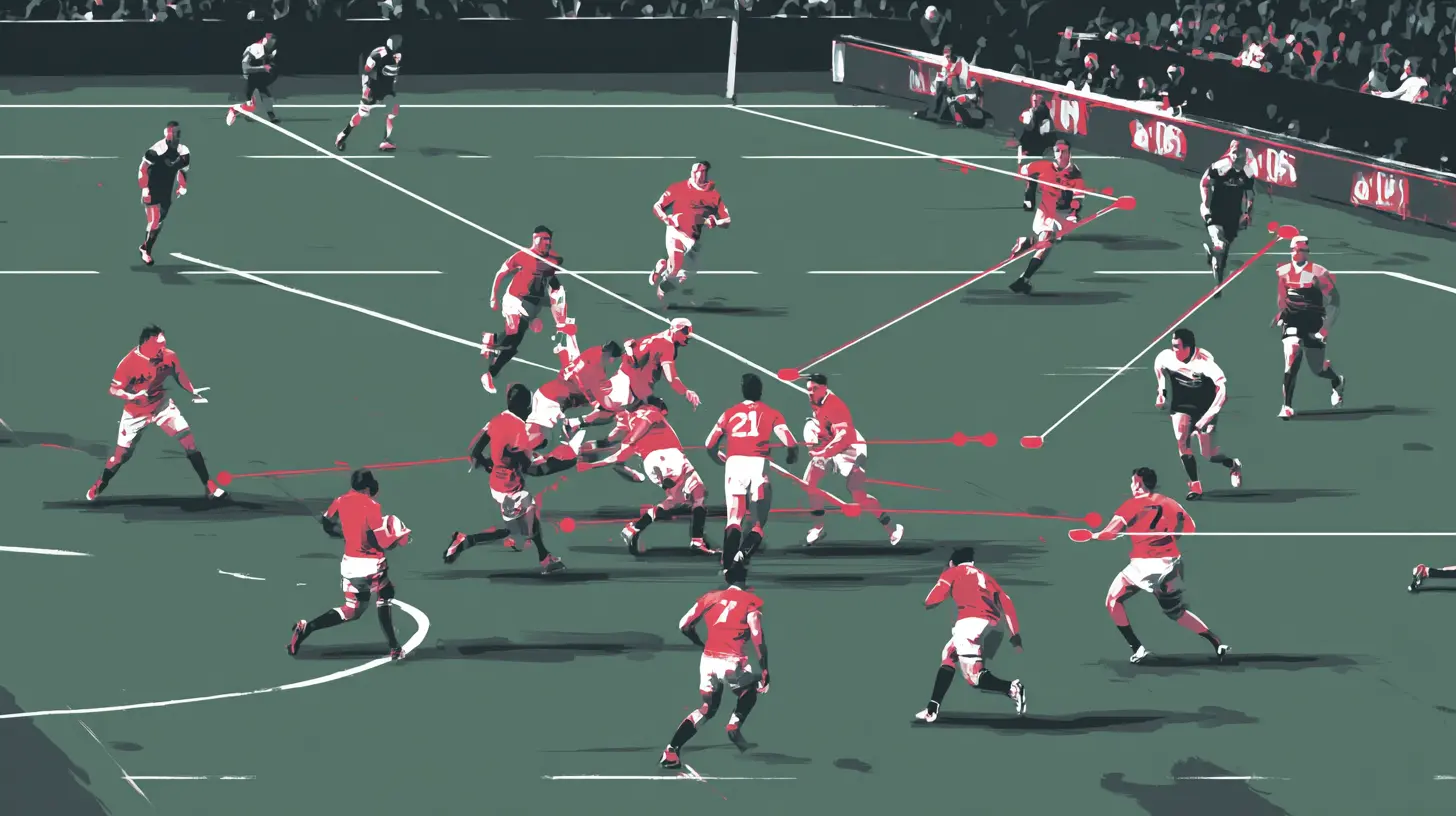
Modern rugby is obsessed with possession stats, but the kicking game is where the real tactical nuance lives. There are three types of kicks in elite rugby: contestable, territorial, and attacking. Each serves a different purpose, and the best teams use all three at the right moments.A contestable kick is a high, hanging ball that gives the chasers time to contest in the air. It is used to put pressure on the opposition's back three and force them to make decisions under physical duress. The trade-off is that if the kick is too long or too short, the opposition gets easy possession with time to counterattack. Contestable kicks are best used in the opposition's half, where a failed contest still leaves you in a good defensive position.
A territorial kick is a long, low punt aimed at the corners. It is not designed to be caught by your own team. It is designed to pin the opposition deep and force them to play out of their own half. These kicks are most effective when the opposition's back three are weak under the high ball or when the wind is in your favor. The downside is that you are giving away possession. If your chase is slow, the opposition can run it back with interest.
An attacking kick is a grubber, chip, or cross-field kick designed to create a try-scoring opportunity. These are high-risk, high-reward. They work best when the defense has compressed in the midfield and the space is behind them. The key is timing. An attacking kick attempted too early in the phase count gives the defense time to adjust. Attempted too late, the defense has already read it. The best attacking kicks come after at least four or five phases, when the defense has committed numbers to the breakdown and the backfield is vulnerable.
Defensive Systems: Blitz, Drift, and the Rush
Elite defenses are not just about tackling hard. They are about organized pressure. There are two main defensive systems in professional rugby: the blitz and the drift. The blitz involves the outside backs rushing up quickly to cut off the attacking time and space. The drift involves the defense sliding across to cover the width, forcing the attack to go sideways.The blitz is aggressive and can force errors, but it is vulnerable to the chip kick and the short pass behind the rushing line. The drift is safer and covers more ground, but it allows the attack to gain ground with simple, direct carries. The best teams mix both, depending on the down and distance, the attacking team's tendencies, and the referee's interpretation of the offside line.
A key defensive metric to track is the tackle completion rate, but not in the way you think. A team can have a 90 percent tackle completion rate and still lose because the ten percent they missed were line breaks. The real question is not how many tackles are made, but where they are made. If a team is consistently making tackles five meters behind the gain line, they are on the back foot. If they are making tackles at or beyond the gain line, they are winning the collision.
The rush defense is a specific type of blitz where the entire line moves up together. It is most effective against teams with a slow, predictable fly-half. However, it is vulnerable to the cross-field kick and the dummy pass that sends the defense one way while the attack goes the other. The rush defense requires exceptional fitness and communication. If one player fails to push up, the entire line is compromised.
The Fly-Half's Role: The Tactical Brain
The fly-half is the on-field coach. Every decision he makes is a tactical choice. Watch how he positions himself relative to the forwards. If he stands deep, he is giving himself time to kick or pass. If he stands flat, he is attacking the line and committing the defense. There is no right or wrong, but there is a reason behind every choice.A fly-half who takes the ball to the line early in the match is testing the inside center's defense. If he gets through or forces a penalty, he will keep doing it. If he gets smashed, he will start passing earlier or kicking more. The best fly-halves are not the ones with the biggest boot or the fastest pass. They are the ones who read the defense's alignment and make the right decision consistently.
Watch for the fly-half's body language after a mistake. Does he get frustrated and try to force a big play? Or does he reset and go back to basics? This is a huge indicator of mental resilience. The teams that win tight matches are the ones whose fly-half stays calm and sticks to the game plan, even when things are not going well.
The Impact of the Bench: How Substitutions Change the Game
The bench is not just for replacing tired players. It is a tactical weapon. The timing of substitutions is a studied art. Bringing on a fresh, aggressive prop in the fifty-fifth minute can change the scrum dynamic completely. Bringing on a fast, elusive back in the sixtieth minute can exploit a tiring defense.The most common mistake fans make is thinking that substitutions are only made when a player is injured or exhausted. In reality, coaches often hold substitutions until the opposition's key players are visibly fatigued. Watch the body language of the opposition's tight five around the sixty-minute mark. If their shoulders are dropping and their movement is slowing, that is the signal for the coach to unleash the bench.
The 6-2 bench split is becoming more common because it allows a team to maintain forward dominance in the final quarter. The trade-off is that if a back gets injured early, the team is left with no specialist backline cover and has to reshuffle. This is a gamble that coaches are increasingly willing to take, especially in matches where the forward battle is expected to be decisive.
Common Misconceptions in Live Analysis
One of the biggest misconceptions is that the team with more possession and territory is always winning. This is not true. A team can dominate possession and still lose because they are not converting that possession into points. A team can have very little territory but win because they are scoring from counterattacks and penalties. The only stat that matters is the scoreboard.Another misconception is that a yellow card always swings the game. It can, but only if the team with the numerical advantage uses it correctly. Many teams fail to score during a yellow card period because they get too conservative or too greedy. The best teams use the extra man to create an overlap on the wide channels, not to grind through the middle.
A third misconception is that the team with the faster backs will always win in the open field. Speed is important, but it is only useful if the ball can get to the fast players in space. A team with moderate speed but excellent passing and support lines will beat a faster team that has poor ball retention and decision-making.
Real-World Tactical Examples from Recent Top Tier Matches
In a recent Six Nations clash, one team used a dominant scrum to win three penalties in the first twenty minutes, all of which they kicked to touch. This forced the opposition to spend long periods defending their own line, which tired their forwards and opened up space for the attacking backs later in the half. The scrum was not just a set piece; it was a strategic tool to control field position and fatigue the opposition.In a Rugby Championship match, a fly-half used a series of cross-field kicks to exploit a mismatched defender in the opposition's back three. The first two kicks were caught, but the third created a try because the defense had shifted their coverage to anticipate the kick, leaving a gap on the other side. This is a classic example of setting a trap with repetition.
Another match saw a team switch from a blitz defense to a drift defense at halftime after conceding two tries from the same chip kick. The adjustment was simple but effective. By sliding instead of rushing, they closed the space behind the line and forced the attack to change their approach. The second half was completely different from the first, not because the players changed, but because the system changed.
Practical Advice for Watching a Live Match as an Analyst
If you want to watch a match like a coach, you need to stop following the ball. This is the hardest habit to break, but it is essential. Instead, watch the fly-half off the ball. Watch the defensive line's shape. Watch the forwards' body positions at the breakdown. The ball will come to you eventually. The tactical picture is much clearer when you are not chasing the action.Pick one player to watch for ten minutes. Do not watch the whole team. Focus on the openside flanker, for example, and see how he positions himself in attack and defense. Notice how he links with the fly-half and how often he is the first to the breakdown. You will learn more from ten minutes of concentrated observation than from the entire match of general viewing.
Take notes. Write down the time of every significant event: penalties, line breaks, substitutions, and kicks. After the match, look for patterns. Did the team that won the breakdown battle win the match? Did the team that kicked more effectively win the territory battle? These patterns are not always obvious in real time, but they become clear when you review your notes.
The Trade-Offs of Playing Style
No tactical system is perfect. Every approach has a weakness. The team that plays a wide, expansive game is vulnerable to turnovers and counterattacks. The team that plays a tight, forward-oriented game is vulnerable to being outscored from long range. The best teams are the ones that can switch between styles based on the match situation.A common mistake is being too rigid. A team that insists on playing an expansive game even when the conditions are wet and windy is asking for trouble. Similarly, a team that refuses to open up when they are behind late in the match is limiting their chances of a comeback. The best coaches are the ones who read the situation and adapt, not the ones who stick to a single philosophy regardless of the circumstances.
The Future of Tactical Analysis in Rugby
The use of data analytics in rugby is growing, but it is still behind other sports like soccer and basketball. The challenge is that rugby is a fluid, continuous game with too many variables to capture in a simple statistic. However, the rise of player tracking and GPS data is starting to change that. Coaches can now see exactly how many meters each player runs, how many high-speed efforts they make, and where they spend most of their time on the field.The next step is using this data to make real-time tactical decisions. Imagine a coach knowing that the opposition's right winger is fatigued and targeting him with a cross-field kick. This is already happening at some level, but it will become more precise. The teams that embrace this data will have an edge, but only if they can translate the numbers into actionable decisions on the field.
Final Thoughts on Watching Top Tier Rugby
Rugby is a game of inches, but it is also a game of decisions. The team that makes better decisions under pressure wins more often than the team with more talent. This is why tactical analysis is so important. It is not about predicting the future. It is about understanding the present and adjusting to what you see.The next time you watch a top tier clash, do not just watch the tries. Watch the ruck speed. Watch the defensive line. Watch the fly-half's eyes. Watch the bench. You will see a completely different game, one that is far more interesting and far more rewarding to understand.
all images in this post were generated using AI tools
Category:
Live CommentaryAuthor:

Easton Simmons
Discussion
rate this article
1 comments
Elowyn James
Rugby isn't just a game; it's a battle of wits. If the teams come out swinging, we better see some serious strategy unfolding. I want to see those plays that leave us gasping, not just lineouts and scrums. Bring on the tactics, and let the best team win... or lose spectacularly!
August 12, 2026 at 10:51 AM
Easton Simmons
Absolutely! It's all about the mental game. Can't wait to see those clever plays and bold moves on the field. That's what makes rugby so thrilling!