The Role of the Stretch Four in Todays Positionless Basketball
8 December 2025
There’s a revolution happening on the hardwood—and if you’ve been paying attention, you’ve probably noticed one position taking center stage in a surprising way. We’re talking about the stretch four. 🤯
Gone are the days when power forwards were just big guys who lived in the paint, wrestled for rebounds, and delivered thunderous dunks. Now, they’ve evolved. The modern-day “four” is graceful, strategic, and most importantly—can shoot the lights out.
But how did we even get here? What’s caused this seismic shift? And why is the stretch four suddenly so essential in today’s positionless game? Let’s unpack it all.
What Exactly Is a Stretch Four?
Alright, let’s break this down. A “stretch four” is a power forward who can shoot—especially from beyond the arc. The term “stretch” comes from their ability to “stretch the floor,” which means they pull defenders away from the paint thanks to their shooting threat.So instead of camping under the basket or backing someone down in the post, these guys are hanging around the three-point line, waiting for a catch-and-shoot opportunity or looking to drive past slower, traditional bigs.
Think of Kevin Love during his Cleveland days, or current examples like Jaren Jackson Jr. and even Giannis (when his jumper decides to show up!). They’re big men with perimeter skills—deadly.
The Rise of Positionless Basketball
Before we get deeper into the role of the stretch four, we’ve gotta understand this whole “positionless” thing.Basketball, once so defined by rigid roles—point guard does this, center does that—is now a swirling soup of hybrid players. You’ve got guards rebounding like centers (shoutout to Russell Westbrook), and forwards facilitating offense like floor generals (hello, Draymond Green).
This shift didn’t happen overnight. Coaches and front offices realized that when you break free from the chains of traditional positions, you get faster lineups, better spacing, and way more versatility—and that’s where the stretch four thrives.
Why the Stretch Four Is a Big Deal in Today’s Game
So, what makes the stretch four so crucial in today’s system?1. Spacing, Spacing, and More Spacing
Spacing is like oxygen for modern offenses. If you can’t spread the floor, your offense suffocates.When you’ve got a big who can shoot, the opposing big has to come out and respect that. That pulls shot blockers away from the rim, opening up driving lanes for slashers and giving guards more room to cook. It turns a crowded lane into an open runway. 🚗💨
2. Mismatch Creation
A traditional big man chasing a shooter out to the three-point line? That’s a mismatch waiting to happen.Stretch fours force opponents to make tough choices: Do you go small and risk getting bullied inside, or do you stay big and get torched on the perimeter? Either way, the offense wins.
3. Versatility on Defense
Here’s the underrated part: many stretch fours can guard multiple positions. They’re athletic enough to switch onto guards on a pick-and-roll, and long enough to bother wings. It’s not just about offense—these dudes fit the modern, switch-everything style like a glove.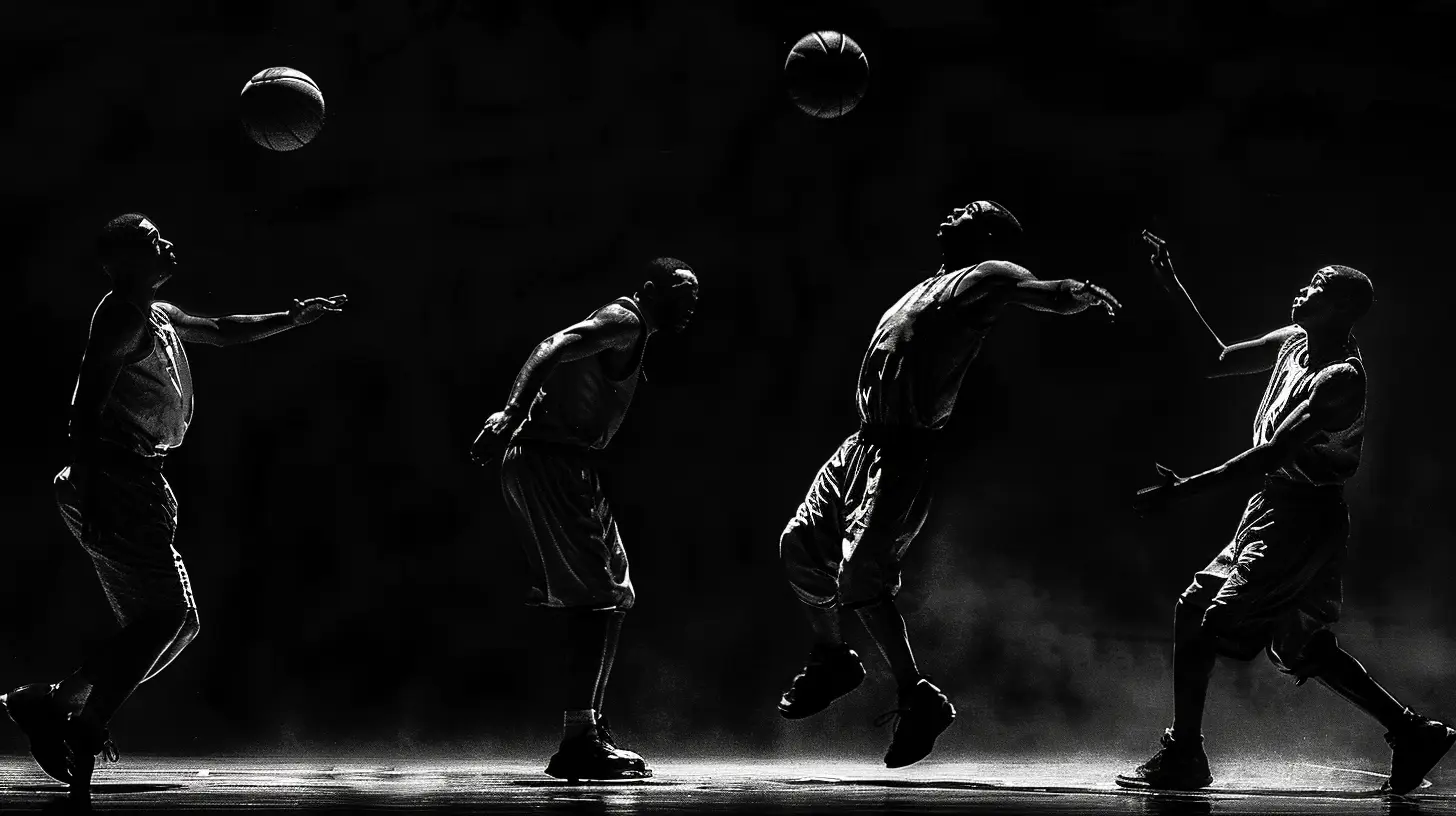
The Stretch Four Through the Ages
Wondering where this all began? Let’s take a quick trip down memory lane.The Early Pioneers
Even in the '90s, we had guys like Detlef Schrempf and Toni Kukoč—forward-types who weren’t afraid to shoot from deep. But back then, they were more the exception than the rule.Enter: Dirk Nowitzki
Let’s be honest. Dirk was the blueprint. A nearly seven-footer with a pure jumper, flawless footwork, and a bag that never ran out? He stretched defenses to their limits before it was trendy. And when he dragged the Mavs to a ring in 2011, the NBA took notes.The Post-Dirk Era
After Dirk, more stretch fours started popping up. Channing Frye, Ryan Anderson, and even Chris Bosh during his Heat years started launching from three. Then, the Steph Curry-led Warriors emphasized spacing even more, and the rest was history.Now, it’s rare to find a four who can’t shoot.
Famous Stretch Fours in Today’s Game
Let’s put some names to this concept:- Kevin Durant – Yes, he plays the three sometimes, but KD is the ultimate positionless sniper. He stretches the floor and plays like a guard in a forward’s body.
- Jayson Tatum – A modern wing who plays as a four in small-ball lineups. Deadly from deep, smooth with the ball, and versatile on defense.
- Karl-Anthony Towns – A center by name, but often used as a stretch four due to his elite shooting ability.
- Kristaps Porzingis – The “Unicorn” who changed the perception of what a 7-footer could do.
- Bobby Portis – A more grounded example, but someone who has carved out a role by being a big that can shoot.
Coaching Strategies That Rely on Stretch Fours
The stretch four isn’t just a trend—it’s a strategic tool.The Pick-and-Pop Threat
Traditional pick-and-rolls often involve the big rolling to the basket. But what if the big pops out to the three-point line instead? That’s the power of a stretch four. They force defenders into no-win situations.5-Out Offense
Some teams, like the Bucks and Mavericks, love using a 5-out offense where everyone can shoot. That only works if your power forward can stretch the floor. Otherwise, the defense can sag off, and your spacing dies.Small Ball Lineups
When teams go small, the “four” becomes even more important. A wing playing the four has to rebound, shoot, and switch on D—all at once. It’s a tough job, and having a stretch four makes it easier.Challenges Facing Stretch Fours
Of course, it’s not all rainbows and corner threes. There are downsides.Lack of Physicality
Some stretch fours struggle against bruising bigs in the post. They’re mobile but can get pushed around. That’s why coaches need support from the center or help rotations to cover defensive gaps.Inconsistent Shooting
Hey, not every stretch four has a sniper's touch. When their shot isn’t falling, their value drops fast. A 6'9" forward who can’t defend or stretch the floor? That’s a bench warmer, not a rotation guy.The Future of the Stretch Four
We’re not going back to old-school power forwards anytime soon.As shooting becomes more valuable and positionless schemes take over, stretch fours will evolve even more. We’re already seeing 7-footers with guard skills, and the line between four and five is blurrier than ever.
Imagine a future where every player on the court can shoot, switch, and handle the ball. That’s not far off—and stretch fours will be the engine that makes everything run.
Final Thoughts
Whether you’re a die-hard hoop head or just getting into the game, one thing’s clear: the stretch four is here to stay.They’re the Swiss Army knife of the modern NBA—able to shoot, switch, and still bang down low when needed. In a world where positions are becoming meaningless, the stretch four might just be the most meaningful piece of all.
So next time you watch a game and see a 6’10” guy swishing threes and guarding point guards, tip your hat. That’s not just skill—that’s evolution.
all images in this post were generated using AI tools
Category:
BasketballAuthor:

Easton Simmons
Discussion
rate this article
2 comments
Opal Velez
What an intriguing exploration of the stretch four! It’s fascinating how this role enhances team dynamics and versatility in today’s positionless basketball landscape.
December 21, 2025 at 3:43 AM
Easton Simmons
Thank you! I'm glad you found it intriguing. The stretch four truly is a game-changer in modern basketball.
Natalie McQuillan
Versatile, crucial for spacing today.
December 8, 2025 at 12:41 PM
Easton Simmons
Thank you! The stretch four truly enhances spacing and creates opportunities for dynamic play in today’s game.