The Role of Sports in Shaping Leadership Skills in Students
14 August 2026
Walk onto any school field or court, and you will see more than just a game happening. You will see a live laboratory for human behavior. A captain adjusting a teammate's stance. A player deciding whether to pass or shoot. A bench player cheering louder than anyone else. These moments, repeated thousands of times over a season, build something that classrooms often struggle to teach: leadership.
Sports do not simply teach leadership. They force it into existence. There is no theoretical test for leadership on a field. There is only the pressure of a live situation, the clock running down, and the need for someone to step up. That pressure is exactly why sports remain one of the most effective leadership training grounds for students.

Why Sports Are a Unique Leadership Classroom
Leadership is often taught through books, case studies, and lectures. Those methods have value, but they lack one critical element: consequence. When a student reads about decision-making, nothing is lost if they choose poorly. On a sports field, every decision has immediate, visible, and often emotional consequences. That changes how the brain processes the lesson.Consider the difference between learning to swim from a manual and learning to swim in a pool. The manual tells you the mechanics. The pool teaches you what it feels like when water fills your lungs. Sports operate the same way. They create a controlled environment where students can experience failure, success, and the weight of responsibility without the permanent stakes of adult life.
Another unique feature of sports is the speed of feedback. In academics, feedback might come days or weeks later. In sports, feedback comes in seconds. Miss a block, and the defender is already past you. Make a good pass, and the crowd reacts instantly. This rapid feedback loop accelerates the development of self-awareness, which is the foundation of all leadership.
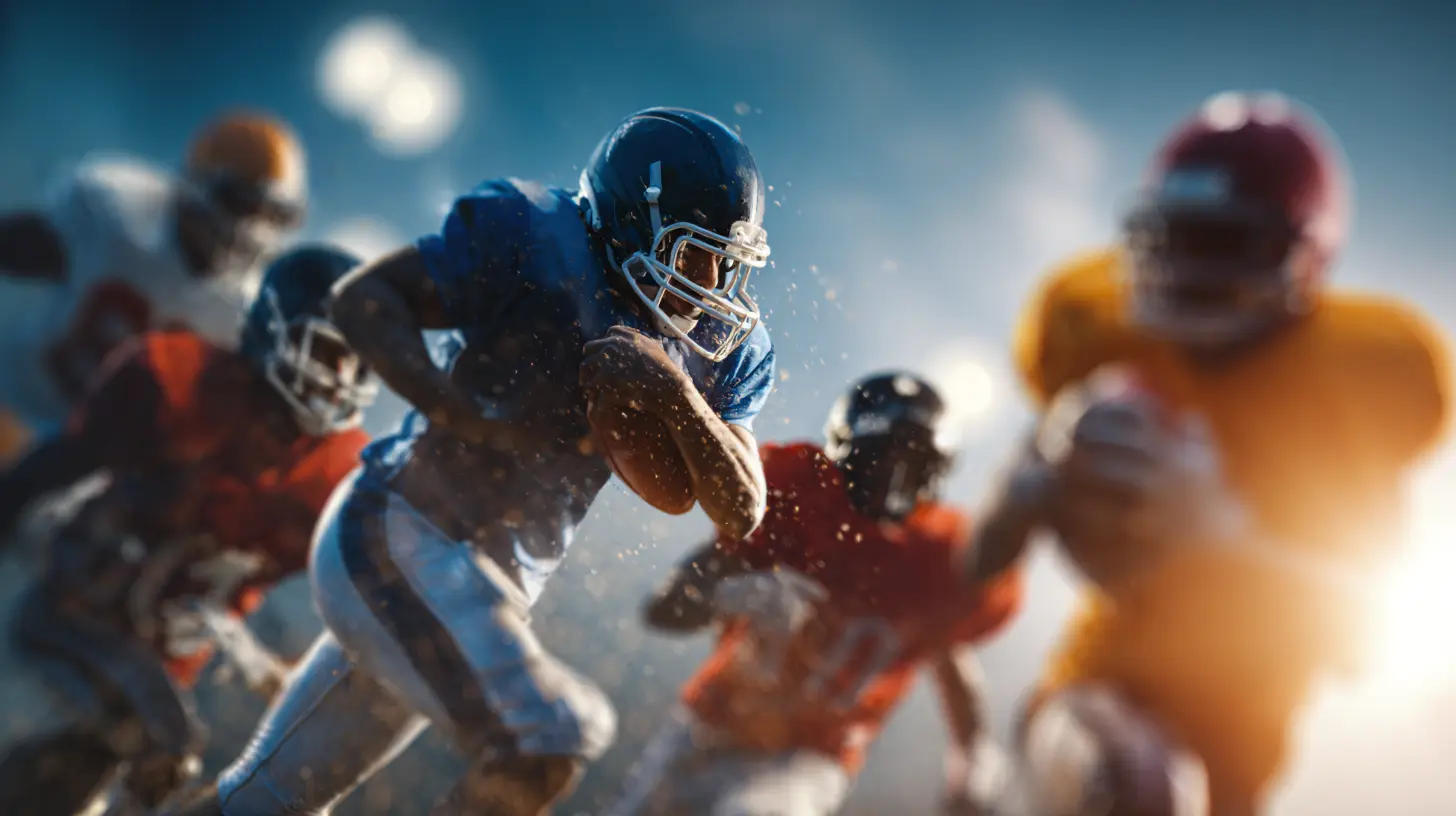
The Shift From Individual Performance to Collective Responsibility
Most students enter sports thinking about personal achievement. They want to score, win, or be noticed. The shift to leadership happens when they realize that individual performance means nothing if the team fails. This is not a natural realization. It is a painful one, and sports deliver it relentlessly.A student who scores thirty points but loses every game will eventually face a hard question: Am I actually contributing to this team? That question is the beginning of leadership thinking. It moves the student from "what can I get" to "what can I give." This is the exact mental shift that separates managers from leaders, and it happens organically in sports.
Take the example of a basketball point guard. The point guard might be the best scorer on the team, but if they never pass, the defense will collapse on them and the team will lose. The point guard must learn to read the game, understand the strengths of their teammates, and make decisions that serve the group. That is leadership in its purest form: making choices that optimize the whole, not the self.

Captains, Not Just Players: Formal Leadership Roles
Many sports teams have formal leadership positions, most commonly the captain. Being named captain is not the same as being a leader. It is an opportunity to practice leadership, and many students fail at it initially because they mistake the title for the job.A good captain does not just talk to referees or call the coin toss. A good captain sets the emotional tone of the team. They are the first to arrive and the last to leave. They notice when a teammate is struggling at home and adjust their approach. They take the blame publicly and give credit publicly. These behaviors are not taught in a single meeting. They are learned through trial, error, and reflection.
One common mistake students make as captains is trying to be friends with everyone. Leadership requires making unpopular decisions. A captain might have to tell a teammate that their attitude is hurting the team. That conversation is uncomfortable, and many young captains avoid it, which leads to resentment and dysfunction. Sports provide a safe space to learn that conflict, handled respectfully, is not the enemy of teamwork. It is a necessary part of it.
The opposite mistake is becoming a dictator. Some students, once given the captain title, start barking orders and demanding respect. This almost always backfires. Respect cannot be demanded. It is earned through consistency, competence, and care. Sports teach this lesson faster than almost any other activity because the results are immediate. A team that does not respect its captain will not perform, and the captain will feel that failure personally.

Decision-Making Under Pressure
One of the most transferable leadership skills from sports is the ability to make decisions under pressure. In a game, there is no pause button. There is no time to consult a textbook or ask a supervisor. The student must act with incomplete information and live with the outcome.This experience builds what psychologists call decision-making stamina. The student learns that waiting for perfect information is a form of paralysis. They learn to trust their training and instincts. They also learn to recover quickly from bad decisions. A quarterback who throws an interception cannot dwell on it. The next play is coming in thirty seconds. They must clear their mind and move forward.
This skill transfers directly to leadership in business, medicine, emergency response, and any field where decisions have time pressure. Students who have played competitive sports often describe a strange calm in high-stakes situations. That calm is not natural. It is trained. It comes from thousands of repetitions of being in uncomfortable, high-pressure moments and surviving them.
However, there is a nuance here. Sports teach decision-making under pressure, but they do not automatically teach good decision-making. A student can make the same bad decision repeatedly and become very confident at it. That is why reflection is critical. The best coaches and athletes review game footage, not to celebrate wins, but to examine decisions. Students who learn to review their own decisions, both good and bad, develop a habit of continuous improvement that serves them for life.
Communication: The Invisible Skill That Wins Games
Leadership is often described as the ability to get things done through others. That requires communication, and sports are a brutal teacher of communication skills.On a field, communication must be clear, concise, and timely. A soccer defender who shouts "man on" to a teammate is communicating critical information in a split second. A volleyball player who calls the ball loudly prevents a collision. These are micro-communications, but they build the foundation for larger leadership communication.
Sports also teach non-verbal communication. A captain's body language after a mistake sets the tone for the entire team. If the captain slumps their shoulders and looks defeated, the team follows. If the captain claps, resets, and moves on, the team does the same. This is emotional leadership, and it is often more powerful than words.
One of the most important communication lessons from sports is learning to listen. Many students think leadership is about talking. In reality, the best leaders listen more than they speak. On a team, a leader must understand the unspoken dynamics. Who is struggling? Who is confident? Who needs encouragement? Who needs a challenge? These answers come from listening, both to words and to silence.
The trade-off here is that communication in sports is often fast and direct, while communication in professional settings is often slower and more nuanced. Students must learn to adapt. The directness that works on a field can come across as harsh in an office. Good sports programs teach students when to speak loudly and when to speak softly. That adaptability is a mark of true leadership.
Resilience and the Art of Losing
Leadership is not about winning all the time. It is about how a person responds to losing. Sports provide a regular, structured exposure to failure, and this is perhaps their greatest gift to future leaders.Every athlete loses. Every team has a losing season. Every player makes a mistake that costs the game. The question is what happens next. Some students are crushed by loss and never recover. Others use loss as fuel. The difference often comes down to how the coach and the team frame the loss.
A good coach will ask, "What did we learn?" rather than "Who is to blame?" This reframing teaches students that failure is data, not identity. A loss is an event, not a verdict on a person's worth. This is a profoundly important leadership lesson because all leaders fail. The ones who succeed are the ones who fail forward.
There is a common misconception that resilience means never feeling bad about losing. That is not true. Resilience means feeling the disappointment fully and then choosing to move forward anyway. Sports allow students to experience the full arc of failure: the immediate sting, the reflection, the adjustment, and the next attempt. Completing this cycle repeatedly builds a kind of emotional toughness that cannot be faked.
The trade-off is that too much focus on winning can destroy resilience. If a coach or parent only celebrates victories, the student learns that losing is shameful. That creates fear of failure, which leads to playing it safe, which is the opposite of leadership. The best sports environments celebrate effort, growth, and learning, while still keeping score. Keeping score is important. It teaches realism. But the score is not the only measure of success.
Teamwork vs. Individual Accountability
Leadership requires a balance between teamwork and individual accountability. Sports teach both, but not always in equal measure. Some students lean too far toward individualism, thinking they must do everything themselves. Others lean too far toward collectivism, hiding in the group and avoiding personal responsibility.The truth is that great leaders understand both. They know when to step up and take personal responsibility, and they know when to step back and let the team work. This is a subtle skill that develops over time.
In a relay race, each runner is individually responsible for their leg. If one runner runs poorly, the team loses, regardless of how well the others performed. This teaches that individual performance matters. But the relay also teaches that the handoff, the moment of teamwork, is often where races are won or lost. A great runner who cannot execute a clean handoff is useless to the team.
This dual lesson is directly applicable to leadership in organizations. A leader must hold themselves to high individual standards while also creating systems that allow others to succeed. Sports teach that these are not competing goals. They are complementary.
A common mistake is thinking that teamwork means everyone is equal. That is false. Teams need clear roles. Some players are scorers. Some are defenders. Some are leaders. Some are supporters. The best teams have clear hierarchies of responsibility, but they also have mutual respect across those hierarchies. Students who learn this distinction are better prepared for the real world, where hierarchy and teamwork coexist.
The Role of the Coach: Modeling Leadership
No discussion of sports and leadership would be complete without addressing the coach. Coaches are the first leadership models that many students encounter outside their families. The way a coach behaves teaches students more than any speech.A coach who stays calm under pressure teaches emotional regulation. A coach who admits mistakes teaches humility. A coach who invests time in the weakest player teaches compassion. A coach who demands discipline teaches standards. Students absorb these lessons unconsciously, and they carry them into their own leadership styles.
However, not all coaches are good models. Some coaches are abusive, arrogant, or dismissive. Students who experience bad coaching learn a different lesson: how not to lead. This can be valuable too, but it requires reflection. A student who has a bad coach should be encouraged to ask, "What would I do differently?" That question turns a negative experience into a leadership lesson.
The best coaches also know when to step back. They do not solve every problem for the team. They let the team struggle, fail, and figure things out. This is called productive struggle, and it is essential for leadership development. A coach who always has the answer creates players who never learn to find answers themselves. A coach who asks questions, rather than giving commands, develops thinkers.
Parents and educators should pay attention to the coaching style in their sports programs. A win-at-all-costs coach might produce winning teams, but they often produce players who burn out or who never develop leadership skills. A developmental coach might have a worse record, but they produce students who become leaders in life. The trade-off is real, and it is worth considering carefully.
Comparing Sports Leadership to Other Leadership Training
It is worth comparing sports to other common leadership training methods for students. Student council, debate teams, and academic clubs all offer leadership opportunities. Each has strengths and weaknesses.Student council teaches formal leadership structures, public speaking, and organizational skills. But it often lacks the emotional intensity and immediate feedback of sports. A student council president might not know for weeks whether their initiative worked. An athlete knows in seconds.
Debate teaches critical thinking and persuasive communication. But it is highly individualistic. There is no physical teamwork in the same way. The shared physical struggle of sports creates a bond that intellectual activities rarely match.
Academic clubs teach project management and collaboration. But they often lack the time pressure and physical stakes of sports. The urgency of a game situation is hard to replicate in a club meeting.
This does not mean sports are superior. It means they are different. The best leadership development programs combine multiple approaches. A student who does both sports and student council gets a more complete education than one who does only one. The sports teach them how to handle pressure and people. The council teaches them how to handle process and policy.
Parents and educators should encourage students to pursue multiple leadership experiences. Sports alone are not enough. But they are an irreplaceable piece of the puzzle.
Common Misconceptions About Sports and Leadership
There are several misconceptions about the relationship between sports and leadership that deserve correction.The first misconception is that only captains or star players develop leadership skills. This is false. Bench players often develop some of the strongest leadership skills because they must support the team without the reward of playing time. They learn humility, patience, and the art of encouraging others. These are leadership skills.
The second misconception is that leadership in sports is about being loud and aggressive. Some of the best leaders are quiet. They lead by example, consistency, and reliability. A quiet player who always works hard and never complains is a leader. Sports teach that there are multiple leadership styles, and students should find the one that fits their personality.
The third misconception is that winning teams produce leaders and losing teams produce followers. This is also false. Losing teams often produce stronger leaders because they must overcome adversity. The experience of working through a losing season together builds character and resilience. Some of the best leaders in business and politics were on mediocre sports teams.
The fourth misconception is that leadership skills from sports automatically transfer to other areas of life. They do not. Transfer requires reflection. A student who plays sports but never thinks about what they learned will not become a leader. A student who plays sports and actively reflects on their experiences will. The sports are the raw material. The reflection is the processing. Both are needed.
Practical Advice for Students, Parents, and Educators
For students who want to develop leadership skills through sports, the first piece of advice is to be intentional. Do not just show up and play. Ask yourself questions after every game. What did I do well? What did I do poorly? How did I treat my teammates? What would I do differently? This reflection turns experience into learning.Second, volunteer for responsibility. Do not wait to be named captain. Offer to organize team warm-ups. Help clean up the equipment. Check on a teammate who seems down. These small actions build the habits of leadership.
Third, learn to give and receive feedback. Ask your coach for specific feedback. Ask your teammates how you can support them better. And when you give feedback, make it specific and kind. Say "I noticed you seemed frustrated after that play. What was going on?" rather than "You need to calm down."
For parents, the best thing you can do is focus on effort and growth, not outcomes. Ask your child what they learned, not whether they won. Celebrate their courage in trying something new, not just their victories. And model good leadership yourself. Your child is watching how you handle your own wins and losses.
For educators, consider how you can integrate sports leadership lessons into the broader curriculum. Have students write reflective journals about their sports experiences. Discuss leadership case studies from sports in business classes. Invite coaches to talk about how they build teams. The lessons from sports are too valuable to be left on the field.
The Long-Term Impact on Career and Life
The leadership skills developed through sports do not expire. They compound over time. Students who learn to lead on a field carry those skills into college, careers, and community life.In the workplace, former athletes often stand out because they understand the rhythm of teamwork. They know when to push and when to support. They are comfortable with feedback. They handle pressure without falling apart. They understand that the goal is bigger than any individual.
In community life, former athletes often become organizers and volunteers. They know how to rally people around a cause. They understand that success requires everyone to play their role. They have experienced the power of collective effort.
None of this happens automatically. It happens because sports provided the training ground, and the student chose to learn. The field does not make leaders. It reveals them. It gives them a place to practice, fail, and try again. That is the true role of sports in shaping leadership skills in students.
The next time you watch a student athlete, look beyond the scoreboard. Look at the way they help a fallen opponent. Look at the way they encourage a struggling teammate. Look at the way they handle a bad call from the referee. That is leadership in action. It is being shaped in real time, one play at a time, and it will serve them for the rest of their lives.
all images in this post were generated using AI tools
Category:
Sports And EducationAuthor:

Easton Simmons
Discussion
rate this article
1 comments
Clementine McVicar
Sports play a vital role in developing leadership skills among students. They teach teamwork, resilience, and decision-making under pressure. Encouraging participation in sports can help cultivate these attributes, preparing students for future challenges both on and off the field.
August 17, 2026 at 3:45 AM
Easton Simmons
I completely agree. Sports provide invaluable lessons in teamwork and resilience that are crucial for effective leadership. Encouraging students to engage in sports equips them with skills that extend far beyond the field.