The Rain-Soaked Match That Became an Instant Classic in 2026
23 October 2026
Some matches are remembered for the scoreline. Others are remembered for the weather, the mud, the slipping boots, and the way a game plan dissolves when the sky opens up. The rain-soaked match that became an instant classic in 2026 belongs firmly in the second category. It was not a clean, technical exhibition. It was a test of nerve, adaptation, and old-fashioned grit, and it reminded everyone watching why sport can be so gripping when conditions turn hostile.
This article breaks down what made that match special, why rain changes football so dramatically, and what players, coaches, and fans can take away from it. Whether you play, coach, or simply love watching the game, there are real lessons here about preparation, decision-making, and the fine margins that decide contests when the pitch turns into a battlefield.
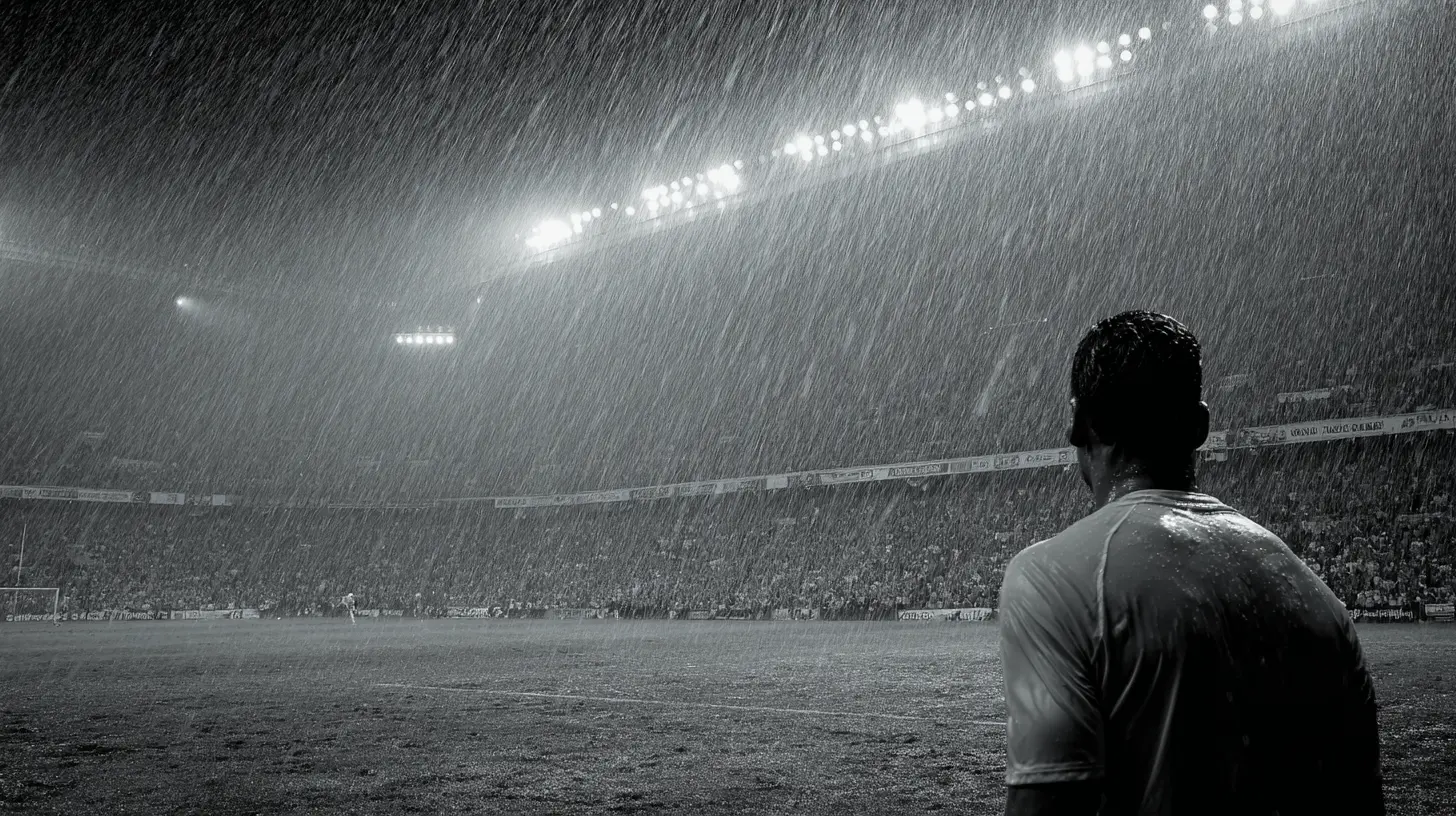
Why Rain Changes Everything
Football is designed for firm, predictable surfaces. When rain arrives, that predictability vanishes. The ball skids faster along the grass. Passes that would normally arrive at a comfortable height now zip in low and awkward. Players who rely on quick footwork suddenly find their studs failing to grip. The game becomes less about technical perfection and more about problem-solving in real time.The 2026 classic captured this perfectly. Early in the match, both sides tried to play their usual game: short passes, patient build-up, controlled possession. It worked for a while. Then the surface began to hold water, and everything shifted. Passes were overhit. Turns were slower. Defenders who normally stepped out confidently started hesitating because a mistimed challenge on a slick pitch can lead to a slip, a missed tackle, and a clear chance for the opposition.
That hesitation is the hidden story of rainy matches. It is not just that the ball behaves differently. It is that players start thinking about their footing, and that split second of doubt is often enough to lose a duel or arrive late to a loose ball.
The Physics of a Wet Pitch
A wet surface reduces friction between the boot and the ground, and between the ball and the grass. That has several consequences:- Faster ball roll. Ground passes travel quicker, which rewards quick thinking but punishes heavy touches.
- Unpredictable bounces. A ball that skids can bounce low and awkwardly, which is why goalkeepers often prefer to parry rather than catch in wet conditions.
- Reduced traction. Acceleration and deceleration both take longer, so sprinting and stopping become riskier.
- Heavier ball. A waterlogged ball gains weight, which affects long passes and shots. Players who try to hit the same power as usual often overhit.
Understanding these effects is the first step toward playing well in the rain. The teams that adapted fastest in the 2026 match were the ones that accepted the conditions rather than fighting them.
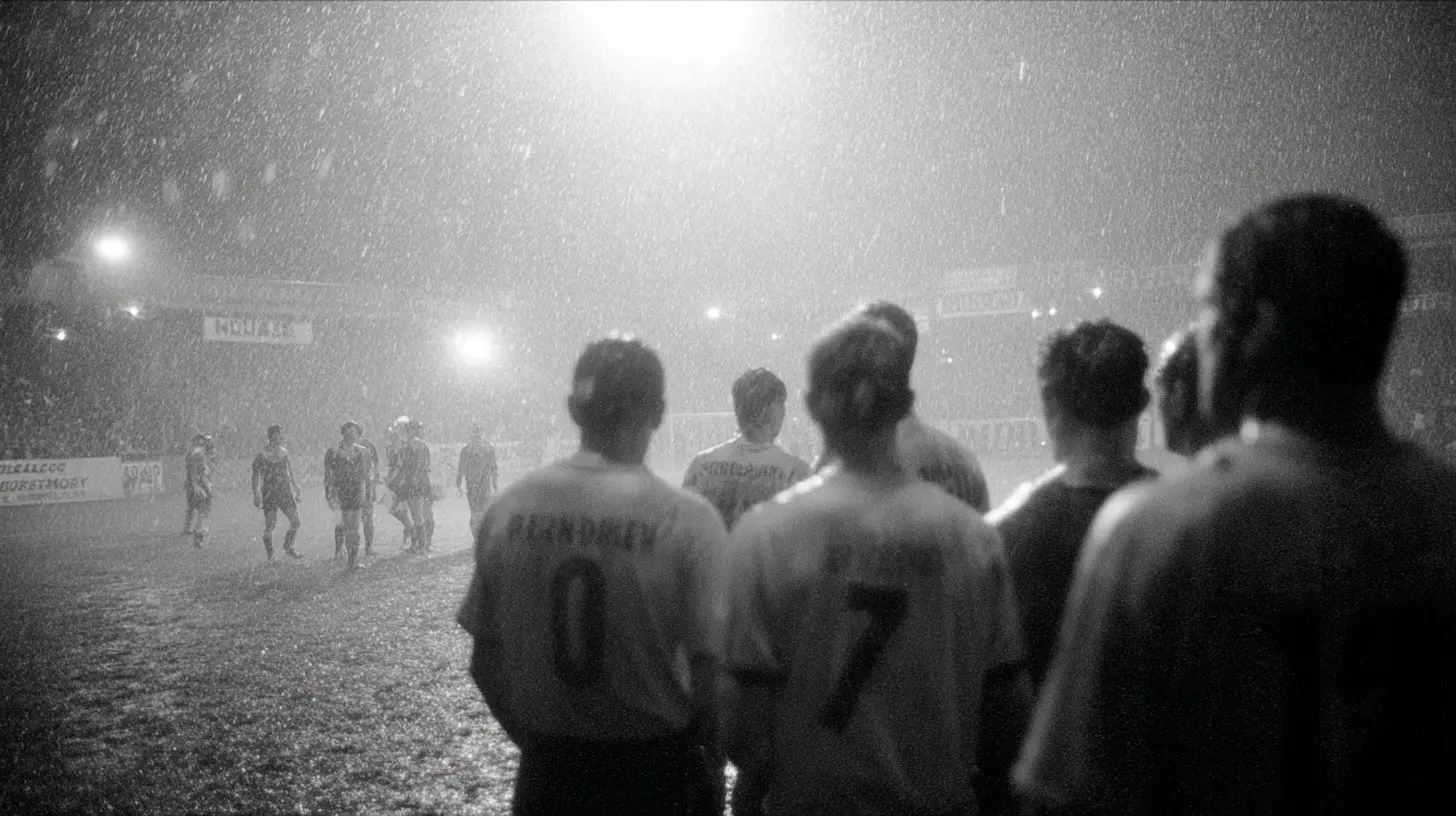
How the Match Unfolded
The match did not become a classic because of one moment. It became a classic because of how the game evolved in layers.The Opening Phase: Business as Usual
For the first twenty minutes or so, the rain was steady but manageable. Both teams tried to impose their identity. One side pressed high and tried to force turnovers in the opposition half. The other sat deeper and looked to hit on the counter. The pitch was slick but not yet saturated, so the technical players still had a platform.This phase matters because it set expectations. Fans settled in for a normal contest. The players believed the game would be decided by the usual factors: quality, tactics, and finishing.
The Turning Point: When the Surface Gave Way
As the rain intensified, the pitch began to hold water in the middle third. That is where the match changed. The central midfield, normally the engine room of any team, became a swamp. Passes slowed. Players lost their footing. The game broke into transitions, with both sides winning the ball in dangerous areas and then struggling to keep it.This is the point where many teams make a critical mistake. They keep trying to play the same way. They insist on short passes in the middle, and they get punished. The smarter approach is to recognize that the pitch has changed the rules and to adjust accordingly. In the 2026 match, the team that adapted first started playing longer, more direct balls into channels, bypassing the boggy center and asking their forwards to chase and hold up play.
That adjustment is not glamorous. It is not the kind of thing that shows up in highlight reels. But it is exactly the kind of decision that wins matches in bad weather.
The Dramatic Finish
The closing stages were chaotic, and that chaos is what turned a good match into a classic. Tired legs on a heavy pitch lead to mistakes. Mistakes lead to chances. Chances lead to drama. Late saves, scrambled clearances, and one final push created the kind of ending that fans talk about for years.The key insight here is that rain amplifies fatigue. Running on a soft, heavy surface demands more energy than running on a firm one. Players who are already tired become more likely to slip, misjudge a bounce, or lose concentration. Coaches who manage substitutions well in wet conditions give their teams a real edge in the final twenty minutes.
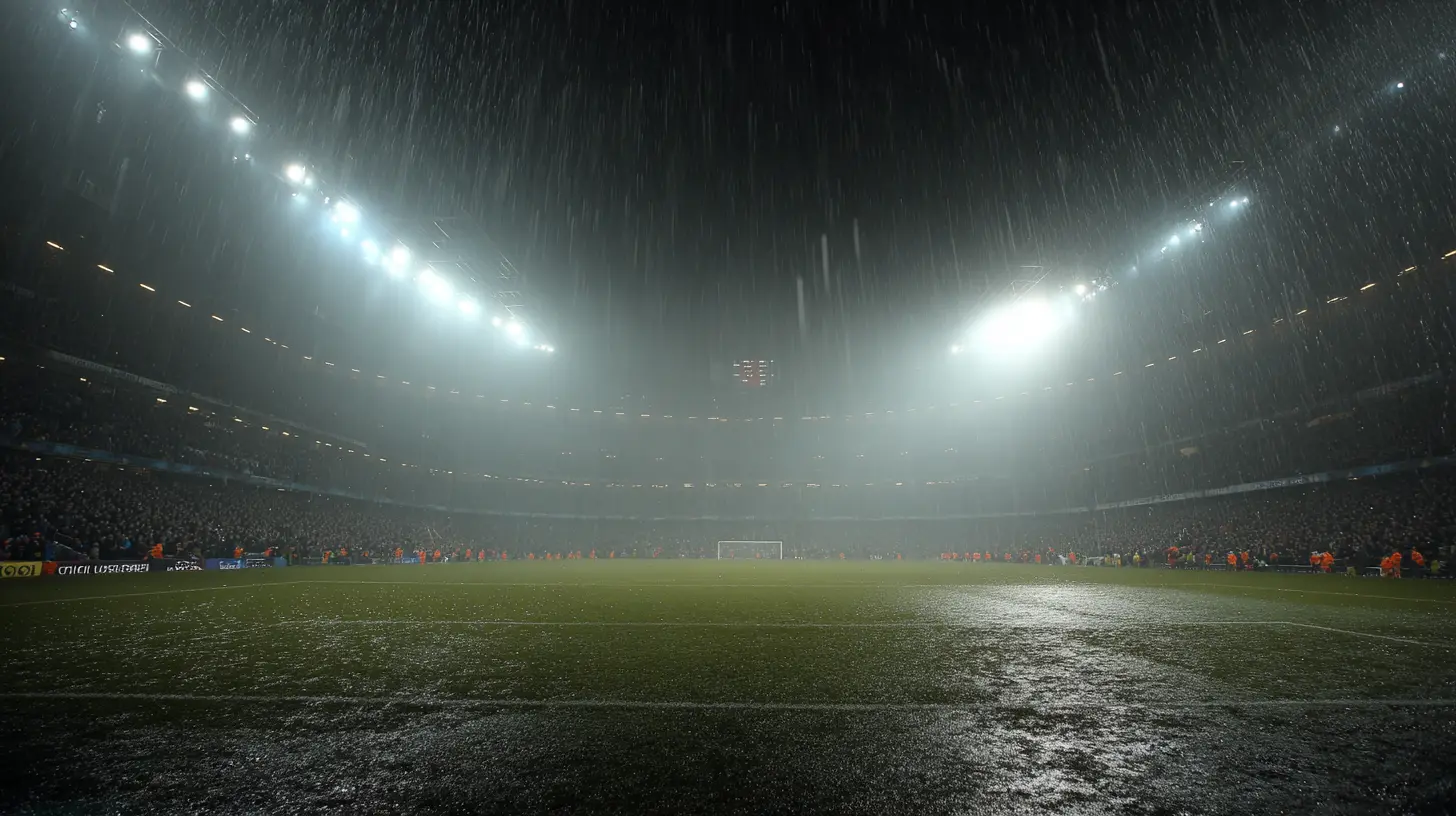
Tactical Adjustments That Work in the Rain
If you coach or play, the 2026 match offers a practical playbook. These adjustments are not just theory. They are the kinds of decisions that separate teams who cope with rain from teams who collapse in it.Simplify the Build-Up
Short, intricate passing out from the back is risky on a wet pitch. A single heavy touch can gift the opposition a chance in a dangerous area. The safer approach is to mix in longer passes, use the flanks, and avoid playing across the middle of the pitch when the surface is holding water.Why it works: Longer passes reduce the number of touches in risky areas. They also bypass the most waterlogged part of the pitch, which is usually the center.
When to avoid it: If your team lacks height or physical presence up front, long balls may simply give possession away. In that case, a better compromise is to keep passes shorter but play them more quickly, with fewer touches per player.
Prioritize First-Time Passing
On a slick surface, the ball moves faster than players expect. Taking an extra touch gives defenders time to close down and increases the chance of a slip. One-touch and two-touch passing keeps the ball moving and reduces the risk of losing it under pressure.Defend With Discipline, Not Desperation
Sliding tackles are tempting in the rain, but they are also dangerous. A mistimed slide on a wet pitch can leave a defender on the ground while the attacker carries on. The better approach is to stay on your feet, jockey, and force the attacker into wide areas where the risk is lower.Use Set Pieces as a Weapon
Rain makes defending set pieces harder. Goalkeepers are less confident coming for crosses. Defenders struggle to generate power in their clearances. Attacking teams should treat every corner and free kick as a genuine scoring opportunity, not just a chance to recycle possession.Manage Substitutions Carefully
Heavy pitches drain energy faster. Coaches who recognize this and make earlier, more targeted substitutions can dominate the final phase of the match. Fresh legs on a wet pitch are a genuine advantage, especially in wide areas where sprinting is constant.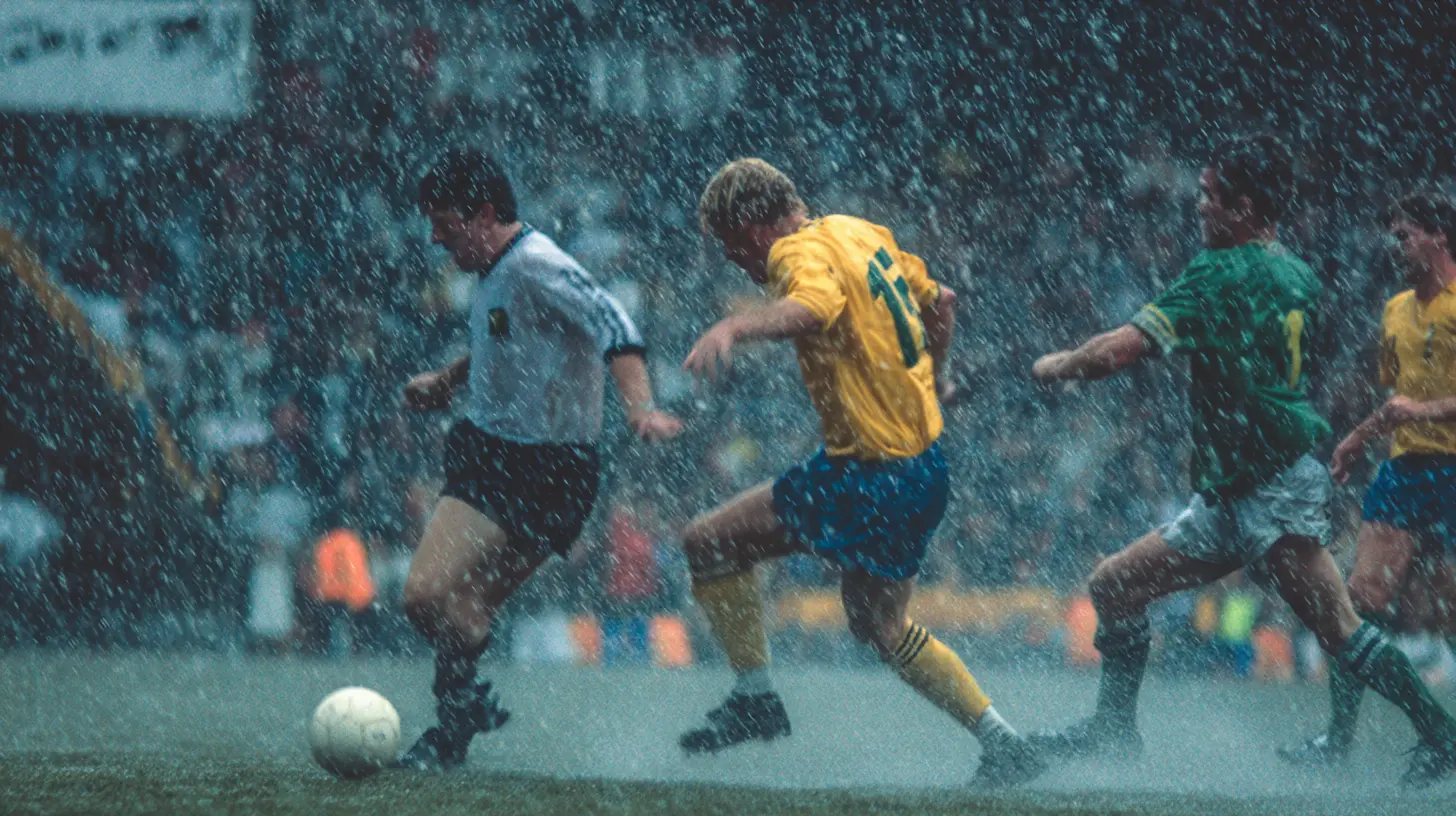
Common Mistakes and Misconceptions
Rainy matches expose habits that go unnoticed in good conditions. Here are the mistakes that show up again and again, along with the reasoning behind why they hurt.Misconception: "Just Play Your Normal Game"
This is the most common and most damaging belief. Conditions change the game. Insisting on the same tactical approach regardless of the weather is not bravery. It is stubbornness. The best teams adapt.Mistake: Overpowering Shots and Passes
Players often try to compensate for the wet ball by hitting it harder. That usually leads to overhit passes and shots that sail high. The ball is already moving faster on a wet surface. The right response is usually more control, not more power.Mistake: Ignoring Footwear
Studs matter enormously in wet conditions. Firm-ground studs on a soft pitch can lead to slipping and injury. Soft-ground studs give better traction but can feel heavy on firmer areas. Players should check the pitch before kickoff and choose accordingly. This is a small detail with a big impact.Mistake: Forgetting the Warm-Up
Cold rain tightens muscles. A thorough warm-up is even more important than usual. Players who skip it or rush through it are more likely to pull something when they sprint or change direction on a slick surface.Misconception: "Rain Favors the Underdog"
This is a popular idea, but it is only partly true. Rain does level the playing field in some ways, because it reduces the advantage of technical precision. But it also rewards teams that are better prepared, better organized, and better conditioned. In other words, rain does not favor the underdog. It favors the team that adapts fastest.What Makes a Match a Classic
Not every rainy match becomes a classic. Many are simply messy and forgettable. So what separates the 2026 match from the hundreds of other wet-weather games played every season?Stakes and Context
A match becomes a classic partly because of what is at stake. A mid-table game in October rain is easy to forget. A match with consequences, whether that is a title race, a cup run, or a relegation battle, carries more weight.Contrast and Drama
Classic matches usually feature a shift in momentum. One team dominates, then the other responds. The rain in the 2026 match created exactly that kind of swing. The team that looked comfortable early lost control when the pitch deteriorated, and the team that adapted clawed its way back into the contest.Individual Moments of Quality
Even in the worst conditions, great players find ways to shine. A perfectly weighted pass through a puddle, a brave save in a crowded box, a goal scored from a scramble. These moments stand out because they are harder to produce in the rain.Emotional Connection
Finally, a classic needs an emotional hook. The 2026 match had it. You could see the effort on the players' faces. You could feel the frustration of the team that lost control. You could sense the relief of the team that adapted and survived. That emotional texture is what makes a match memorable.
Practical Advice for Players
If you play the game, here is how to handle wet conditions without overcomplicating things.- Check your studs before kickoff. Choose soft-ground studs on a saturated pitch. Do not wait until you slip.
- Warm up properly. Cold rain tightens muscles. Give yourself extra time.
- Keep your first touch simple. On a slick surface, a clean first touch is worth more than a clever one.
- Communicate more. Rain makes it harder to hear and see. Talk to your teammates constantly.
- Stay on your feet defensively. Jockey and delay rather than diving in.
- Expect the ball to skid. Adjust your positioning as a goalkeeper and your timing as a defender.
- Manage your energy. Heavy pitches drain you faster. Pace yourself early so you have something left late.
Practical Advice for Coaches
Coaches have more levers to pull than players do. Use them.- Prepare a wet-weather plan. Do not improvise on matchday. Have a clear set of adjustments ready.
- Train in bad conditions occasionally. Players who have practiced in the rain are calmer when it happens in a match.
- Watch the pitch during warm-ups. Notice where water is collecting and adjust your game plan accordingly.
- Use substitutions earlier. Fresh legs matter more on a heavy pitch.
- Emphasize set pieces. They become more valuable in wet conditions.
- Keep your messaging simple. In chaotic conditions, players need clarity, not complexity.
Practical Advice for Fans and Analysts
Even if you are watching from the stands or on television, understanding the conditions makes the match more enjoyable.- Watch the pitch, not just the ball. Notice where players are slipping and how the surface is affecting the game.
- Judge players fairly. A misplaced pass in a downpour is not the same as a misplaced pass on a dry pitch.
- Look for adaptation. The most interesting story in a rainy match is often which team adjusts first.
- Appreciate the physical effort. Playing in those conditions is exhausting. What looks like a slow game is often a brutal test of stamina.
The Bigger Picture
The rain-soaked match that became an instant classic in 2026 is a reminder that football is not played on a spreadsheet. Tactics matter, but so does the weather. Technique matters, but so does the ability to adapt when the surface stops cooperating. The best teams and the best players are the ones who can solve problems in real time, and there is no better test of that than a heavy pitch in a downpour.It is also a reminder to fans. We spend a lot of time debating formations, transfers, and statistics. Sometimes the most compelling story is simpler than that. Eleven players, a slippery pitch, and a game that refuses to follow the script. That is what happened in 2026, and it is why people are still talking about it.
all images in this post were generated using AI tools
Category:
Historic MatchesAuthor:

Easton Simmons

