Olympic Swimming: The Quest for the Perfect Stroke
31 March 2026
Swimming at the Olympic level isn’t just about being fast—it’s about being flawless. Every stroke, every kick, every breath is calculated down to the millisecond. Athletes push their bodies beyond limits, transforming the pool into a battleground where even the smallest mistake can cost them gold.
But what exactly makes an Olympic swimmer stand out? What defines the “perfect” stroke? And is there really such a thing? Grab your goggles, because we're diving deep into the world of elite swimming to uncover the secrets behind the art of speed in the water. 
The Science Behind The Stroke
Swimming is one of the most technical sports in the world. Unlike running, where increasing speed is as simple as moving your legs faster, swimming requires finesse. The water is an unforgiving opponent—it resists every movement, slows down inefficient swimmers, and punishes poor technique.Every stroke is a blend of science and athleticism, combining hydrodynamics, muscle efficiency, and breathing mechanics to achieve the perfect balance of speed and endurance. Without impeccable form, even the strongest swimmers will struggle to cut through the water efficiently. 
The Four Competitive Strokes: Breaking Them Down
Olympic swimming features four strokes: freestyle, backstroke, breaststroke, and butterfly. Each has its own set of challenges, but they all require precise technique to maximize speed and minimize drag.1. Freestyle: The King of Speed
Freestyle (or the front crawl) is the fastest stroke in competitive swimming. It's the sprinting equivalent of the water world.- Key to Perfection: A strong flutter kick and a powerful arm pull. Swimmers use a high elbow catch to generate momentum while keeping minimal resistance in the water.
- Common Mistakes: Over-rotating the body, poor breathing technique, and slow arm recovery.
- Olympic Legends: Michael Phelps and Katie Ledecky have mastered freestyle, showing the world just how dominant this stroke can be.
2. Backstroke: Swimming Without Seeing
Backstroke is the only stroke where swimmers race on their backs, relying solely on rhythm and spatial awareness to stay in a straight line.- Key to Perfection: A steady head position and continuous arm movement. Since swimmers can’t see where they’re going, they align themselves with overhead lane markers.
- Common Mistakes: Hips sinking too low, poor hand entry, and uneven stroke timing.
- Olympic Legends: Ryan Murphy and Missy Franklin have both crushed backstroke events with seemingly effortless technique.
3. Breaststroke: The Most Technical Stroke
Breaststroke is often considered the slowest yet most technical stroke. The key is in timing—one wrong move and you lose momentum.- Key to Perfection: A powerful glide phase followed by a synchronized pull and kick. Unlike freestyle, swimmers pause slightly between strokes to maintain efficiency.
- Common Mistakes: Rushing the stroke, inefficient pull patterns, and weak kicks.
- Olympic Legends: Adam Peaty has revolutionized breaststroke, setting records with his explosive yet controlled technique.
4. Butterfly: The Most Exhausting Stroke
Butterfly is brutally demanding, requiring incredible upper-body strength and perfect rhythm to maintain speed.- Key to Perfection: A strong dolphin kick and a perfectly timed arm recovery. Swimmers must maintain fluid motion to avoid excessive resistance.
- Common Mistakes: Poor breathing technique, lack of undulation, and inefficient arm recovery.
- Olympic Legends: Michael Phelps made butterfly his signature stroke, dominating the competition with seamless execution. 
How Swimmers Perfect Their Stroke
No one is born with the perfect stroke. It takes years of repetition, drills, and biomechanical analysis to refine every movement. Olympic swimmers work with coaches, sports scientists, and even AI-driven technology to analyze and correct their technique.1. Video Analysis and Underwater Cameras
Coaches use high-speed cameras to break down every stroke in slow motion, identifying inefficiencies that aren’t visible at full speed.2. Resistance Training and Strength Conditioning
Swimming isn't just about technique—power matters too. Resistance bands, weighted swimsuits, and specialized dryland workouts help athletes develop strength without sacrificing fluidity.3. The Art of Breathing Optimization
Breathing at the wrong time means lost momentum. Swimmers train to minimize breaths while maximizing oxygen intake, allowing for longer bursts of speed.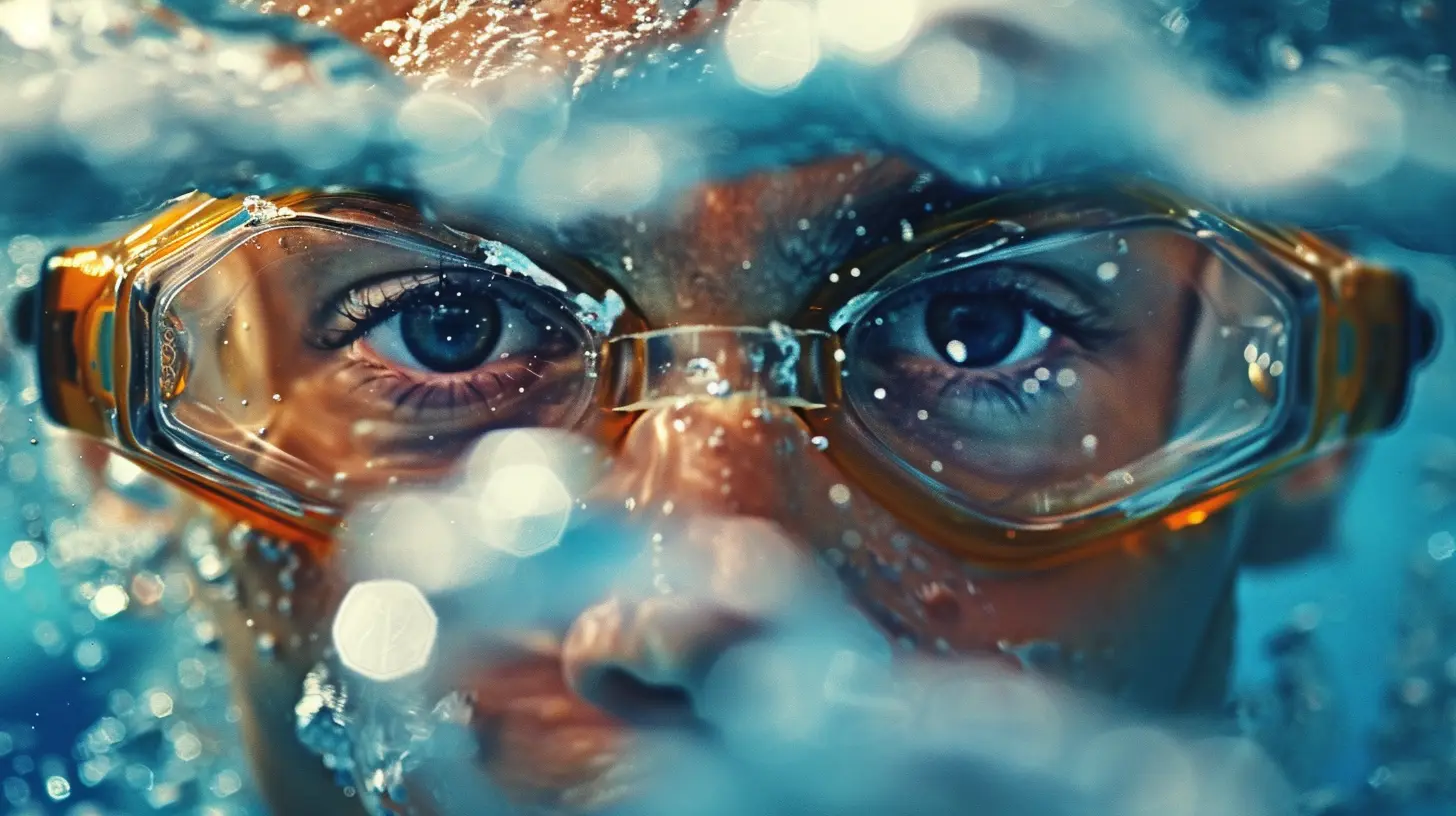
The Mental Game: Because Swimming Is 90% Mental
Perfecting a stroke isn’t just physical—it’s mental. Olympic swimmers must stay calm under pressure, maintain focus, and execute split-second decisions during races.Visualization techniques, meditation, and mental resilience training are just as crucial as physical practice. Because when you’re standing on the starting block, milliseconds away from competition, self-doubt is the last thing you need.
Speed vs. Efficiency: The Eternal Battle
Olympians don’t just want to be fast—they want to be efficiently fast. The more effort you expend fighting against water resistance, the more energy you waste. The world's best swimmers spend more time maximizing efficiency than raw speed.For instance, Michael Phelps wasn't just fast because of his strength. His insanely efficient technique and streamlined body position allowed him to cut through the water with minimal effort.
Think of it like running—if you sprint using poor form, you’ll tire quickly. But if you maintain perfect technique, you'll go farther with less fatigue. That’s what makes the difference between Olympic champions and the rest of the pack.
The Cutting-Edge Technology Behind Olympic Swimming
Swimming has evolved beyond human capability alone. Now, science and technology play a massive role in stroke improvement.1. High-Tech Swimsuits
Remember when the 2008 Olympics saw a flood of world records? That was thanks to the now-banned LZR Racer swimsuits, which reduced drag and increased buoyancy.2. Pool Design Matters More Than You Think
Olympic pools are engineered to minimize waves and turbulence, giving swimmers the smoothest possible race conditions. Deep water, advanced drainage systems, and anti-wave lane lines all contribute to faster times.3. AI-Powered Stroke Tracking
Technology like motion-capture sensors and AI-driven coaching software now allow swimmers to analyze their stroke mechanics with ridiculous accuracy, tweaking even the smallest details.Will There Ever Be a Truly Perfect Stroke?
So, here’s the million-dollar question: Can someone ever achieve the “perfect” stroke?The answer? Probably not. Perfection in swimming is like chasing a phantom—you can always get closer, but you'll never fully catch it. What’s considered the best today could easily change tomorrow with new techniques, technology, and training methods.
But one thing’s for sure—the pursuit of perfection is what makes Olympic swimming so thrilling. Every four years, we witness history being rewritten, records being shattered, and new legends emerging.
So, whether you're an aspiring swimmer or just a fan of the sport, remember: perfection isn’t about being flawless—it’s about always striving to be better.
And isn’t that what the Olympic spirit is all about?
all images in this post were generated using AI tools
Category:
OlympicsAuthor:

Easton Simmons
Discussion
rate this article
2 comments
Juliana Hensley
Great insights on the nuances of Olympic swimming. The perfect stroke is truly an art form, blending technique and power. Excited to see how athletes continue to push these boundaries.
May 16, 2026 at 11:51 AM
Easton Simmons
Thanks for your thoughts! It really is fascinating to see how athletes evolve their techniques. Exciting times ahead for the sport!
Reina Baxter
This article effectively captures the dedication and precision required in Olympic swimming. The breakdown of techniques highlights the nuances of achieving the perfect stroke, showcasing both the physical and mental challenges athletes face. It's a fascinating read for anyone interested in the science behind swimming excellence and the pursuit of perfection.
April 5, 2026 at 4:15 AM
Easton Simmons
Thank you for your kind words! I'm glad you found the article insightful. The dedication of these athletes is truly inspiring.