Most Improved Teams Going Into the 2027 Season
23 September 2026
Every offseason produces a flood of "winner of the winter" proclamations, and most of them age badly. The teams that actually improve the most are rarely the ones that made the loudest moves. They are the ones whose improvements compound: a young core that was already trending upward, a coaching change that finally fits the roster, a salary cap situation that flipped from constraint to advantage, or a few mid-tier acquisitions that addressed specific structural flaws rather than chasing headlines.
This piece looks at the teams positioned to make the biggest jump going into the 2027 season. The focus is on the logic behind each case, not just the transaction list. For each team, I will break down what changed, why it should matter, where the risk lives, and what would have to go right for the improvement to be real rather than theoretical.
A quick note on methodology. "Most improved" is not the same as "best." A team can improve by ten wins and still miss the playoffs. A team can improve by three wins and win a title. I am evaluating improvement relative to where each franchise was, the sustainability of the gains, and whether the underlying roster and organizational infrastructure support a genuine step forward. I am also weighing the difference between addition by subtraction and addition by addition, because both count.

How to Judge Offseason Improvement Without Getting Fooled
Before getting into the teams, it helps to establish what actually drives year-over-year improvement. Most fans and even some analysts default to grading offseason moves in isolation. That approach misses the point.The Four Real Levers of Improvement
Internal development. The cheapest and most reliable source of improvement is a young player getting better. A 23-year-old quarterback who cuts his interception rate, a 22-year-old wing who adds a reliable pull-up jumper, a 24-year-old defenseman who stops chasing hits and starts anticipating plays. These gains do not show up in transaction logs, which is why they get underrated every single year.Scheme and coaching fit. A roster can be materially better simply because the system now matches the personnel. This is not hype. It is the difference between asking a power forward to spot up in the corner and asking him to operate from the elbow. The players did not change. The usage did.
Health regression. Teams that lost significant time to injury almost always improve by simply getting those players back. This is the most overrated form of improvement because it is not really improvement at all. It is reversion to a healthier baseline. Still, it counts in the standings.
Roster construction. Actual acquisitions matter, but only when they solve a specific problem. Signing a good player who duplicates an existing skill set is not improvement. It is expensive redundancy.
The Trap of Overrating Free Agency
The single most common mistake in offseason evaluation is assuming that the team that signed the biggest names improved the most. Free agency is a market with severe information asymmetry. Teams are bidding on players whose best years may already be behind them, and the winning bid is often the one that most overpaid. The teams that improve most through free agency tend to be the ones making smaller, targeted moves: a reliable third guard, a veteran linebacker who can diagnose plays, a penalty-killing specialist, a backup catcher who frames pitches well.The teams that improve most overall tend to improve through the draft, internal growth, and coaching, with free agency used as a finishing touch rather than a foundation.
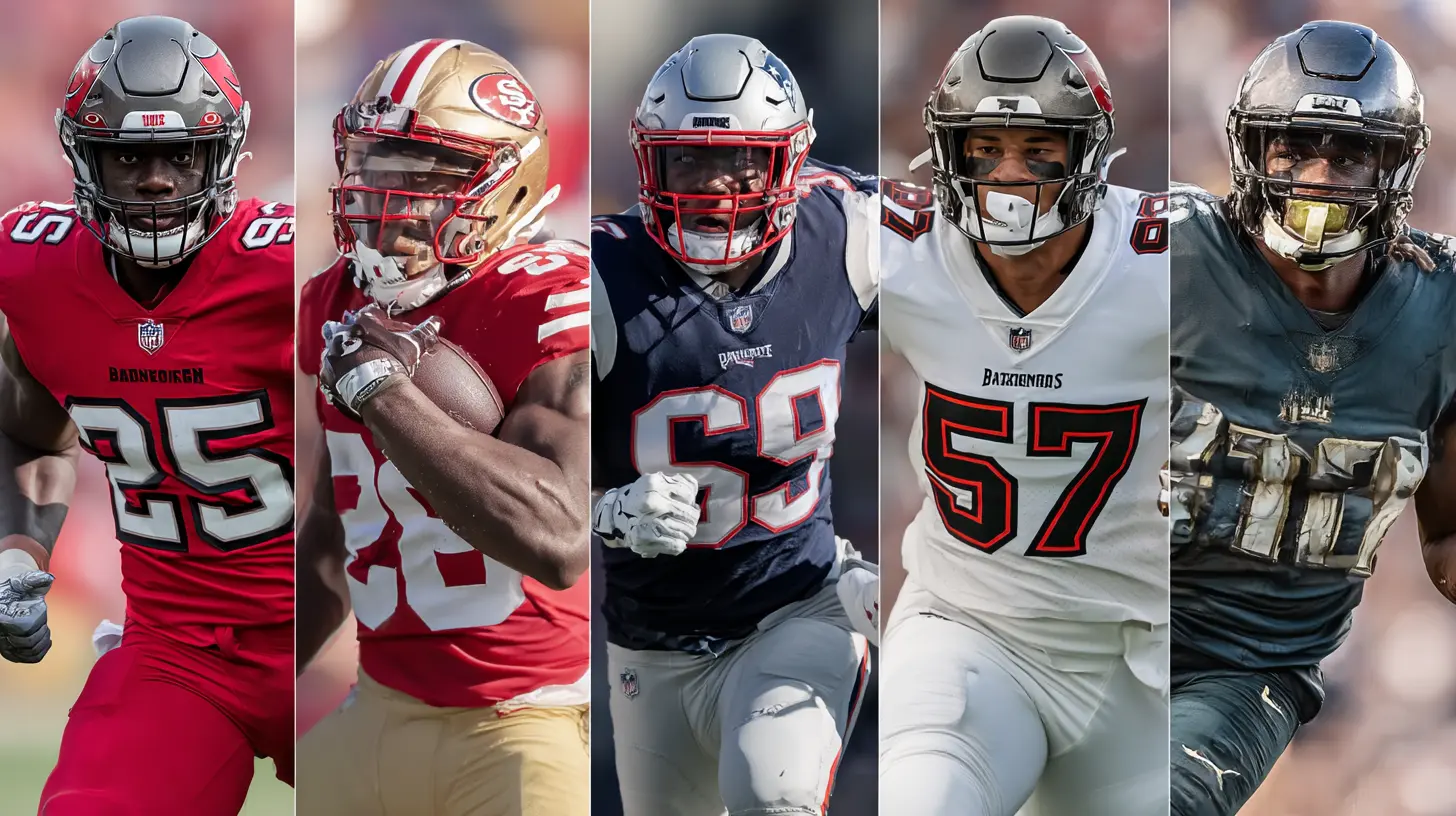
The Teams Poised for the Biggest Jumps
With that framework in place, here is where the real improvement is likely to come from.Team Profile One: The Young Core That Finally Has a Supporting Cast
The most common profile of a genuinely improved team is one that already had its stars and spent the offseason filling in the gaps around them. Think of a team with a franchise quarterback on a rookie contract that used its cap space to sign two starting-caliber offensive linemen and a reliable slot receiver. The quarterback was already good. Now he has time and options.Why this works: rookie-contract stars create a massive efficiency window. You are paying elite production at a fraction of market value, which means you can afford depth elsewhere. Teams that waste this window by overpaying for a single veteran star usually regret it. Teams that use it to build a balanced roster often make a leap.
What to watch: whether the new additions actually fit the scheme. A great pass-blocking tackle who struggles in a zone-run system is not a great fit, no matter what the highlight reel says. The teams that get this right are the ones whose coaching staff was involved in the acquisition process from the start.
The risk: young cores can plateau. Development is not linear, and a quarterback who looked ascendant in year two can regress in year three if defenses adjust and he does not counter-adjust. Improvement is likely, not guaranteed.
Team Profile Two: The Team That Fixed Its Biggest Structural Flaw
Some teams are good everywhere except one glaring weakness. A basketball team that cannot shoot. A football team that cannot stop the run. A hockey team that cannot win a faceoff in its own zone. These flaws are often the difference between a first-round exit and a deep run.When a team addresses that one flaw with a targeted move, the improvement can be dramatic even if the roster looks similar on paper. This is the logic behind signing a pure shooting specialist or a run-stuffing defensive tackle. The player may not be a star, but the fit is so precise that the whole system functions better.
Why this works: in team sports, the weakest link often determines the ceiling. Removing that link raises the floor for everyone. A point guard who can shoot forces defenders to stay home, which opens driving lanes for everyone else. A defensive tackle who commands double teams frees up the linebackers to make plays.
When it does not work: if the "flaw" was actually a symptom of a deeper problem. If a team cannot stop the run because its linebackers are slow to read plays, adding a defensive tackle will help but not fix it. The best front offices diagnose root causes, not symptoms.
Team Profile Three: The Coaching Change That Actually Fits
Coaching changes are the most overhyped and underanalyzed form of offseason improvement. A new coach can transform a team, but only if the scheme matches the personnel and the coach can actually teach it.The teams that improve most from a coaching change are usually the ones that hired a coach whose system is a natural fit for the existing roster. If you have a mobile quarterback and you hire a coach who runs a spread-option system, that is a fit. If you have a statuesque pocket passer and you hire the same coach, that is a disaster waiting to happen.
Why this works: scheme fit can add wins without any roster turnover. Players who looked mediocre in one system can look excellent in another. This is not magic. It is about putting people in positions to succeed.
What to consider: coaching changes also come with transition costs. New terminology, new relationships, new expectations. The first half of the season can be rocky even when the long-term trajectory is positive. Patience matters.
Team Profile Four: The Team Getting Healthy
This is the least glamorous category and the one most likely to be ignored. A team that lost its starting point guard for 30 games, its best defensive lineman for the season, and its closer for two months is not as bad as its record suggested. Getting those players back is not "improvement" in the developmental sense, but it produces improvement in the standings.Why this matters: sports media consistently underrates health regression. A team that finished 35-47 with major injuries is not the same team that will take the field or court next season. If the underlying roster is solid, health alone can produce a ten-game swing.
The caution: health is not guaranteed. Some players are injury-prone, and counting on them to stay healthy is a gamble. The teams that benefit most from health regression are the ones whose injured players have a track record of durability, not the ones hoping a chronically injured star suddenly becomes reliable.
Team Profile Five: The Rebuild That Hit the Inflection Point
Every rebuild has a moment when the accumulated draft picks and young players start to produce at the professional level. The 2027 season may be that moment for a team that has been stockpiling talent for three or four years.Why this works: young players improve rapidly in their first few seasons. A team full of 23 and 24 year olds is not the same team it was two years ago. The improvement is baked in, even if no major acquisitions were made.
What to watch: whether the team has enough veteran leadership to handle success. Young teams often struggle with expectations. They can also struggle with adversity. The best rebuilds add a few veterans specifically to stabilize the locker room, not to produce on the field.

What Separates Real Improvement From Offseason Noise
The teams that actually improve share a few characteristics. Understanding these patterns helps separate genuine contenders from paper tigers.Continuity Matters More Than Most Fans Think
Teams that retain their coaching staff and core players tend to improve more than teams that overhaul everything. Continuity allows for refinement. Players already know the system, so they can focus on execution rather than learning. Coaches already know the players, so they can tailor the scheme to their strengths.This is why the "winner of free agency" often disappoints. New players need time to integrate. New systems need time to install. The teams that improve most are often the ones that changed the least, but changed the right things.
The Salary Cap Is a Strategic Tool, Not Just a Constraint
Teams with cap flexibility can improve quickly. Teams without it are stuck. The most improved teams going into 2027 are often the ones that spent the previous two years cleaning up their cap situation, which means they can now sign the players they need without sacrificing the future.This is not exciting. It does not generate headlines. But it is how good organizations operate. They plan for windows of contention rather than trying to win every offseason.
Draft Hit Rate Is the Hidden Variable
No team improves consistently without hitting on draft picks. The teams that look most improved going into 2027 are often the ones that have drafted well for three consecutive years. Those picks are now entering their prime, and the improvement is the natural result of that accumulation.This is why grading drafts immediately is pointless. The real evaluation happens three years later, when those players are either contributors or busts.

Common Mistakes in Evaluating Improvement
Even experienced analysts fall into predictable traps when projecting which teams will improve. Here are the ones to avoid.Mistaking Activity for Improvement
A team that signs five free agents is not necessarily better than a team that signs one. Activity can be a sign of desperation rather than competence. The best front offices are disciplined. They make moves when the value is right, not when the pressure to do something is highest.Ignoring Coaching and Scheme
Roster turnover gets the headlines, but scheme changes often matter more. A team that switches from a man-to-man defense to a zone scheme can improve dramatically with the same personnel if the players fit the new system better. This is not sexy, but it is real.Overrating Veteran Additions
Veterans are valuable, but they are also risky. Players in their 30s can decline quickly, and the decline is often sudden rather than gradual. A team that signs a 32-year-old star to a long-term deal may get one or two good years and then be stuck with an albatross contract.The best veteran additions are short-term and role-specific. A team that signs a 34-year-old shooter to a two-year deal is making a smart bet. A team that signs the same player to a four-year deal is gambling on something that rarely happens.
Underrating Internal Growth
The most reliable source of improvement is a young player getting better. This is also the hardest to project because development is not linear. Some players make a leap. Others plateau. The teams that improve most are often the ones with multiple young players who are all trending upward at the same time.Practical Takeaways for Fans and Analysts
If you want to evaluate which teams will actually improve, here is a simple framework.First, look at the young core. Are there players in their second, third, or fourth seasons who showed real progress last year? If so, expect more.
Second, look at the coaching staff. Did the team retain its coaches, or did it make a change? Continuity usually helps. Changes can help, but only if the fit is right.
Third, look at health. Did the team lose significant time to injuries last year? If so, expect regression to the mean.
Fourth, look at the cap situation. Does the team have flexibility to add players, or is it stuck?
Fifth, look at the draft. Did the team add players who fill specific needs, or did it draft the best available athlete regardless of fit?
Teams that score well on these five dimensions are the ones most likely to improve. Teams that score poorly are the ones most likely to disappoint, regardless of how many headlines they generated in the offseason.
Conclusion
The most improved teams going into the 2027 season will not necessarily be the ones that made the biggest splashes. They will be the ones whose improvements are structural and sustainable: young cores maturing, scheme fits improving, health returning, and targeted acquisitions addressing real needs.That is less exciting than a blockbuster trade, but it is how improvement actually happens. The teams that understand this are the ones that consistently outperform expectations. The teams that do not are the ones that win the offseason and lose the season.
all images in this post were generated using AI tools
Category:
Preseason AnalysisAuthor:

Easton Simmons