Live Breakdown: Strategies Behind the Cycling Tour Sprint Finish
24 October 2026
Sprint finishes in a grand tour are chaos with a choreography. From the outside, it looks like a hundred riders hurtling toward a line at 70 kilometers per hour, and may the fastest survive. From the inside, it is a chess match played at speed, where lead-out trains, wind direction, road furniture, and the nerve of a single rider decide who wins and who goes home with road rash.
This breakdown is for the fan who wants to see the race the way riders and directors see it, and for the rider or coach who wants to build a sprint that holds up under pressure. We will move through the anatomy of the final ten kilometers, the architecture of a lead-out train, the physics and tactics that decide the last 200 meters, and the mistakes that quietly cost teams wins. No single secret explains a sprint finish. A stack of small, well-executed decisions does.
Why the Final Ten Kilometers Matter More Than the Final Ten Seconds
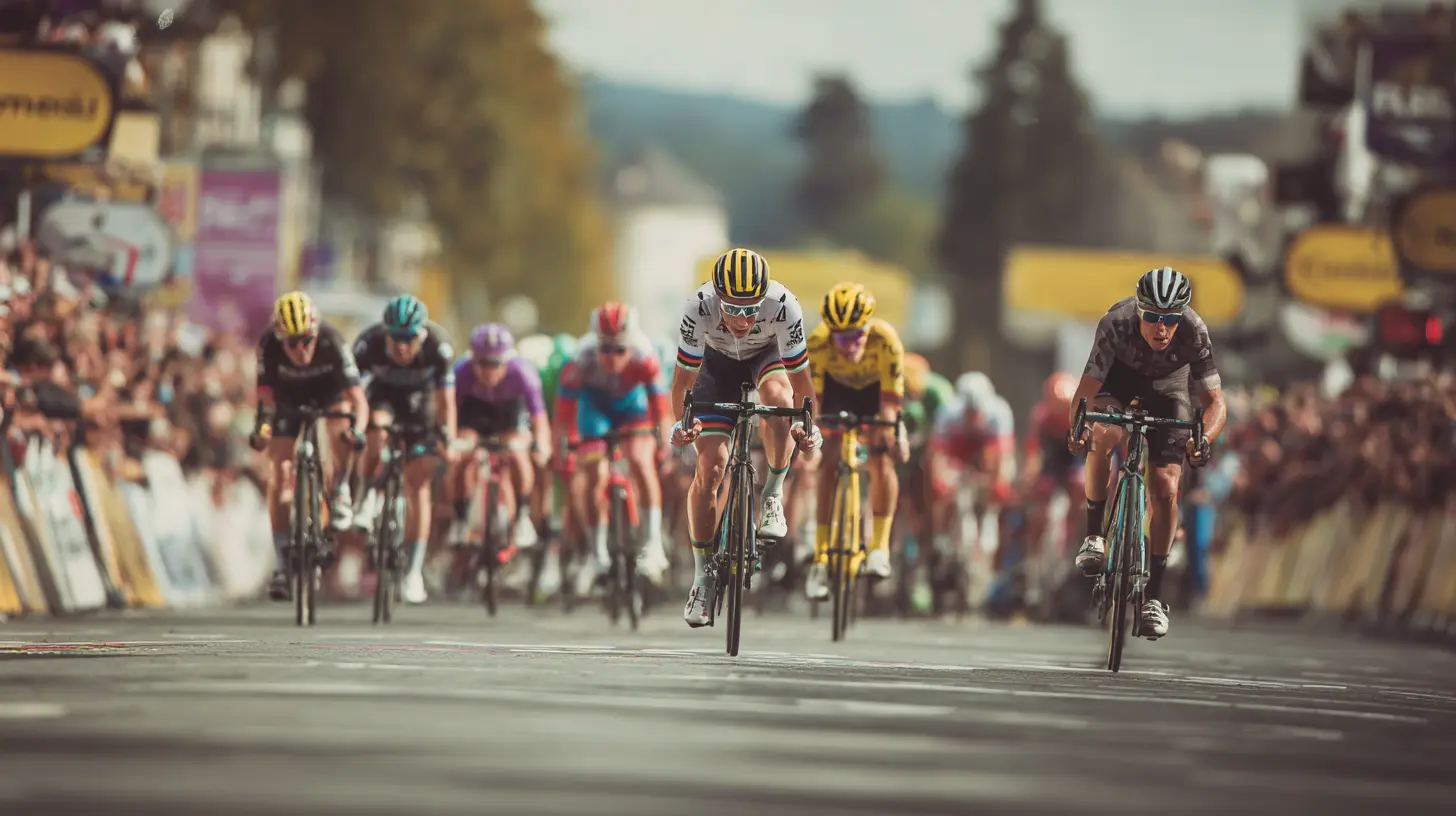
Most viewers tune in for the last kilometer. Most of the outcome is already decided by then. The final ten kilometers are where positioning is won, where teams burn their domestiques, where crosswinds split the bunch, and where a badly timed move forces a sprinter to spend matches he does not have.Think of a sprint finish as a budget problem. Every rider has a finite number of hard efforts, and the final kilometer demands a near-maximal one. Every unnecessary acceleration before that point is money taken out of the account. The team that reaches the flamme rouge with its sprinter sheltered, calm, and near the front has effectively bought a faster final 200 meters.
This is why directors talk about "controlling" the race rather than "winning" the sprint. Control is the precondition. A sprinter who has to fight for position from twentieth wheel with 800 meters to go is already racing a different, harder race than the one he trained for.
The Anatomy of the Final Ten Kilometers
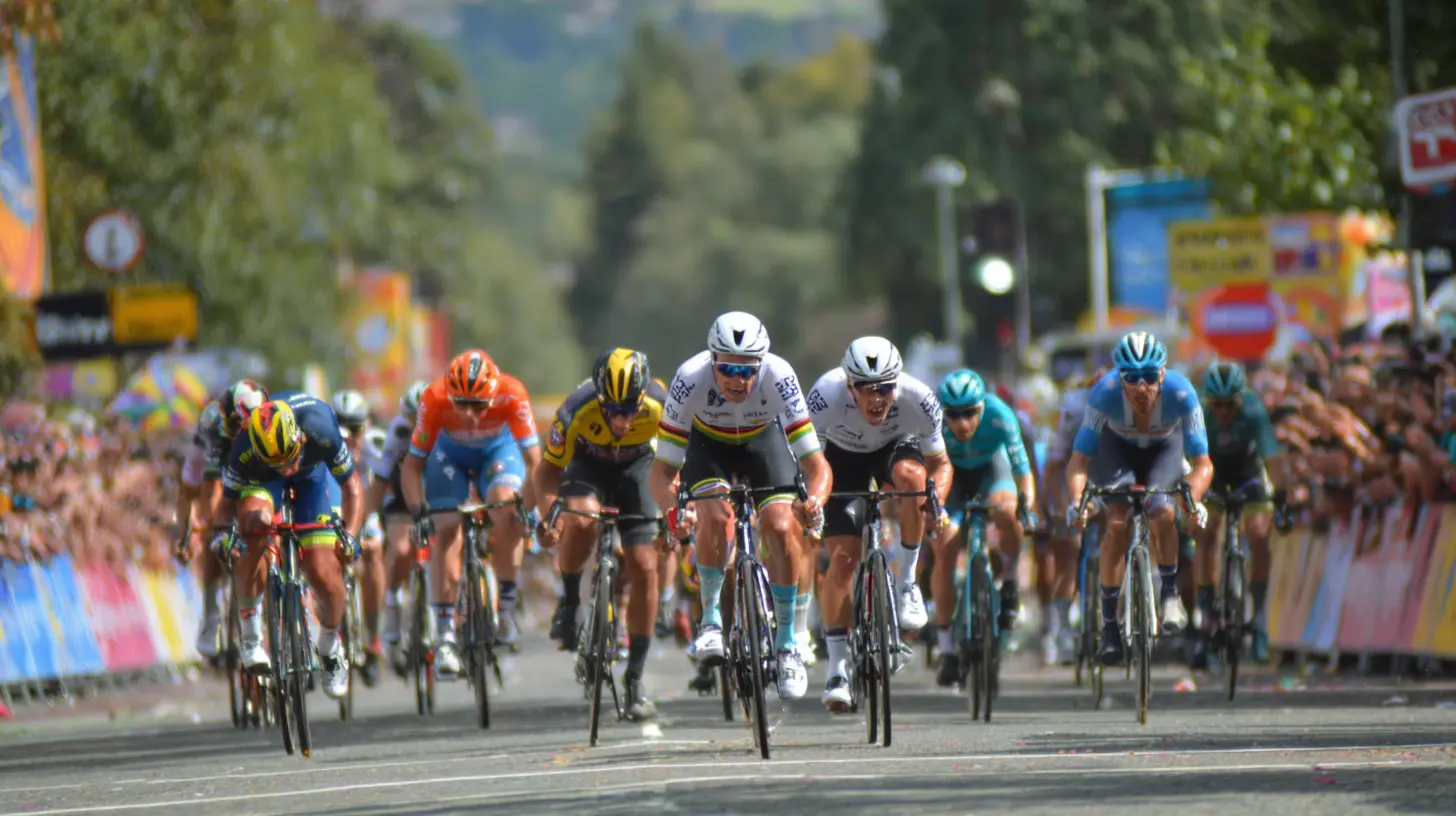
A sprint finish unfolds in recognizable phases. Elite teams do not improvise them. They rehearse them.Phase 1: The Chase and the Catch (10 to 5 km to go)
If a breakaway is still out front, this is where the sprint teams organize the pursuit. The goal is not to catch the break as early as possible. Catching too early invites counterattacks and gives rivals a free ride. Catching too late leaves no time to set up the train. The sweet spot is usually a catch with roughly three to five kilometers remaining, though wind, road width, and the strength of the break change the math.The team doing the chasing is spending energy. That is a real cost, and it is why teams with multiple sprint options or a strong all-rounder sometimes prefer to let a rival squad do the work. The trade-off: saving legs now can mean losing the front of the bunch later.
Phase 2: The Fight for Position (5 to 2 km to go)
This is the least glamorous and most decisive part of the race. The bunch compresses, riders jostle shoulder to shoulder, and the road often narrows. Teams try to move their sprinter up without burning him out. The lead-out riders form a moving wall, and rivals probe for gaps.Two competing philosophies exist here. One is to go early and secure the front, accepting the wind exposure. The other is to sit a few wheels back and surf the slipstream, accepting the risk of getting boxed in. Neither is universally correct. On a wide, straight run-in, surfing is often better. On a technical or narrow finish, securing the front early usually wins.
Phase 3: The Lead-Out (2 km to 300 m to go)
The train delivers the sprinter to the launch point. The last lead-out rider, often called the pilot or the final man, sets the pace and then pulls off at the moment the sprinter opens up. The timing of that pull is one of the hardest skills in the sport. Pull off too early and the sprinter is exposed. Pull off too late and the sprinter has to swing around a fading teammate and loses the slipstream advantage.Phase 4: The Sprint (300 m to the line)
The sprinter chooses a line, commits, and holds it. The best sprinters read the wind, the road camber, and the closing speed of rivals behind them. They also know when to start and when to wait. Starting too early is the most common error. Waiting too long is the second most common.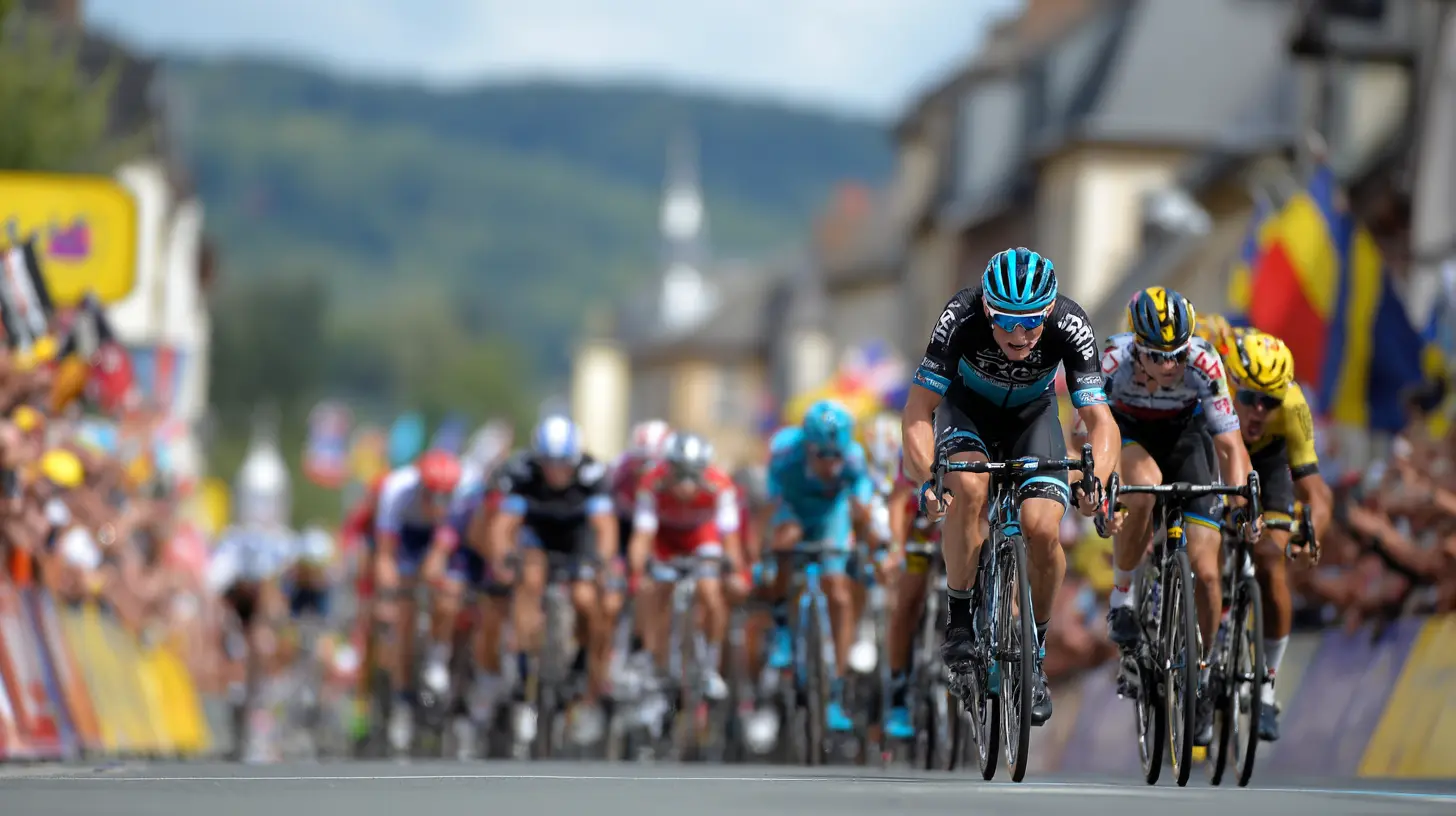
Building a Lead-Out Train: Roles, Order, and Trade-Offs
A lead-out train is a relay team on wheels. Each rider has a job, and the order is not arbitrary.The Roles
- The early pacers set tempo and control the bunch, often from five kilometers out. They are strong, steady riders who can hold a high pace without surging.- The positioning riders move the train through traffic and protect the sprinter from wind and contact.
- The pilot is the last rider before the sprinter, usually a fast, tactically sharp rider who can read the finish and deliver at speed.
- The sprinter sits last, sheltered, conserving energy until the launch.
The Order and Why It Matters
The train is usually arranged so that the strongest endurance riders are at the front and the fastest, most explosive riders are at the back. This is a simple energy logic: the front riders do more work for longer, so they need bigger engines. The pilot and sprinter need acceleration, not endurance.There is a real trade-off in train length. A longer train offers more shelter and control but is harder to keep together and easier for rivals to disrupt. A shorter train is more flexible and harder to hijack, but the sprinter gets less protection. Many teams now run a compact three or four rider train rather than the long eight rider trains of the past, because modern sprint speeds make a long line fragile.
The Hijack Problem
Rival teams will try to slot into your train, using your lead-out as a free ride. This is legal and common. Teams counter it by riding slightly off the barriers, by accelerating to shed unwanted wheels, or by having a rider "close the door" gently. The line between defending your train and dangerous riding is thin, and commissaires watch it closely. A team that defends too aggressively risks relegation or disqualification.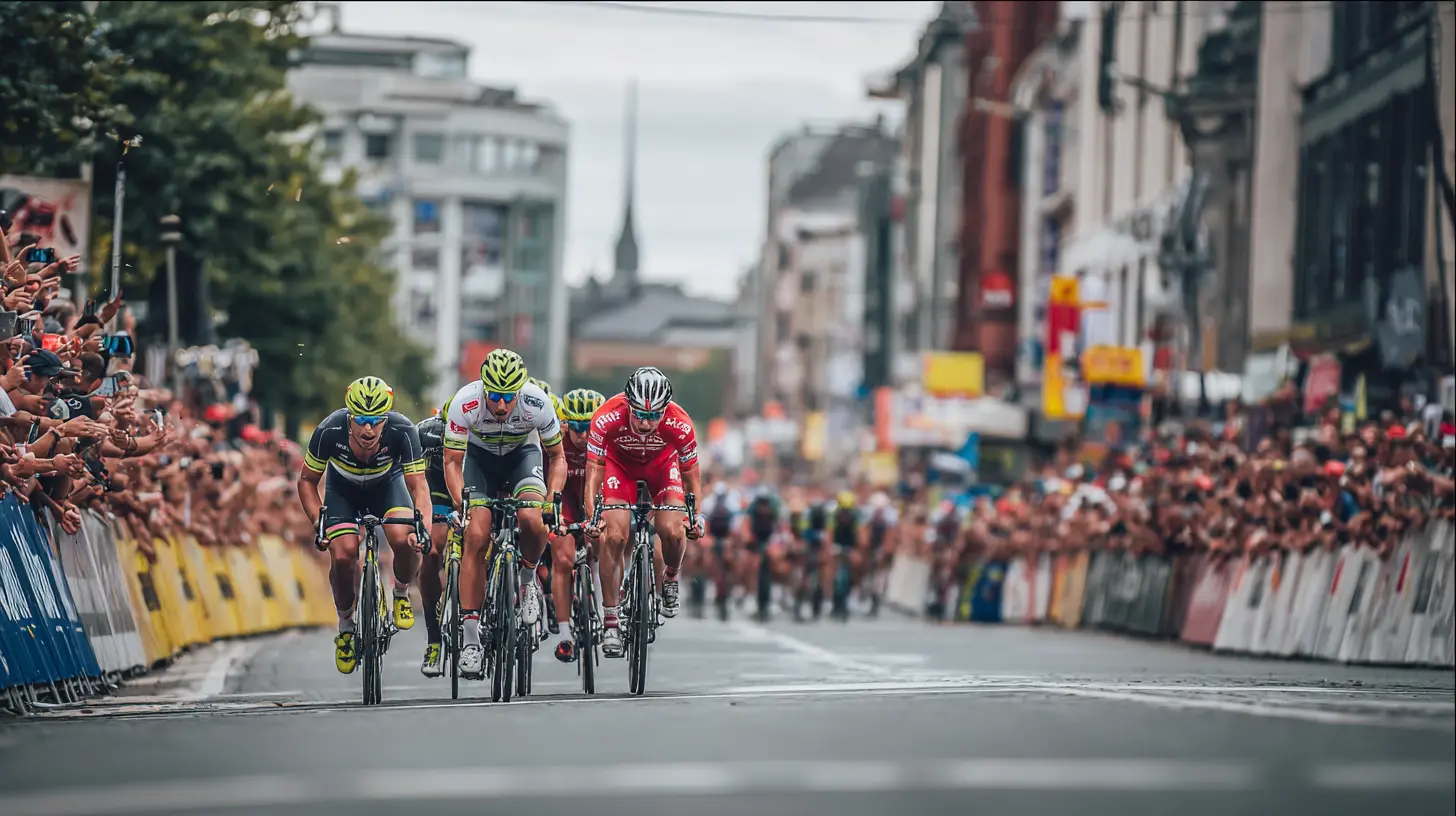
The Physics and Tactics of the Last 200 Meters
The final 200 meters is where aerodynamics, timing, and nerve collide.Drafting and the Slipstream
At sprint speeds, sitting in the slipstream saves a large fraction of energy. The sprinter wants to stay sheltered until the last possible moment, then move out into clean air. The ideal launch is a slingshot: the sprinter swings out from behind the pilot with speed already built, so the acceleration is shorter and the top speed is higher.The mistake many riders make is opening up too far out, often 300 meters or more, because they fear getting boxed in. That exposes them to the wind for longer and lets faster finishers draft them before coming around. The best sprinters often wait until 150 to 200 meters, then use a short, violent acceleration.
Wind Direction
A headwind favors patience. Riders who go early into a headwind fade, and the smart move is to wait and use the draft longer. A tailwind favors early commitment and high speed, because the draft matters less and momentum carries. A crosswind changes everything: it creates echelons earlier in the race and makes the final sprint a fight for the sheltered side of the road.Road Camber and Surface
The crown of the road, the camber, and even the type of asphalt affect line choice. Riders often prefer the smoother, more sheltered side, and the finish line placement relative to the barriers can decide which side is faster. Teams scout finishes in advance for exactly this reason.Reading the Sprint: What Experts Watch
If you want to watch a sprint like a coach, ignore the leader and watch the wheels behind him.- Who is doing the work? The team on the front from five kilometers out is usually committed. If a team is absent, ask why. They may be saving for a later stage or protecting a general classification rider.
- Where is the sprinter? A sprinter sitting fifth or sixth wheel with 500 meters to go is well placed. A sprinter in fifteenth is in trouble.
- Is the train coherent? A train that surges and slows is disorganized. A smooth, steady train is dangerous.
- Who is surfing? Riders moving up without teammates are often the smartest and most dangerous. They are saving energy and choosing their moment.
Common Mistakes and Misconceptions
Misconception: The fastest rider always wins
Sprint finishes reward position and timing as much as raw speed. A rider with a superior top speed who launches from twentieth wheel rarely wins. A slightly slower rider with a perfect lead-out often does.Mistake: Going too early
The most common error. Excitement, fear of getting boxed, or a fading pilot pushes riders to open up too soon. The result is a long, exposed effort that ends short of the line.Mistake: Fighting for position too far out
Burning matches at five kilometers to go to gain three places is usually a bad trade. The energy spent there is energy missing at the line.Mistake: Ignoring the wind
Riders who sprint into a headwind as if it were a tailwind consistently fade. Reading the wind and adjusting launch distance is a skill that separates good finishers from great ones.Misconception: The lead-out is only about speed
A lead-out is about control, communication, and timing. A fast but disorganized train is less effective than a slower, precise one.Practical Advice for Riders and Coaches
For Sprinters
- Practice launch timing at different distances and in different winds. Build a feel for what 200 meters at race speed actually costs.- Learn to surf wheels. Riding without teammates is a skill, and it makes you dangerous in chaotic finishes.
- Stay calm. Panic leads to early moves. The best sprinters are patient until the exact moment.
For Lead-Out Riders
- Communicate. A quick word or a hand signal can prevent a mistimed pull.- Hold a steady line and pace. Surging disrupts the sprinter's rhythm.
- Know your pull-off point in advance. Scouting the finish helps.
For Coaches
- Rehearse the train in training, including the messy parts: contact, wind, and traffic.- Build sprint-specific endurance so lead-out riders can hold high tempo for several kilometers.
- Review race footage with riders and identify positioning errors, not just outcomes.
Balancing Risk and Reward
Every sprint decision is a trade-off. Going early reduces the risk of being boxed in but increases wind exposure. Sitting back saves energy but risks getting trapped. A long train gives control but is fragile. A short train is flexible but offers less shelter.There is no single correct answer. The right choice depends on the finish, the wind, the strength of your team, and the form of your rivals. The best teams are not the ones with a fixed plan. They are the ones with a plan and the flexibility to change it when the race demands.
Final Thoughts
A sprint finish is a compressed story of preparation, trust, and nerve. The winner is rarely the strongest rider in the race. He is the rider whose team controlled the chaos, whose pilot timed the pull, and who waited one heartbeat longer than everyone else before opening up.Watch the final ten kilometers with that in mind, and you will see far more than a blur of color. You will see a strategy executed, or a strategy falling apart.
all images in this post were generated using AI tools
Category:
Live CommentaryAuthor:

Easton Simmons