How Team Cultures Are Evolving During 2026 Camps
7 September 2026
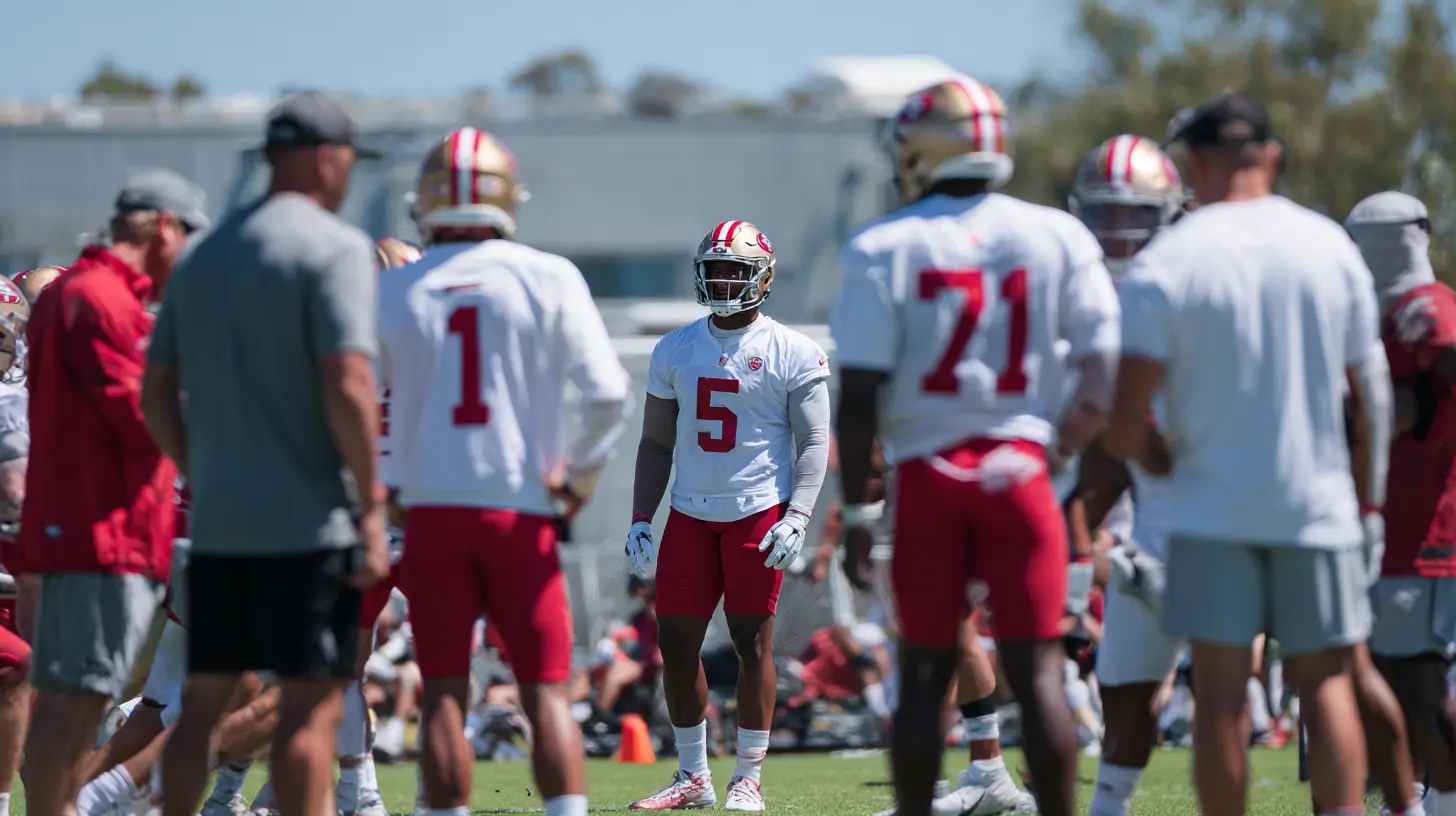
The summer camp has always been the great equalizer in professional sports. It is where the hype of the offseason meets the reality of the practice field. For decades, the formula was simple: veterans set the tone, rookies shut up and carry the pads, and the head coach's personality dictated the atmosphere. But the 2026 cycle is different. The cultural architecture of a team is no longer built from the top down exclusively. It is being co-created by a generation of players who value transparency, mental health, and individual purpose as much as they value winning.
Walking into a training camp in 2026 feels less like entering a military installation and more like stepping into a high-performance tech startup. The shift is not cosmetic. It is structural. And for coaches, front offices, and veteran players who refuse to adapt, the camp environment is becoming the first major battleground of the season. The teams that win in January are often the ones that solve their cultural puzzles in July and August.
The Death of the "Old School" Camp Mentality
For a long time, the prevailing philosophy in camps was simple: break them down to build them up. The idea was that physical exhaustion and psychological pressure would forge a unified, hardened group. Coaches screamed, practices ran long, and contact was heavy. The unspoken rule was that suffering together created a bond that money could not buy.
That model is not dead, but it is dying. The 2026 athlete is more informed and more empowered than any previous generation. They have access to sports science data that shows the diminishing returns of overtraining. They have platforms to voice their opinions directly to fans. And they have a keen awareness of the mental health crisis that has swept through professional leagues over the last half-decade. When a coach in 2026 tries to run a "brutal" camp for the sake of tradition, they are not just risking injuries. They are risking the trust of the locker room.
The most successful franchises have realized that culture is not a byproduct of suffering. It is a product of shared goals and mutual respect. This does not mean camps are soft. On the contrary, the physical standards are higher than ever. But the motivation has shifted. Instead of using fear as a tool, coaches are using purpose. The best camps in 2026 are intense because the players want them to be, not because they are being forced into submission.
Consider the difference between a "hard" camp and a "tough" camp. A hard camp is defined by the coach's demands. A tough camp is defined by the players' standards. The former relies on external pressure. The latter relies on internal accountability. The evolution we are seeing is a movement away from the former and toward the latter. This is not a semantic difference. It changes how drills are run, how mistakes are corrected, and how players interact with each other off the field.
Why "Psychological Safety" Is the New Buzzword
In corporate boardrooms, psychological safety has been a talking point for years. It is the idea that team members feel safe to take risks and be vulnerable without fear of punishment or humiliation. In 2026, this concept has finally taken root in professional sports, and it is reshaping camp dynamics.
The old model treated vulnerability as weakness. A player who admitted to being confused about a playbook or anxious about a position battle was seen as mentally fragile. In 2026, that same admission is viewed as a sign of high self-awareness. Teams are hiring sports psychologists not just to treat issues, but to proactively build an environment where players can communicate openly.
During camp, this manifests in several concrete ways. First, the quarterback-room dynamic has changed. In the past, a backup quarterback would rarely challenge the starter's understanding of a defensive look. Now, teams are actively encouraging cross-positional dialogue. A safety might sit in on a receivers' meeting to explain what he sees on a specific route combination. A defensive lineman might ask the offensive line about their blocking scheme, not to gain a competitive edge, but to understand the game better. This cross-pollination creates a culture of curiosity rather than a culture of competition for survival.
Second, the handling of mistakes has evolved. The classic camp coaching moment is the public takedown. The coach stops the drill, screams at the player, and uses him as an example for the rest of the group. In 2026, the most effective coaches pull the player aside. They ask questions first: "What were you seeing there?" "Why did you make that read?" This approach does not excuse the error, but it treats the player as a thinking partner rather than a malfunctioning robot. The result is that players are more willing to try new techniques during camp, because they know a failed experiment will not cost them their roster spot or their dignity.
The Rise of the Player-Led Council
One of the most significant structural changes in camp culture is the formalization of player leadership. In the past, leadership was informal. It belonged to the loudest veteran or the highest-paid star. In 2026, many teams have established player-led councils that meet with the coaching staff on a weekly basis during camp. These councils are not just for show. They have real input on practice schedules, recovery days, and even travel logistics.
This evolution did not happen because owners suddenly became progressive. It happened because the alternative failed. Teams that ignored player input on workload management saw a spike in soft-tissue injuries by week three of the season. Teams that forced players to practice in the heat without adjusting times faced mutiny, not in the form of protests, but in the form of passive resistance. Players would go through the motions, conserving energy for games, which made camp practices useless.
The councils solve this by aligning incentives. When players have a voice in the schedule, they take ownership of the execution. A camp practice that starts at 10 a.m. instead of 8 a.m. might seem like a minor concession, but it signals that the organization respects the players' biological needs. In return, the players are expected to be fully present during the 10 a.m. session. This trade-off is the essence of modern cultural negotiation. It is not about giving in to demands. It is about creating a system where both sides are accountable to each other.
The Role of Social Media and Personal Branding
It would be naive to talk about 2026 camp culture without addressing the elephant in the room: the camera. Every player in camp has a phone, and most have a personal brand that they are actively cultivating. This has changed the way players interact with each other and with the coaching staff.
In the past, a rookie hazing ritual might involve carrying a veteran's pads or singing a song at dinner. In 2026, these rituals are heavily monitored because they can be filmed and posted online. A harmless prank can quickly become a national news story if it is taken out of context. This has led to a professionalization of behavior that some veterans miss. The locker room banter is still there, but it is more guarded.
However, the social media presence also has a positive cultural impact. Players are using their platforms to document the grind of camp, which creates a sense of shared experience with fans. More importantly, it creates a sense of shared experience within the team. When a player posts a video of a young offensive lineman staying late to work on footwork, it goes viral in the locker room group chat. The praise from teammates online reinforces the behavior in person. This creates a feedback loop where hard work and dedication are publicly celebrated, not just privately acknowledged.
The danger here is performative culture. Players might start doing extra work for the camera rather than for the improvement. Coaches in 2026 are becoming savvy to this. They are looking for consistency between the public image and the private effort. The teams that manage this well have a clear code of conduct regarding social media. They do not ban it, because that would be futile. Instead, they educate players on how to build their brand without undermining the team's mission. The cultural norm becomes: promote yourself, but never at the expense of the collective.
The Hybrid and Remote Camp Model
The COVID-19 pandemic forced teams to explore virtual meetings, and the lessons from that era have stuck. While the physical camp is irreplaceable for building chemistry, the 2026 camp is increasingly a hybrid experience. Teams are using digital platforms for classroom sessions before players even report to the facility.
This has a profound effect on culture. In the past, the first week of camp was a scramble to install the playbook. Veterans would get frustrated with rookies who did not know the terminology. Now, rookies are expected to arrive at camp having already passed a digital playbook exam. This shifts the cultural dynamic from "teaching the basics" to "refining the details." The patience level is higher because the baseline knowledge is higher.
the hybrid model allows for a more inclusive environment for players who are recovering from injuries. A player who is on the physically unable to perform list can still attend positional meetings virtually. They remain part of the cultural fabric of the team, rather than being isolated in the training room. This prevents the "out of sight, out of mind" problem that used to plague injured veterans. They stay connected to the emotional pulse of the group, which makes their eventual return to the field smoother.
The downside is the loss of spontaneous interaction. The best cultural moments in camp often happen in the cafeteria or the hotel lobby. A virtual meeting cannot replicate the conversation that happens when two players are waiting for the ice bath. Teams are mitigating this by creating "social zones" in the facility where devices are discouraged. The goal is to use technology for efficiency but to protect the analog spaces where human connection happens.
Data-Driven Culture vs. Intuition
Another major shift in 2026 is the reliance on biometric data to make cultural decisions. Wearable devices track sleep, heart rate variability, and workload. Coaches use this data to decide who gets a rest day and who needs extra conditioning. This seems like a purely physical decision, but it has cultural implications.
When a coach rests a player based on data, it sends a message that the organization values longevity over short-term gain. This builds trust. However, there is a risk of over-reliance on the numbers. A player might feel fine but have poor sleep data due to a crying baby at home. If the coach benches him based on the watch, it can create resentment. The best coaches in 2026 use the data as a conversation starter, not as a verdict. They ask the player: "Your numbers look low today. How are you feeling?" This opens a dialogue that builds a stronger relationship than either pure intuition or pure data ever could.
The cultural mistake occurs when teams treat the data as a moral judgment. A player with a high workload is not necessarily lazy, and a player with a low heart rate is not necessarily calm. The data is a tool, not a personality test. Teams that fail to understand this create a culture of suspicion where players try to game the system by hiding their fatigue. This is the opposite of the psychological safety we discussed earlier. The goal should be to create a culture where players are honest about their physical state because they know the data will be used to help them, not to punish them.
The Global Game and Cultural Diversity
The 2026 camp is also more international than ever. Leagues are scouting talent globally, and the player pool is increasingly diverse in nationality, language, and cultural background. This creates a rich environment but also a challenging one for team cohesion.
In the past, the melting pot approach was to force everyone to assimilate to the dominant culture. English was the only language spoken, and American football rituals were the only ones observed. In 2026, the best teams are adopting a mosaic approach. They recognize that a player from Japan might have a different communication style than a player from Texas. They do not try to erase those differences. Instead, they find ways to honor them.
This shows up in small ways during camp. Halal meal options are no longer an afterthought. Translation services for playbooks are standard. Team meetings might include a moment of silence for a cultural holiday that is important to a handful of players. These gestures are not political statements. They are practical tools for making every player feel like they belong. A player who feels like an outsider will not play with reckless abandon. A player who feels valued will run through a wall for the guy next to him.
The trade-off here is time. Accommodating cultural differences takes time away from football instruction. There is a cost to having a longer meeting to ensure everyone understands the nuance of a phrase. But the teams that invest this time see a return in the form of reduced friction. They avoid the misunderstandings that lead to locker room cliques. The culture becomes one of mutual curiosity rather than mutual suspicion.
The Quarterback Problem
No discussion of team culture is complete without addressing the quarterback position. In 2026, the quarterback is still the de facto leader of the offense, but the cultural expectations of that role have expanded. A quarterback is now expected to be a CEO, a therapist, and a social media influencer all at once. This is an impossible burden, and how teams manage it during camp is a defining cultural issue.
Some teams are moving to a model where the quarterback is not the sole voice of the team. They are elevating the center, the middle linebacker, and the free safety as co-captains of the culture. This distributes the leadership load and prevents the team from becoming a cult of personality around one player. This is a healthy evolution because it makes the culture more resilient. If the starting quarterback gets injured, the team does not lose its identity because the identity is shared.
However, there is a counterargument. Some of the greatest teams in history were built on the singular will of a dominant quarterback. Their manic intensity set the standard. In 2026, there are still players like that, but they are rarer. The teams that try to force a non-dominant personality into a dominant role often fail. The cultural lesson is to be authentic. The team should adapt to the quarterback's natural leadership style, not the other way around. If the quarterback is quiet and lead by example, the camp culture should reward that. If the quarterback is vocal and fiery, the culture should make space for that intensity.
The Role of the Head Coach as a Cultural Architect
The head coach in 2026 has to be more than an X's and O's guru. They have to be a cultural architect. This means they are designing the environment, not just calling the plays. The best coaches in the league spend their offseasons not just studying film, but studying group psychology. They are reading books on organizational behavior and consulting with experts from outside the sports world.
This is a departure from the old guard, who believed that football was football and that the same principles that worked in 1995 would work in 2026. The game has changed, and the players have changed. A coach who cannot adapt to the new cultural landscape will quickly lose the locker room, regardless of their strategic genius.
The common mistake for new coaches is to come in with a "my way or the highway" attitude. They want to establish authority immediately. In 2026, this is a recipe for disaster. The players will tune out, and the front office will eventually side with the players because they are the more expensive assets. The successful coach in 2026 is the one who listens first and talks second. They ask questions about the previous season's issues. They solicit feedback from the veteran leaders before they implement new rules. This does not mean they are a pushover. It means they are strategic. They pick their battles and they choose the cultural norms that truly matter, rather than fighting over trivialities like dress code or music volume in the locker room.
The Danger of "Culture" as a Buzzword
With all this talk about culture, there is a risk that the term becomes meaningless. Every team claims to have a great culture. Every coach says they prioritize it. In 2026, the discerning observer looks for actions, not words.
A team that talks about culture but cuts a veteran player abruptly without a conversation is sending a message. A team that claims to value mental health but schedules double practices every day is lying. The players are not stupid. They see the hypocrisy. The cultural evolution in 2026 is about aligning the stated values with the demonstrated behaviors.
This is where many teams fail. They hire a "culture coach" or a "director of team development" and think that solves the problem. But culture is not a department. It is the sum of every interaction. It is how the equipment manager treats the third-string punter. It is how the head coach reacts to a turnover in practice. It is whether the team bus leaves on time for a rookie who is running late because he was helping a teammate with a drill.
The best practices in 2026 involve a constant audit of these micro-interactions. Teams are using anonymous surveys during camp to check the pulse of the roster. They are asking questions like: "Do you feel comfortable sharing your opinion with the coaching staff?" and "Do you trust your teammates to do their jobs?" The results are used to adjust the camp schedule and the meeting structure. This is not micromanagement. It is a commitment to continuous improvement in the human dimension of the sport.
Looking Ahead: The 2026 Season and Beyond
As the 2026 camps draw to a close and the regular season begins, the teams that have embraced this cultural evolution will have a distinct advantage. They will be more resilient to the inevitable adversity of a long season. They will be better equipped to handle the loss of a star player to injury. They will be more attractive to free agents in the next offseason.
The teams that have resisted this change will not necessarily fail, but they will struggle. They will rely on talent alone, and talent is rarely enough in a league where every team has talented players. The difference between the haves and the have-nots is increasingly the quality of the human environment.
For players entering their first camp in 2026, the advice is to be a cultural contributor, not just a cultural consumer. Do not wait for the veterans to set the tone. Ask questions. Offer help. Be the person who organizes the optional film session. In the new model, leadership is available to anyone who wants it, regardless of draft position or salary.
For coaches, the advice is to be humble. The days of the autocratic dictator are over. The best you can be is a steward of the environment. You are not the star of the show. The players are. Your job is to create the conditions where they can be their best selves, both on and off the field.
The evolution of team culture during these camps is not a passing fad. It is a response to a fundamental shift in the relationship between the organization and the individual. The 2026 athlete is a partner, not a pawn. The teams that understand this will not just win games. They will build dynasties. The ones that do not will be left behind, wondering why their talented roster never quite clicked. The answer was right there in the camp, in the way they treated people, in the culture they built.
all images in this post were generated using AI tools
Category:
Preseason AnalysisAuthor:

Easton Simmons
Discussion
rate this article
2 comments
Journey Riley
This article offers valuable insights into the changing dynamics of team cultures in the 2026 camps. It's fascinating to see how modern approaches to teamwork and communication are reshaping these environments. Understanding these shifts can significantly impact a team's performance and unity moving forward. Great read!
September 29, 2026 at 12:57 PM
Easton Simmons
Thank you for your thoughtful comment! I'm glad you found the insights valuable. It's an exciting time for team dynamics.
Falkor Summers
Great insights! Embracing change in team culture will lead to stronger bonds and success on the field.
September 26, 2026 at 11:36 AM
Easton Simmons
Thanks! I believe fostering a positive team culture is key to our growth and success.