How Sports Influence Critical Thinking and Problem Solving
29 November 2026
Most conversations about sports and intelligence focus on the wrong thing. They argue about whether athletes are "smart" or whether playing a sport raises test scores. That framing misses the more interesting question. The real value of sports is not that they make people book-smart. It is that they put people in situations where thinking is tested under pressure, with incomplete information, real consequences, and no option to pause.
That is a closer description of how critical thinking actually works in life than most classrooms manage. A physics problem does not change while you are solving it. A defender does. This article looks at how sport trains the mind, where that training transfers, where it does not, and how to get the benefit whether you play, coach, or just watch closely.
What Critical Thinking Actually Means in Motion
Critical thinking is often described as careful, logical reasoning. In sport, it is something more specific: reading a situation quickly, weighing options, committing to one, and adjusting when the situation changes. The academic version rewards deliberation. The athletic version rewards deliberation compressed into a fraction of a second, followed by action.This distinction matters because it explains why athletes can look brilliant on a field and ordinary at a desk, and vice versa. The underlying skill is not general intelligence. It is decision-making under constraint. Constraints include time, fatigue, incomplete information, an opponent actively working against you, and the knowledge that a wrong choice has an immediate cost.
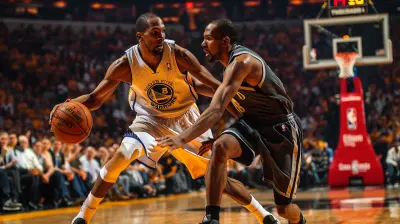
Sports also teach a form of thinking that is rare elsewhere: thinking in systems. A basketball player does not just decide to pass. They read the help defender, the shooter's momentum, the shot clock, and the score. Each decision ripples through the next several seconds. Players who see those ripples early are the ones coaches describe as having "vision," and that vision is pattern recognition built from thousands of repetitions.
Why Sport Is an Unusually Good Training Ground for Thinking
Several features of sport make it a strong environment for developing problem-solving skills. Each one is worth understanding on its own, because together they explain why sport transfers to other domains at all.Fast feedback loops
In most areas of life, feedback arrives late. You make a business decision and find out months later whether it worked. In sport, feedback is almost immediate. A bad pass is intercepted within a second. A wrong read on a defense leads to an open shot for the other team. That speed compresses the learning cycle. You can make and correct hundreds of decisions in a single practice.The catch is that fast feedback can also teach the wrong lesson. A risky pass that happens to work is not necessarily a good decision. Players who only learn from outcomes rather than from process develop habits that break down against better opponents. Good coaching corrects this by evaluating the decision, not just the result.
Consequences that cannot be argued away
In a debate, a clever person can talk their way out of a bad position. In a game, the scoreboard does not negotiate. This creates intellectual honesty. You can believe you made the right call, but if the opponent scored, you have to examine why. Sport forces people to separate what they intended from what actually happened, which is a core critical thinking skill that many adults never fully develop.Adversarial conditions
Sport is inherently adversarial. Someone is trying to disrupt your plan. This is different from solving a puzzle, where the pieces cooperate. It trains a specific kind of thinking: anticipating how another mind will respond to your actions, and then responding to that response. Strategists call this thinking at a higher level, and it is the same skill used in negotiation, competitive business, and any situation where another person's choices shape your options.Constraint management
Every athlete works within limits: time, energy, rules, roster size, field dimensions. Good athletes do not ignore constraints. They exploit them. A soccer team that is outmatched in possession may sit deep and counterattack, turning the opponent's strength into a vulnerability. That is resource-based problem solving, and it transfers directly to project management, budgeting, and any setting where you must achieve a goal with less than you would like.
The Mental Skills Sports Build, and How They Transfer
It is easy to claim sports build thinking skills. It is more useful to name the specific skills and trace how each one shows up outside sport.Reading patterns and anticipating
Experienced athletes do not react to events. They anticipate them. A tennis player reads the toss and starts moving before the serve is struck. A hockey player knows where the puck will go because they recognize the shape of the play.Outside sport, this shows up as the ability to see where a project is heading before problems become obvious. The transfer is not automatic. It requires the person to recognize that the pattern they learned on the field is a general principle: early cues predict later outcomes, and the best time to act is before the outcome is certain.
Decision-making with incomplete information
Athletes almost never have full information. They decide anyway. This is a skill that many highly educated people struggle with, because school trains them to gather all the facts before answering. Sport trains the opposite: act when you know enough, not when you know everything.This is valuable in leadership, emergency response, and any role where waiting for certainty is itself a decision. The trade-off is real. People trained in sport can become overconfident in their ability to improvise and underinvest in preparation. The best athletes combine fast in-the-moment decisions with deep preparation beforehand, and that combination is what makes the improvisation reliable rather than reckless.
Emotional regulation under pressure
Critical thinking collapses when emotion takes over. A player who is angry about a bad call stops reading the game and starts reacting to the referee. Sport repeatedly puts people in frustrating, high-stakes situations and requires them to stay composed. Over time, this builds the ability to notice frustration without being controlled by it.This is one of the most transferable skills sport offers, because pressure is universal. The person who has learned to reset after a mistake on the field has a template for resetting after a mistake at work. The key is that the reset must be practiced, not just experienced. Athletes who never develop a routine for recovering from errors tend to carry the error into the next play.
Planning and adjusting plans
A game plan is a hypothesis. The opponent tests it. Good teams adjust. This cycle of plan, test, observe, and revise is the same loop used in scientific inquiry and in any well-run project. Sport makes the loop visible and fast.The risk here is stubbornness. Some teams and players cling to a plan that is clearly failing because changing it feels like admitting a mistake. The skill that transfers is not just the ability to plan, but the willingness to abandon a plan when evidence says it is wrong. That is harder than it sounds, and sport gives people a low-stakes place to practice it.
Communication and shared cognition
Team sports require people to coordinate without full information. A defender calls a switch. A point guard signals a play. Teammates must interpret these signals in real time and adjust. This is shared cognition: thinking as a group rather than as individuals.In organizations, this shows up as the ability to work within a team that is making decisions faster than any single person could. The transfer depends on whether the person learned to communicate clearly and early, or whether they learned to rely on teammates who covered for their silence. The former is a durable skill. The latter is a habit that fails when the team changes.

Individual Sports vs Team Sports: Different Thinking Demands
It is a common assumption that team sports build collaboration and individual sports build discipline. The reality is more nuanced, and the distinction matters for anyone choosing a sport for a child or for themselves.Team sports demand constant interpretation of other people. You must read teammates' intentions, predict their movements, and adjust your own actions to fit. This builds a social and strategic intelligence that is hard to replicate elsewhere. The downside is that team sports can hide individual weaknesses. A player can be carried by a strong team and never develop the self-reliance that solo competition forces.
Individual sports, by contrast, put the entire problem on one person. A runner must manage pace, effort, and psychology with no teammate to share the load. A tennis player must solve the opponent alone, with no coach allowed mid-match in most settings. This builds self-regulation and the ability to diagnose your own problems. The downside is that individual sports offer less practice at coordination and shared decision-making.
The most complete development comes from doing both at some point, or from team sports that require genuine individual accountability, such as sports where each player has a clear one-on-one assignment. The point is not that one is better. It is that they train different muscles, and a person who only does one develops a lopsided thinking toolkit.
What Coaches and Players Get Wrong
The claim that sport builds thinking skills is true in general but false in many specific cases. Several common mistakes undermine the benefit.Mistake one: coaching outcomes instead of decisions
A coach who only praises results teaches players to chase lucky outcomes. A coach who reviews decisions, regardless of result, teaches players to think. This is the single biggest lever in whether sport develops critical thinking or just reflexes. After a game, ask why a choice was made, not just whether it worked. The best programs do this systematically, with video review focused on decision points rather than highlights.Mistake two: over-structuring practice
Drills have their place. But if every practice is a scripted sequence of predetermined actions, players never learn to read a situation and choose. Small-sided games, where players face more decisions per minute, are generally better for developing decision-making than isolated drills. The trade-off is that small-sided games are messier and harder to control, which is exactly why they work.Mistake three: punishing mistakes too harshly
If a player is afraid of making a mistake, they stop taking risks, and risk-taking is where learning happens. This does not mean tolerating carelessness. It means distinguishing between a bad decision and a bad outcome. A player who makes the right read and the pass is intercepted by a great play should not be treated the same as a player who made a lazy choice. Environments that blur this distinction produce cautious, uncreative players.Mistake four: assuming transfer is automatic
The biggest misconception is that skills learned on a field automatically show up at a desk. They do not. Transfer requires reflection. A player must be helped to see the connection between reading a defense and reading a market, between adjusting a game plan and revising a project plan. Without that bridge, the skills stay in the sport. This is why the most effective athletic programs include structured reflection, and why former athletes who can articulate what they learned tend to transfer those skills far better than those who cannot.
How to Get the Thinking Benefits, Whether You Play or Not
Not everyone plays competitive sport. The good news is that the underlying mechanisms can be accessed in other ways, and understanding them helps you choose how to engage.If you play
Build a habit of reviewing decisions, not just results. After a game or practice, pick two or three moments where you made a choice and ask what information you had, what you missed, and what you would do differently. This takes ten minutes and is more valuable than an hour of extra conditioning for long-term development.Seek out sports or roles that force you to make decisions rather than execute fixed tasks. A goalkeeper faces more decision points than a player who rarely touches the ball. A point guard runs the offense. Choose positions and formats that put you in the middle of the problem.
If you coach
Design practices around decisions. Use games that require reading and reacting. Review decision quality separately from outcome. And explicitly name the transferable skill you are building, so players can carry it beyond the field.If you are a parent or manager
Do not assume that a child who plays sport is automatically learning to think. Ask what kind of coaching they are getting. A program that emphasizes decision-making and reflection will develop thinking skills. A program that emphasizes winning at all costs may develop technical skill while teaching players to avoid risk and defer to authority.For managers, the same principle applies to hiring and developing former athletes. The sport itself is not the credential. The evidence of decision-making, adjustment, and reflection is. Ask candidates about a time they changed a plan mid-course and why. The answer will tell you whether the transfer happened.
If you do not play
You can still build these skills through activities that share the core features: fast feedback, real consequences, adversarial conditions, and constraints. Strategy games, competitive debate, improvisation, and certain forms of simulation training all provide similar pressure. Watching sport analytically, pausing to predict what a team will do before the play unfolds, is a surprisingly effective way to practice pattern recognition.A Balanced View
It would be easy to overstate the case. Sport is not a substitute for formal education in logic, statistics, or structured reasoning. It does not make people immune to bias, and athletes are as capable of stubbornness and superstition as anyone. Some sports, particularly highly scripted ones, offer fewer decision-making opportunities than others. And the transfer to non-sport domains depends heavily on reflection and coaching quality, not on participation alone.What sport does offer is something formal education often struggles to provide: repeated practice at making consequential decisions with incomplete information while under pressure, with immediate feedback and a real cost for being wrong. That is a rare and valuable combination. Used well, it builds a kind of practical intelligence that shows up in how people handle uncertainty, adjust plans, and stay clear-headed when things go wrong.
The key word is "used." Sport does not automatically build critical thinking. It creates the conditions for it. Whether those conditions produce thinkers or just skilled performers depends on how the sport is taught, coached, and reflected upon. That is the part most people miss, and it is the part that matters most.
all images in this post were generated using AI tools
Category:
Sports And EducationAuthor:

Easton Simmons