Could It Be The Best Rugby Match of the Decade? 2026 Revisited
16 October 2026
Rugby fans love a good argument. Give us two teams, a ball, and a questionable refereeing decision, and we will debate it until the pubs close. But there is one argument that keeps resurfacing every few years: which match was the best of the decade? Usually, the answer depends on who you support, how old you are, and whether you had money on the game.
Now imagine we are looking back from some point in 2026. A match has just finished. The whistle has gone. Social media is on fire. Pundits are calling it the greatest game of the past ten years. And you are sitting there wondering whether that claim actually holds up or whether it is just recency bias doing what recency bias does.
This article is not a match report. It is a way of thinking about the question itself. How do we judge a rugby match? What makes one game better than another? And why do we keep falling into the same traps when we argue about it?
Let us dig in.
Why the "Best Match" Debate Is Harder Than It Looks
On the surface, ranking rugby matches seems simple. You watch them, you feel something, and you decide. But feelings are terrible referees. They blow hot and cold depending on context.Think about the last time you watched a game that you thought was an instant classic. Now think about watching it back a year later. Was it as good as you remembered? Sometimes yes. Often no. The drama was in the moment, not in the replay.
There are at least four things fighting for control when you judge a match:
- The result. If your team won, the game was probably better than if they lost.
- The stakes. A World Cup final carries more weight than a mid-season friendly, even if the friendly was more entertaining.
- The quality. Two teams playing brilliantly is different from two teams playing badly but dramatically.
- The story. A comeback, a last-minute kick, a red card, a controversial call. Narrative matters.
The problem is that these four things do not always point in the same direction. A match can be dramatic but sloppy. It can be high quality but boring. It can be meaningful but one-sided. The "best match" is usually the one that scores highest across all four, but nobody agrees on the weighting.
That is why the debate never ends. And honestly, that is why it is fun.

The Anatomy of a Genuinely Great Rugby Match
If you want to argue that a specific game is the best of the decade, you need to know what you are actually measuring. Let us break it down.Tension That Does Not Let Go
Great matches have a pulse. You feel it in the first ten minutes and it does not drop until the final whistle. Not every minute has to be chaotic. In fact, the best games often have long stretches of tactical chess before the explosion. The tension comes from not knowing when the explosion will happen.Think of a game where the lead changes hands four or five times. Every time one team looks like they are pulling away, the other claws back. That is tension. It is not just about scoring. It is about the sense that the game is never safe.
Skill That Holds Up on Replay
This is where casual fans and serious students of the game often disagree. A match can feel incredible live and look ordinary on second viewing. Bad handling, aimless kicking, and messy breakdowns can be hidden by drama in the moment.A truly great match has moments that make you rewind. A pass that should not have been possible. A tackle that saves a certain try. A kick to the corner that lands on a sixpence. These are the things that separate a classic from a chaotic mess that happened to be close.
Stakes That Actually Matter
There is a reason nobody calls a pool-stage match the greatest of all time, even if it was brilliant. Context matters. A World Cup final, a deciding test in a Lions series, a Grand Slam decider. These games carry weight because the players carry weight. You can see it in their faces. You can feel it in the physicality.This does not mean only finals can be classics. A Six Nations match that decides the championship on the final day can be just as heavy. But the stakes have to be real, not manufactured.
A Story You Could Not Write
The best matches have a narrative that emerges naturally. A player returning from injury. A team written off by everyone. A coach under pressure. A referee decision that swings the game. A kicker who has missed all day suddenly nailing the winner.You cannot plan these things. They just happen. And when they do, they stick in your memory far longer than the scoreline.
Common Mistakes Fans Make When Judging Matches
Before we go further, let us clear up the ways we all get this wrong.Recency Bias
This is the big one. The last great match you watched is always the best. Your brain is wired to remember recent emotional peaks more vividly than older ones. That is why every few months someone declares a new greatest game of all time.The fix is simple but hard. Wait. Give it six months. Watch it again. If it still holds up, then you have something.
Confusing Drama With Quality
A match can be dramatic and still be bad. Two teams making constant errors is not the same as two teams playing brilliantly under pressure. Drama is easy. Quality is hard.When you are judging a match, ask yourself: were the players executing at a high level, or were they just making a lot of mistakes that happened to create chaos?
Letting the Result Cloud Everything
If your team wins, the match was great. If your team loses, the match was overrated. This is tribalism, and it is almost impossible to avoid. But try. Some of the best matches ever played ended in defeat for the team you love. That does not make them worse.Ignoring the Conditions
Weather, pitch quality, and altitude all affect how a match plays out. A game in driving rain that ends 9-6 can be a tactical masterpiece. A game in perfect conditions that ends 9-6 is probably just boring. Context matters.
What Makes a Match "The Best of the Decade" Specifically
Now we get to the tricky part. Best of the decade is a different question from best of all time or best of the season. It requires a longer view.It Has to Be Remembered
If you have to look up the score, it probably is not the best of the decade. The best matches live in the collective memory. People quote them. People reference them. People still argue about them years later.It Has to Matter Beyond the Final Whistle
Some matches change the sport. They shift tactics, they launch careers, they end eras. A match that is brilliant but has no lasting impact is a great game. A match that is brilliant and changes how the game is played is a candidate for best of the decade.It Has to Survive the Replay Test
This is the killer. Watch it again five years later. Does it still hold up? If the answer is yes, you have a genuine contender. If the answer is "well, it was exciting at the time," then it belongs in a different category.The 2026 Angle: Why Looking Back Is Tricky
Let us say it is 2026 and we are looking back at the decade. The problem is that the decade is not over. We are judging a book that is still being written.This matters because the best matches often reveal themselves slowly. A game that felt like a classic in 2023 might be forgotten by 2028. A game that felt ordinary in 2024 might be remembered as a turning point by 2029. You cannot know yet.
So when someone says a match from 2026 is the best of the decade, they are making a prediction as much as a judgment. Treat it accordingly.
How to Judge a Match Like an Expert
If you want to move past gut feeling and actually analyze a match, here is a practical approach.Watch It Twice
First watch: enjoy it. Second watch: study it. The second viewing tells you what you missed. The first viewing tells you what it felt like.Track the Momentum Shifts
Great matches have clear momentum swings. Note when they happen and why. Was it a tactical change? A substitution? A moment of individual brilliance? A refereeing decision? Understanding why the momentum shifted tells you how the match was won and lost.Look at the Set Piece
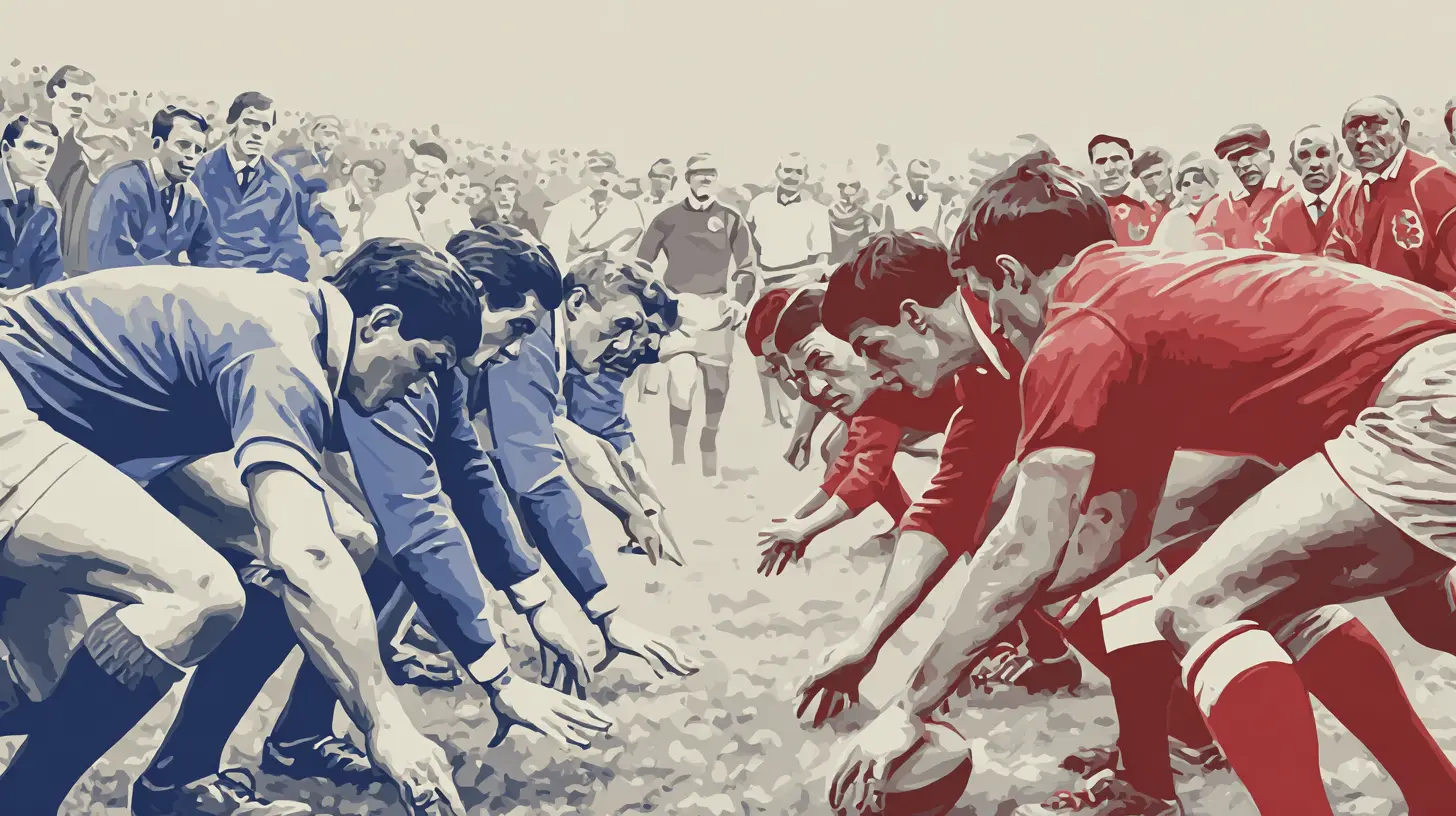
Scrums and lineouts are not glamorous, but they decide matches. A dominant scrum can strangle a team. A malfunctioning lineout can kill momentum. If you ignore the set piece, you are missing half the game.Check the Discipline
Penalties and cards shape matches. A team that gives away ten penalties is not unlucky. It is undisciplined. A referee who lets things go creates a different game than one who blows everything. Both can produce great matches, but for different reasons.Ask the Big Question
Would this match still be great if the score was reversed? If the answer is no, then you are probably judging the result, not the match.Comparisons: Different Types of Great Matches
Not all great matches are great in the same way. It helps to know what type you are watching.The Shootout
Two teams trade tries. Defense is optional. The scoreboard looks like a cricket score. These matches are entertaining but often lack tension because the lead keeps changing so fast that it stops feeling meaningful.The Arm Wrestle
Low scoring, brutal physicality, every point earned. These matches are not for everyone, but they can be the most intense. The tension is constant because one mistake decides everything.The Comeback
One team is dead and buried, then suddenly they are not. These matches are emotionally exhausting and often unforgettable. But they can also be misleading. A comeback often requires the other team to collapse, which is not the same as the winning team being brilliant.The Statement
One team dominates from start to finish. These matches are rarely called the best of the decade because there is no tension. But they can be the most impressive displays of rugby you will ever see.The best of the decade is usually a mix. A match that has elements of all four. That is rare, and that is why it stands out.
Practical Advice for Fans Who Want to Argue Better
If you are going to have this debate, and you will, here is how to do it without sounding like a fool.- Do not lead with "my team." Nobody cares.
- Bring specifics. "The third try was incredible" is weak. "The third try came from a lineout move they had not used all tournament" is strong.
- Acknowledge the other side. If someone makes a good point, say so. It makes your argument stronger, not weaker.
- Be honest about bias. We all have it. Admitting it makes you more credible.
- Do not confuse popularity with quality. A match that everyone watched is not automatically the best. It is just the most watched.
Misconceptions That Need to Die
Let us clear up a few things that people get wrong all the time."High scoring means great match"
No. High scoring means bad defense or perfect conditions or both. Some of the best matches ever played ended 15-12."A red card ruins the game"
Sometimes. But sometimes a red card creates a completely different game that is just as compelling. It depends on how the teams respond."The best match has to be a final"
No. Finals are often cautious because the stakes are so high. Some of the best matches happen in pool stages or mid-tournament when teams are still free."You had to be there"
This is a cop-out. If a match only works because of the atmosphere in the stadium, it is not the best of the decade. It is a great experience. Those are different things.
Final Thoughts: What to Look For in 2026 and Beyond
As we move through the decade, keep your eyes open. The best match of the decade is probably not the one everyone is talking about right now. It might be a game nobody expected. It might be a match between two teams that are not traditional powers. It might be a game that looks ordinary on paper and turns into something else entirely.When it happens, you will know. Not because someone on television tells you. Not because social media explodes. But because you will still be thinking about it weeks later. You will still be talking about it months later. And when someone asks you about the best match of the decade, you will not need to look it up.
That is the test. Everything else is just noise.
all images in this post were generated using AI tools
Category:
Historic MatchesAuthor:

Easton Simmons
Discussion
rate this article
1 comments
Sage Pratt
What an incredible match! The energy was contagious, and every play kept us on the edge of our seats. The skill and determination displayed by both teams truly made this a game to remember. Here's to more thrilling moments like this in the future!
October 16, 2026 at 2:38 AM