Beyond the Arena: Sports Stories That Transcend the Game
5 August 2026
Sports are more than just a competition. Sure, we all love the thrill of a last-second touchdown, the swish of a buzzer-beating three-pointer, or the crack of a home run. But sometimes, what happens beyond the arena is far more impactful than any scoreboard or stat line. These are the stories that inspire, the moments that touch our hearts, and the actions that remind us that sports often transcend the game itself.
From athletes using their platforms to fight for social justice to moments of pure humanity that restore our faith in the world, there’s something undeniably powerful about the intersection of sports and life. These stories go beyond the wins and losses—they reflect courage, empathy, and perseverance.
So, let’s take a deeper dive into some of the most poignant sports stories that extend far beyond the playing field. Buckle up, because this isn't just about sports—this is about life.

The Power of Unity: Jesse Owens at the 1936 Berlin Olympics
Let’s start with a story that most of us have heard about, but one that still gives goosebumps decades later. In 1936, the world was on the verge of WWII, and Nazi Germany was gearing up to showcase its ‘superiority’ at the Berlin Olympics. The stage was set for Adolf Hitler to promote his propaganda of Aryan dominance.Enter Jesse Owens, an African American track and field athlete. Not only did he face the racial discrimination present in his own country, but he was also walking into a stadium filled with swastikas and Nazi supporters. Yet, Owens didn’t just show up—he dominated.
Owens won four gold medals, effectively shattering Hitler's myth of Aryan supremacy. But what stood out even more than his athletic prowess was his grace under pressure and his ability to unite people. Owens’ achievements were a powerful reminder that sports can break down barriers and unite people, regardless of race or nationality. His story transcends the Olympics—it’s about human dignity and the power of one person to defy hate.

Muhammad Ali: Fighting Inside and Outside the Ring
If there’s one athlete who truly embodies the idea of transcending sports, it’s Muhammad Ali. He was more than just a boxer—he was a symbol of resistance, a voice for civil rights, and a beacon of social justice.In the 1960s, at the height of the Vietnam War, Ali refused to be drafted into the U.S. military, citing his opposition to the war on religious and moral grounds. His words still echo today: "I ain't got no quarrel with them Viet Cong. No Viet Cong ever called me [an offensive racial slur]."
Ali’s decision to stand up for his beliefs cost him dearly—he was stripped of his boxing license, his world heavyweight title, and faced years of legal battles. But his courage in speaking out against the war and racial injustice resonated far beyond the ring. Ali’s story isn't just about boxing; it’s about standing up for what you believe in, even when the cost is high.

The Miracle on Ice: A Cold War Showdown
Sports have this incredible way of reflecting larger societal issues, and perhaps nowhere is this more evident than in the 1980 Winter Olympics. The Cold War was in full swing, and tensions between the United States and the Soviet Union were at an all-time high. It was more than just two teams facing off—it was a symbolic battle of ideologies.The U.S. men’s hockey team was a group of amateur and collegiate players, while the Soviet team was essentially a well-oiled machine of military-trained professionals. The Americans were massive underdogs. No one expected them to win. But in one of the most stunning upsets in sports history, the U.S. team defeated the Soviets in what became known as the Miracle on Ice.
It wasn’t just about hockey—it was about hope. It was about proving that, even when the odds are stacked against you, anything is possible. The victory wasn’t just for the players; it was for a nation looking for something to believe in during a time of uncertainty.
Colin Kaepernick: Kneeling for Justice
In recent years, one of the most polarizing stories in sports has been that of Colin Kaepernick. In 2016, the NFL quarterback made headlines when he decided to kneel during the national anthem as a protest against police brutality and racial injustice in the U.S. Some praised his courage, while others condemned him for being unpatriotic.But regardless of where you stand on the issue, it’s undeniable that Kaepernick’s protest sparked a national conversation that extended far beyond the football field. He sacrificed his career for his beliefs, and his actions ignited a movement that continues to this day.
Kaepernick’s story isn’t just about football—it’s about activism, civil rights, and the role of athletes in society. His decision to kneel was a powerful reminder that sports can be a platform for change, and sometimes the most important battles happen off the field.
The Invictus Games: Healing Through Sport
Prince Harry, a member of the British Royal Family, founded the Invictus Games in 2014 to help wounded, injured, and sick servicemen and women through the power of sport. The name Invictus means "unconquered," a fitting title for an event that showcases the resilience of the human spirit.The Invictus Games are about more than just competition; they’re about recovery, camaraderie, and healing. For many participants, the Games offer not only a chance to compete but also a way to regain a sense of purpose and confidence after life-altering injuries.
It’s yet another example of how sports can go beyond the physical and touch something deeper. The Invictus Games show us that sport has the power to heal both body and mind. It reminds us that, no matter what life throws at us, we are unconquerable.
Cathy Freeman: Running for a Nation
In the 2000 Sydney Olympics, the world watched as Cathy Freeman, an Aboriginal Australian, lit the Olympic cauldron during the opening ceremony. This moment was already symbolic, given Australia’s troubled history with its Indigenous population. But what happened next was even more powerful.Freeman went on to win the gold medal in the 400 meters, draped in both the Australian and Aboriginal flags, uniting the nation in a way few moments ever have. Her victory wasn’t just about personal achievement—it was about reconciliation, pride, and representation for Aboriginal people in Australia.
Freeman’s story transcends the track. It’s about the healing power of sports, the importance of representation, and the ability of one athlete to bring a nation together.
Pat Tillman: Choosing a Greater Cause
Pat Tillman was living the dream. He was a starting safety for the Arizona Cardinals, earning millions in the NFL. But after the September 11 attacks in 2001, Tillman made a decision that shocked the sports world: he left his football career behind to enlist in the U.S. Army.Tillman wasn’t after fame or glory; he simply felt a calling to serve his country. Tragically, he was killed in action in Afghanistan in 2004. His story is one of selflessness, sacrifice, and the recognition that some things are bigger than sports.
Tillman’s legacy goes far beyond the football field. He reminds us that sports, while important, are ultimately just a game. Life, and the choices we make in it, are what truly matter.
The 1995 Rugby World Cup: Nelson Mandela and the Power of Reconciliation
South Africa’s victory in the 1995 Rugby World Cup was about much more than sports. Just a few years earlier, the country had been segregated under apartheid, and tensions were still high. But Nelson Mandela, who had been released from prison in 1990 and became the country’s first Black president in 1994, saw an opportunity to unite the nation.Mandela famously donned the jersey of South African captain Francois Pienaar, a white Afrikaner, during the final match, symbolizing unity between the country’s Black and white populations. When South Africa won the cup, the entire nation—once divided along racial lines—rejoiced together.
It was a powerful moment of reconciliation, showing that sports can be a catalyst for healing and unity. It proved that even in the most divided societies, sports can provide common ground.
Conclusion: The True Power of Sports
At the end of the day, sports are about more than just numbers on a scoreboard. They have the power to inspire, to unite, and to create change. Whether it’s a single athlete standing up for what they believe in or an entire nation coming together over a shared victory, sports have a unique ability to transcend the game and touch something deeper within us.These stories remind us that sports are about more than just wins and losses—they’re about life. They teach us about courage, perseverance, unity, and sacrifice. They show us that, sometimes, the most important moments in sports happen not on the field, but beyond the arena.
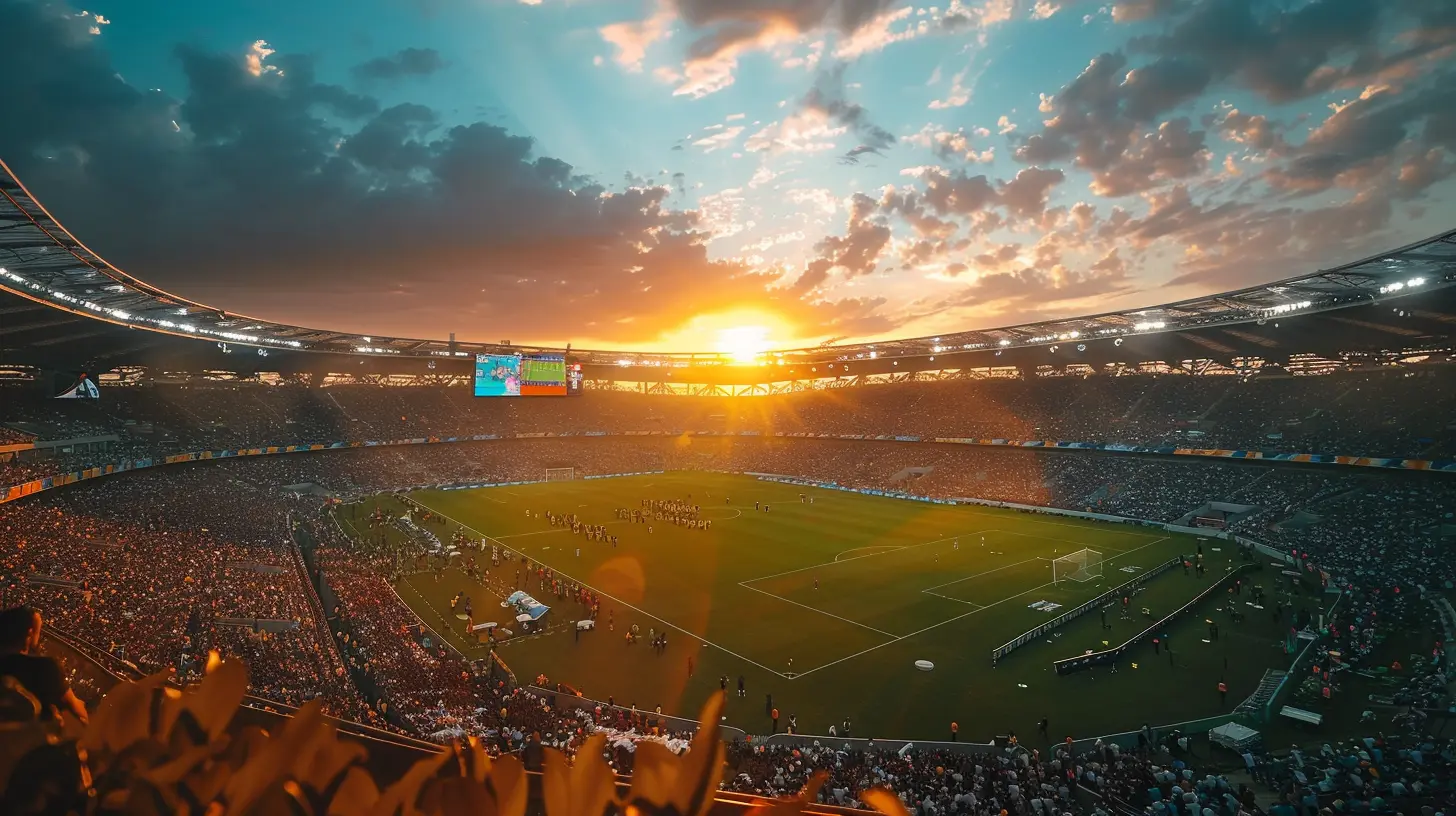
all images in this post were generated using AI tools
Category:
Sports DocumentariesAuthor:

Easton Simmons
Discussion
rate this article
1 comments
Edward Williams
Inspiring tales that elevate sports beyond competition.
August 7, 2026 at 2:50 AM